[0:00]The tears show up when your system decides it's time to let something move through instead of staying stuck. Psychologists describe this as emotional accumulation. Small triggers release larger emotional builds that have been forming quietly over time. Some studies have found that people who cry more regularly tend to show lower baseline stress levels. Tears activate the body's calming system and help regulate emotional overload. In other words, crying is not your system failing.
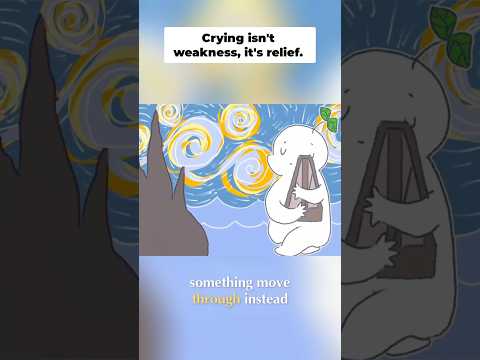
The Benefits of Crying #psychology
Psych2Go
29s75 words~1 min read
YouTube auto captions
Transcript source
YouTube auto captions
This transcript was extracted from YouTube's auto-generated caption track. The transcript below is server-rendered so it can be read, searched, cited, and shared without opening the original YouTube player.
AI Video Summary
This video explains that crying is a natural and beneficial physiological process, not a sign of weakness or a system failure. It highlights that tears emerge when the body's system is ready to process and release accumulated emotions, rather than keeping them suppressed. Psychologists refer to this phenomenon as emotional accumulation, where minor triggers can unleash significant emotional buildup that has been developing over time. The act of crying helps the body to move through these emotions.
The transcript further suggests that regular crying can contribute to lower baseline stress levels, according to some studies. This is because crying activates the body's calming system, playing a crucial role in regulating emotional overload. Therefore, crying is presented as an essential mechanism for emotional regulation and stress reduction.
Key Takeaways
- Crying is a natural process for emotional release, not a system failure.
- It helps to move stuck emotions through the body.
- Psychologists call this 'emotional accumulation,' where small triggers release larger, built-up emotions.
- Regular criers may exhibit lower baseline stress levels.
- Tears activate the body's calming system.
- Crying aids in regulating emotional overload.
Topics Covered
Emotional HealthPsychologyStress ManagementPhysiology
Pull quotes
[0:00]The tears show up when your system decides it's time to let something move through instead of staying stuck.
[0:00]Small triggers release larger emotional builds that have been forming quietly over time.
[0:00]Some studies have found that people who cry more regularly tend to show lower baseline stress levels.
Use this transcript
Related transcript hubs
Watch on YouTube
Share
MORE TRANSCRIPTS


