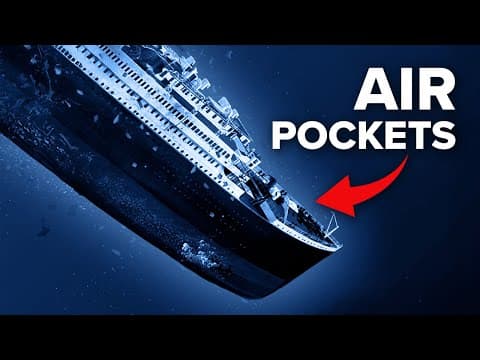
[0:00]Could some passengers have survived inside the Titanic after she sank? And if they did, what happened next? In this video, we'll uncover the terrifying fate of anyone trapped below.
[0:16]We first have to understand the unique way the Titanic went under, because how it broke apart holds the keys to whether anyone could have been alive. The ship was built with watertight compartments intended to separate seawater from the rest of the vessel if flooding began. But in reality, these areas weren't actually watertight. They had openings at the top. When the Titanic struck the iceberg, it tore open five compartments in the bow. Water flooded in, spilling from one compartment to the next, leaving the front of the ship heavy with water while the stern remained filled with air. As the bow sank deeper, the pressure was too much and the ship split in two. Nobody could have survived in the bow as it sank, it was completely flooded. But what about the stern? After the bow went under, the stern lifted upwards into the sky with its propellers fully visible. It was this way of sinking that made it possible for some to remain alive inside the ship. The stern was mostly sealed off, even after the ship tore apart, so it most likely contained trapped pockets of air, in crew quarters, storage areas and even some stairwells. These air volumes behaved like giant lungs, venting and shifting as the hole twisted. Of the 1500 people who perished, it was likely people were still trapped in the stern when those air pockets formed. They'd be plunged into darkness and every creak of the ship's frame would sound like it was coming from inside their own skull. So it was possible that some survived after the ship sank beneath the surface. The question is how long those air pockets could have lasted and whether it made survival more merciful or more cruel. The first and most grim possibility was that passengers trapped in air pockets might have survived long enough to reach the sea floor. A horrifying thought, because the stern's plunge lasted 6 to 10 minutes. Nearly two and a half miles through total darkness. But the way the stern fell would make survival difficult. After breaking apart, the stern didn't sink cleanly, it twisted, rotated and collapsed in on itself before hitting bottom in a blast of debris. The impact folded decks like paper, crushing anything still sealed inside. On the off chance any air pockets survived the entire descent, the final impact would have been annihilating. Entire rooms would have collapsed in milliseconds, killing anyone who survived before they even knew what happened. Thankfully, physics leaves almost no chance anyone made it that far down. But even surviving part of that descent would have been a nightmare on its own.
[2:57]Many air pockets would have flooded almost instantly. As pressure built, rivets loosened, seams split and the Atlantic forced its way inside, swarming survivors. In those spaces, air rushed out in violent bursts as freezing water filled every corner. Survivors outside the ship reported seeing portholes burst as air escaped. For anyone still trapped in these areas, death came within seconds of the stern submerging. The cold and violent surge would have knocked the air from their lungs before they could take one last breath. But some air pockets were likely sealed off enough to keep the ocean out at least for a while, which raises the darker question. What happens when the water never reaches you? As the stern fell, pressure would have climbed meter by meter. Survivors would have waited in complete darkness as air compressed. Their ears popped, breathing tightened, and they listened to the ship twist around them. For a few hundred meters down, these pockets could have persisted, but between 30 seconds and a minute after the ship disappeared beneath the surface, lifeboat survivors reported hearing something horrifying. A distant roar beneath them. This was almost certainly the stern imploding. The steel of the stern would have yielded to crushing pressure of the Atlantic, and the trapped air pockets collapsed in milliseconds. Those inside would have experienced no sound and no warning. Just instantaneous annihilation. This was the most plausible fate for those in the stern who survived the longest.


