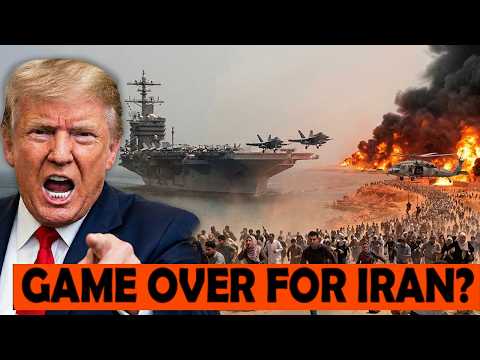
[0:09]Oh my God, here they come. That's right in the middle, another one, and another one. Look at that! The whole wave of them. The whole skyline lit up. The order for combat readiness reaches the aircraft carrier. The crew begins moving the ship out of port. Engines come to full power, the mooring lines are cast off, and tugboats position themselves alongside the hull to guide the carrier through the narrow harbor channel. On the forward deck, sailors operate the anchor windlass, hauling the heavy anchor chains up from the water, link by link, until the anchors are seated in their housings.
[0:51]Along the rails on both sides of the ship, crew members and sailors stand and watch the shore pull away. Some look back at the port, at the buildings, at the people standing on the docks watching the carrier leave. Nobody waves. They just stand and look. The tugboats push and pull the massive hull through the channel, and once the carrier clears the harbor entrance, they peel off one by one and the ship moves into open water under its own power. As soon as the ship is clear of port, the deck crews get to work. Sailors grab steel brushes and start scrubbing the anchor chains and mooring lines, cleaning off mud, salt and debris picked up in the harbor. The lines are coiled and stowed. The anchor housings are secured for sea. Below the flight deck, in the hangar bay, mechanics are already preparing helicopters for combat sorties. Weapons teams attach ordnance to the pylons, rockets, missiles, gun pods. Maintenance crews inspect rotor assemblies, hydraulic lines and tail sections. Each helicopter gets a full check before it is cleared for the flight deck. On the other side of the hangar, the same process is happening with the fighter jets. F/A-18 Super Hornets are being prepped, weapons loaded, panels closed, engine covers removed, fuel levels checked. One by one, the fighters are towed to the aircraft elevators and brought up to the flight deck. Deck crew in colored jerseys guide each aircraft into position on the catapults. Wings are unfolded and locked. Launch bars are attached. Jet blast deflectors rise behind the engines.
[2:35]The first fighter is on the catapult. The pilot runs the engines to full power. The catapult officer gives the signal. The holdback releases, and the aircraft shoots forward off the bow, dropping slightly before climbing hard into the sky. Seconds later, the next fighter launches. Then another.
[2:59]One after another, they are thrown off the deck and bank away toward their assigned sectors.
[3:10]On the flight deck aft, a helicopter is positioned on the landing spot. The rotors begin turning, slowly at first, then spinning up to full speed. The deck crew clears the area. The helicopter lifts off and moves out over the water, heading toward its mission.
[3:35]At the same time, the escort ships in the carrier strike group begin their own operations. A guided missile destroyer turns broadside. Hatches open on the vertical launch system. Tomahawk cruise missiles start launching. One fires out of its cell in a burst of flame and smoke, arcs upward, and turns toward the horizon. Then another, then another. The missiles streak across the sky one after another, heading toward Iranian military targets hundreds of miles away. On the receiving end, Iranian military installations start taking hits. Explosions light up the landscape as the cruise missiles find their targets one by one.
[4:29]Back on the carrier, the catapults keep working. More fighters taxi into launch position, hook up, and launch off the bow. The flight deck is a constant rotation. One aircraft launches, the next one rolls into place. Deck crew work without pause, directing jets, arming catapults, clearing debris from the deck.
[6:51]The escort ships continue firing. Missile after missile leaves the vertical launch cells, each one aimed at a different target. Radar sites, command posts, air defense batteries, military bases. The barrage does not stop. Meanwhile, on land, additional fighters are taking off from airfields across the region. They climb out from runways at allied bases, form up in pairs and flights, and head toward the combat zone to join the operation.
[8:30]The air campaign is building. Carrier-based jets, land-based fighters, cruise missiles from the escort ships. Everything is converging on the same targets at the same time. The strike is underway.


