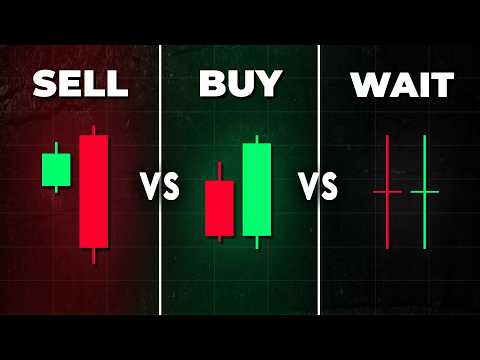
[0:00]Candlestick patterns are one of the most important concepts when it comes to trading profitably. Yet, you'd be surprised that most traders still use them incorrectly. The most confusing part about trading candlestick patterns is figuring out which ones actually work, since there are a lot of them. But here's the truth. 99% of these patterns don't actually work, and I know this because I've tested all of them throughout my trading career. However, I've found that a handful of them work extremely well and to this day have made me a lot of profit. In this video, I'll reveal the top six candlestick patterns proven to work, as well as everything you need to know about them. As a bonus, I'll also reveal how to combine these patterns with price action to find high win rate trade entries. And by the way, I've created a free guide which compiles all the high win rate patterns into one document. Inside, I show real trade examples of these patterns along with some tips and tricks to increase their win rate. You can use this guide as a reference whenever you're trading. So, if you want access to it, you can pick it up inside my free Telegram community. Link is in the description. Now, let's begin the video. First, what are candlesticks? Candlesticks are a simple way to look at price history. Each candlestick represents a price move of an asset for a particular period of time. For example, if you're on the one-hour time frame, each candle represents the price history for one hour. If you're on the daily time frame, then each candle represents price history for one day. A common question I hear from beginner traders is, why shouldn't we just use line charts to look at price? Wouldn't it be simpler? The answer is that candlestick charts actually give us significantly more information about the market compared to a line chart. And let me show you an example. So let's use this Euro dollar pair as an example. On the left, we have the line chart, and on the right, we're using the candlestick chart. As you can see, both charts move in a similar shape, which is expected since they both display the price. However, notice that the line chart only shows us one piece of information, the closing price for each period. In contrast, the candlestick chart provides four pieces of information for the same time period. First, there's the open, which is the opening price for that period. Next is the high, which shows the highest price reached within that period. Then, there's the low, which is the lowest price reached during that period, and finally, the close, which is the closing price. If you were to use only the line chart, the closing price would be the only information you'd get. To see this more clearly, here's a comparison between a line chart and a candlestick chart forming. As you can see, the line chart only displays the closing price for each period, while the candlestick chart shows more information about price movements during the same period. So, what makes these extra information so important? As traders, these information gives us a better understanding of the market, allowing us to make more informed decisions. For example, let's say that price hits a support level and bounces. If we're only using line charts, the only information we know is that the price dropped to this point and then bounced off. However, when we switch to a candlestick chart, it tells a different story. The candlestick chart shows that at one point, the price actually dipped below the support level, as indicated by the long wick, before moving back up and eventually closing at the key level. If we were using only a line chart, we wouldn't know this information. Details like these are crucial for price action traders because they can hint at where the price might go next. There are two types of candlesticks, green candles and red candles. A green candlestick forms when the candle closes above its opening price. Showing that buyers were stronger than the sellers. Similarly, a red candlestick forms when the closing price is below the opening price, showing that sellers were stronger than buyers. A single candlestick consists of two parts, the wick, also called the shadows, and the body. The end of the upper wick shows the highest price reached during that period, while the end of the lower wick shows the lowest price reached during that period. For the candle's body, however, things are a bit different. On a green candle, the bottom of the body shows the opening price for that period, and the top shows the closing price. For a red candle, it's the opposite. The top shows the opening price and the bottom shows the closing price.
[4:38]When we look at a chart, we'll notice that candlesticks come in various shapes. Some have larger bodies, others have longer wicks on one side, and some have small bodies with short wicks. Each of these shapes gives us unique information about price movements and understanding them is essential to analyze the market more accurately. The first type is candles with big versus small bodies. The body of a candle can reveal a lot about the strength or weakness of buyers and sellers. For example, let's look at a green candle with a big body. This type of candle shows that buyers were much more dominant. This is because price opened at a lower level, but because the buying pressure was so high and sellers were weaker, buyers were able to push the price up significantly without much resistance from sellers. This is why the candle closes in this shape. Similarly, a red candle with a big body shows that sellers were much more dominant. The price opened at a higher level, but since sellers were stronger, they managed to push it down significantly with little resistance moving the price sharply downwards before the candle closes. A candle with a small body tells a different story. A green candle with a small body shows that although buyers were in control, they weren't very dominant, as sellers also put up a lot of resistance. The price opened and buyers tried to push it up, but since sellers were almost as strong, the price didn't move much and ended near the opening price. This is why the candle has a small body. Similarly, a red candle with a small body shows that sellers were in control, but not dominant. The price opened at a point above and sellers pushed it down. However, due to either a lack of selling pressure or strong resistance from buyers, they couldn't push the price down significantly, which is why the candle closes in this shape. Second type is candles with large wicks. The size of a candle's wick also gives us a valuable information about price action. For example, a candle with a long wick on the bottom side indicates significant buying pressure. This is because for a wick to be long on the bottom, the price must have moved down significantly at one point. However, before the candle closed, buyers were strong enough to push the price back up considerably. This is why a long wick below indicates strong buying pressure. For the complete opposite, a candle with a long wick on the upper side indicates strong selling pressure. This is because for the wick to be long on the upper side, the price must have moved up significantly at one point, reaching a high level. However, before the candle closed, sellers managed to reject this upward move and push the price back down considerably. This is why a long upper wick indicates strong selling pressure. The third type is candles with a small body and equal wicks. If a candle has a small body and equal wicks, it indicates that neither buyers nor sellers are in strong control. This is because both buyers and sellers tried to push the price up and down during this period, but neither side was significantly dominant, so the candle closed near its opening price. In this example, buyers had a slight advantage as the candle closes green. However, their strength is still nearly equal to the sellers. Understanding the concepts of body and wicks is essential as we begin learning about basic candlestick patterns, so keep them in mind as we move forward. Now, I'm going to show you my top six candlestick patterns that I've found to be the most effective. Number one is the engulfing pattern. An engulfing pattern is a candlestick pattern made up of two candles, a smaller first candle, followed by a larger candle of the opposite color. The key point is that the body of the second candle needs to fully cover the body of the first candle. There are two types of engulfing patterns. Bullish engulfing pattern, which when the smaller candle is red and the larger candle is green. And bearish engulfing pattern, which when the smaller candle is green and the larger candle is red. When you see an engulfing pattern on a price chart, it could signal a potential trend reversal. For example, if the price is in a downtrend and a bullish engulfing pattern forms, it may signal an upward reversal, meaning the price could go up. This is because the pattern shows that buyers have grown stronger, as seen by the large green candle pushing the price higher than the previous red candle, indicating a possible reversal. The bigger the second candle, the greater the chance of a price reversal. To trade this pattern, we should confirm other factors to support our bias, which we'll discuss later. However, if you see a valid bullish engulfing pattern form, you can enter a buy position at the close of the large candle, with your stop loss set at the bottom wick of the green candle. The same applies to bearish engulfing patterns. When a bearish engulfing pattern forms, it could signal a possible downward reversal, as the large red candle indicates that sellers have gained strength over buyers. If you spot a bearish engulfing pattern, you can enter a sell position at the candle's close, with your stop loss set at the top wick of the red candle. Pattern number two is the pin bar. A pin bar is a candlestick pattern made up of just one candle, characterized by a large wick on one side and a small body. There are two types of pin bar patterns. A bullish pin bar is when the candle is green with a longer wick on the bottom, and a bearish pin bar, which is when the candle is red with a longer wick on the top. When you see a pin bar candle forming in on a chart, it means that sellers initially took control, pushing the price down to a low point, but then buyers stepped in, rejected that move, and pushed the price back up before the candle closed. This shows that while both sides were active, buyers ultimately came out stronger. Some traders might enter a buy position as soon as they see a bullish pin bar, but I prefer to wait for another green candle to form, confirming the trend. Once the trend is confirmed, you can take a buy position after the candle closes and place a stop loss at the bottom of the pin bar's wick.
[11:02]The same approach applies to bearish pin bars. If you see one forming, it means that buyers initially took control and pushed the price up, but sellers ultimately rejected this move and drove the price back down before the candle closed. You could wait for an additional red candle to form for extra confirmation. Then, you can look for a sell opportunity with the stop loss placed at the top of the pin bar's wick. Moving on to pattern number three, which is the three-bar continuation. This pattern consists of three consecutive candles that need to form in sequence. The first candle should have a large body and be bigger than the average candle. The second candle is a smaller, opposite colored candle that ideally shouldn't be more than half the size of the first candle's body. The third candle should be another large candle that closes higher than the second candle's close. There are two types of three-bar continuation pattern. A bullish pattern, where the first and third candles are large green candles with a small red candle in the middle, and a bearish pattern, where the first and third candles are large red candles with a small green candle in the middle. Whenever you see this type of pattern on a chart, it could indicate a possible continuation of the current trend. For example, if the price is in an uptrend and a bullish three-bar continuation pattern forms, it suggests the price may continue rising. This can be a good opportunity to enter a long position if you missed the initial uptrend, with a stop loss at the bottom wick of the second candle. It's the opposite for bearish three-bar continuation patterns. When you see it forming in the middle of a downtrend, it may suggest that the downtrend will continue. In this case, you could enter a sell position at the close of the third candle, with a stop loss at the top wick of the second candle. Moving on to pattern number four, which is the three-bar reversal pattern. This pattern consists of a sequence of three candles. The first candle is large with a nearly full body. The second candle is smaller, has the same color as the first, and has a small body. The third candle is a large, full-bodied candle of the opposite color to the first two. The size of the third candle's body affects the success rate of this pattern. If the third candle's body is equal to or larger than the first candle, it suggests a higher success rate and is considered a strong entry signal. If the third candle is smaller than the first, this suggests a lower chance of success and is considered a weaker entry signal. There are two types of three-bar reversal patterns, the bullish three-bar reversal, where the first two candles are red and the third is green, and the bearish three-bar reversal, where the first two candles are green and the third is red. As the name suggests, whenever you see this type of pattern on a chart, it signals a possible reversal of the existing trend. For example, during a downtrend, if you see a bullish three-bar reversal pattern forming, it signals that the trend might reverse upward. To trade this, you can enter a buy position at the closing price of the third candle and place your stop loss at the lows of the second candle. In the case of a bearish three-bar reversal pattern, it's the opposite. During an uptrend, if this pattern appears, it signals that the trend may reverse downward. In this case, you can enter a short position at the close of the red candle, with a stop loss at the high of the previous candle. Moving on to pattern number five, which is breakout candles. This is a type of candlestick pattern where we have multiple small candles with small bodies forming, followed by a large bodied candle. This pattern shows that the price was stagnant for a while, with no clear direction, until one side, buyers in this example, pushed the price significantly upward. In this setup, the series of small candles is called consolidation candles, and the large candle is known as the breakout candle. For this to be a valid pattern, there need to be at least three consolidation candles. However, the more consolidation candles there are, the higher the chance of a successful breakout. There are two types of breakout patterns. A bullish breakout pattern, where the breakout candle is green, and a bearish breakout pattern, where the breakout candle is red. Note that for both bullish and bearish patterns, the color of the consolidation candles is unimportant. What matters is that they're small in size. Whenever you see this type of setup on a chart, you'll usually observe a continuation in the direction of the breakout candle. Let's look at an example. Here, the price formed a series of small candles before a large green candle appeared, forming a bullish breakout pattern. This signals that the trend will likely continue upward. To trade this setup, you can enter a buy position at the close of the breakout candle, with a stop loss placed at the opening price of the breakout candle. The same principle applies to short entries. For instance, if you see multiple small candles forming as the price moves sideways, followed by a large red candle, this would count as a bearish breakout pattern. You could open a short position at the close of the breakout candle, with a stop loss placed at the opening price of the breakout candle. Pattern number six is shrinking candles. This is a candlestick pattern that consists of at least three consecutive candles of the same color, each getting smaller, followed by a large candle of the opposite color. This pattern suggests that the trend is gradually weakening, as indicated by the shrinking candles. Then, a large candle appears, confirming the reversal. The size of the fourth candle affects the likelihood of a successful reversal. Larger candles show stronger momentum, increasing the probability of a reversal. I recommend looking for a pattern where the fourth candle closes above the second candle. There are two types of shrinking candles, a bullish shrinking candle pattern, where the three shrinking candles are red and the fourth candle is green, and a bearish shrinking candle pattern, where the three shrinking candles are green and the fourth candle is red. Whenever you see this type of pattern on a chart, it signals a possible reversal of the current trend. For example, if the price is in a downtrend and you spot three consecutive red candles, each smaller than the last, this signals that the previous downtrend is losing momentum. After that, a large green candle forms, showing that buyers are now more dominant and signaling a potential reversal to the upside. If you see this setup on a chart, you can enter a long position at the close of the green candle, with a stop loss at the low of the previous candle. The same principle applies to bearish shrinking candles. For instance, if the price is in an uptrend and you notice three green candles getting progressively smaller, this shows that the uptrend is weakening. Then, a large red candle forms, ideally closing below the second candle, indicating that sellers are now in control and confirming a reversal to the downside. In this case, you can enter a short position at the close of the red candle, with a stop loss at the high of the previous candle. So those are the six candlestick patterns that I've found to work. Now, keep in mind, when traded on their own, these patterns may not always be as effective. However, if you combine them with other forms of analysis, like key levels, they can become much more powerful. So now, I'm going to introduce an advanced price action strategy that you can use alongside these patterns. This is the same strategy I use to achieve strong returns. To start, you'll want to prioritize higher time frames. Any time frame at or above the one-hour chart is better. This is because candlestick patterns are generally much less effective on lower time frames. So, the first step of the strategy is to identify a key level on a chart. There are many types of key levels like support and resistance, dynamic key levels, trend lines, Fibonacci levels, and more. I won't discuss all of them in this video because it would take too long, but to keep things simple for this tutorial, we can start by finding support and resistance levels or trend lines. Here's an example. In this chart, we can see the price has formed a downtrend and reversed twice at a specific area, making it a level of support. Now that we've identified our key level, the next step is to wait for the price to interact with it once again. At this third retracement, we're expecting the price to bounce once more, but we'll need extra confirmation from a candlestick pattern that supports our uptrend bias. In this example, we see a large red candle, followed by a smaller red candle, and then a large green candle, which closes above the bottom of the first candle. If you remember from the patterns we've learned, this matches the characteristics of a bullish three-bar reversal pattern, suggesting that the price may reverse to the upside. You can enter a buy position at the high of the third candle, place a stop loss at the low of the second candle, and set a take profit target at twice the size of the stop loss. As you can see, after our entry, the price moved up, hitting our take profit target. Here's another example. In this chart, we see that the price is in a downtrend, and it has formed a support-turned resistance level. This happens because the price initially formed a support level, as price rejected it once, but then price broke below it and is now approaching it again from the bottom, making this an area of resistance. However, we also see that the price has made two lower high points, creating a strong trend line. This area where the trend line and resistance level intersect is called a confluence level, an area where multiple key levels meet. Price is more likely to reverse at a confluence level. Now, we wait for the price to reach this confluence level. Once it does, we anticipate a reversal, but we still need confirmation. Looking closely, we see three green candles, each getting smaller in size, followed by a large red candle. This pattern shows that as the price approached our confluence level, buying pressure was fading, giving sellers the opportunity to step in. This is the characteristic of a shrinking candle pattern, which strengthens our expectation that the price will reverse downward from this level. This setup provides a good opportunity to enter short. Then, you can place a stop loss above the high of the previous candle and set a take profit at twice the size of the stop loss. As you can see, the price moved down and reached our profit target shortly after entry. Now, if you've watched the tutorial this far, I assume you're one of the few people who are truly serious about learning how to trade. So, if you feel like you got value from this video and want to learn even more, I've created a free guide that compiles all the high win rate candlestick patterns from this video into one file, which you can use as a quick reference in case you need a refresher. Inside, you'll find more in-depth explanations and trade examples for each, along with three more high win rate strategies that I didn't show in this video. So, if you'd like access to the guide, you can pick it up in my free Telegram community, which I've linked in the description. Just go to the files section and the guide will be there. Inside, you'll also get access to my free market analysis on Forex and crypto, which I will be posting regularly. So, if you're serious about leveling up your trading skills, join the free Telegram community. I'll see you there.


