[0:13]This video will outline a range of techniques to successfully offload bony prominences and reduce shear forces. Repositioning and mobilizing individuals is an important component in the prevention of pressure injuries. Extended periods of lying or sitting on a particular part of the body and failing to redistribute pressure on the body surface can result in sustained deformation of soft tissue and ultimately in tissue damage. In this video you'll see patients in a number of positions. Please take note, the emphasis on the bony prominences that you need to consider within these positions. Repositioning and mobilizing individuals is an important component in the prevention of pressure injuries. Repositioning ultimately involves changing position. Mobilization involves assisting and encouraging a person to move or shift into a new position. Individuals who cannot reposition themselves will require assistance in this activity. Repositioning all individuals with or at risk of pressure injuries needs to occur on an individualized basis. Encourage and educate your patients who are able to regularly reposition themselves. Establish and document individualized pressure relieving schedules. Determine your repositioning frequency by considering the following: The individual skin and tissue tolerance, their general medical condition, their overall treatment and objectives, and their comfort and pain levels. Evaluate the need for analgesia prior to repositioning. When this is required, medicate the individual 20 to 30 minutes prior to assisting repositioning. No support surface provides complete pressure relief. Turning and repositioning is essential. Reposition the individual in a way that optimal offloading occurs of all bony prominences. Check all pressure points when repositioning the patient to ensure that pressure has been adequately offloaded according to your repositioning goals. Teach patients who are able to provide some or all of their own pressure relief to reposition correctly using pressure relief lifts or other pressure relieving maneuvers like the ones you see here. When in the supine position, keep the head of the bed as flat as possible. Paying attention to the individual's heels, which can be inadvertently exposed to continuous pressure when the person is repositioned. Avoid repositioning or positioning patients directly onto medical devices such as tubes or drainage systems. When repositioning patients in the lateral sideline position, offload the sacro-coccygeal region without placing pressure on the trochanter. Consider using the 30° sideline position in preference to the 90° sideline position. When in prone position, avoid extended periods in this position, unless required for the management of the individual's medical condition. Promote seating out of bed in an appropriate chair or wheelchair for limited periods of time. Encourage individuals who spend time in Ceder positions to implement weight shifts and pressure relief maneuvers. If you have any questions, please seek advice from your local or virtual allied health specialist.
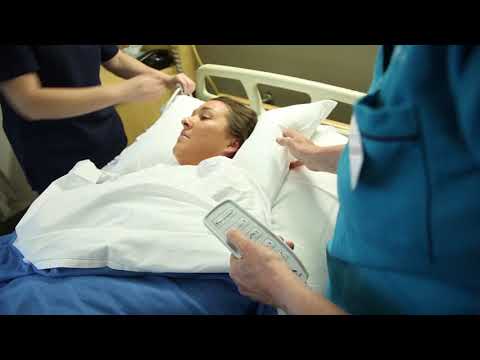
Pressure Injury Prevention - Repositioning
Western NSW Local Health District
3m 38s455 words~3 min read
YouTube auto captions
Transcript source
YouTube auto captions
This transcript was extracted from YouTube's auto-generated caption track. The transcript below is server-rendered so it can be read, searched, cited, and shared without opening the original YouTube player.
Pull quotes
[0:13]This video will outline a range of techniques to successfully offload bony prominences and reduce shear forces.
[0:13]Repositioning and mobilizing individuals is an important component in the prevention of pressure injuries.
[0:13]Extended periods of lying or sitting on a particular part of the body and failing to redistribute pressure on the body surface can result in sustained deformation of soft tissue and ultimately in tissue damage.
[0:13]Please take note, the emphasis on the bony prominences that you need to consider within these positions.
Use this transcript
Related transcript hubs
Watch on YouTube
Share
MORE TRANSCRIPTS


