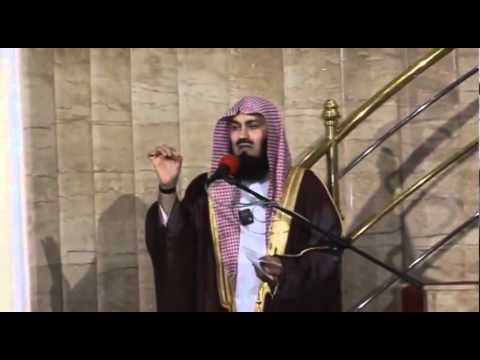
[0:02]Bismillahir Rahmanir Raheem In the name of Allah, the Most Gracious, the Most Merciful. SubhanAllah. Alhamdulillah. There is no god but Allah. Allah is the greatest. Par Excellence presents by Mufti Ismail ibn Musa Menk Assalamu Alaikum Warahmatullahi Wabarakatuh. Bismillahir Rahmanir Rahim. Alhamdulillah. All praise is due to Allah subhanahu wa ta'ala. Blessings and salutations upon Muhammad sallallahu alayhi wasallam. We ask Allah Subhanahu wa ta'ala to bless him and to bless every single one of us. And we ask Allah Subhanahu wa ta'ala to accept from us the first fast that we have fasted. And we ask Allah Subhanahu wa ta'ala to accept from us the second tarawih that we have engaged in. As I said, it comes with a lot of sacrifice. The month of Ramadan is a month of sacrifice. And it comes with really a lot of self-discipline and control. We cannot eat what we want. In fact, we will not eat anything through the day. And outside Ramadan, we would be grateful to Allah Subhanahu wa ta'ala to say, Ya Allah, if we could abstain from that which was permissible for your sake, then to abstain from that which is prohibited is far more simple by the will of Allah Subhanahu wa ta'ala. And also if we can engage in 20 extra rakaats, as is the case here with us, for the sake of Allah Subhanahu wa ta'ala, then the five daily salawat is not much. We ask Allah to grant us strength. And we ask Allah to open our doors. For indeed, this is a month where it is said, "Ya baqiyal khairi aqbil." Oh you who wants goodness, come forward. And oh you who intends evil, go back. So anyone who wants goodness, Allah Subhanahu wa ta'ala draws them closer and closer in this month. This evening I will continue from where I left off last night, and as you know, it was a the introduction of the series that we have commenced with, and I had ended where we were making mention of why is it that that the stories of the previous prophets are made mention of. And I made mention of one point, and I'd like to go further. But before I do that, it is important for us to highlight where we got the words stories from. Sometimes it does not sound appropriate to use the word stories when it comes to the Quran. Rather we'd say the lives of the prophets, someone might say we'd rather say something else. But if you look at the words used in the Quran, Allah subhanahu wa ta'ala says to Rasulullah Sallallahu alaihi wasallam, So narrate to them the qasas, the stories, in order that they may ponder. So these stories are narrated to us for what reason? That we may ponder and we may learn a thing or two. Rasulullah Sallallahu alaihi wasallam was told in the Quran,
[3:52]You were not there, oh Muhammad Sallallahu Alaihi Wasallam, at that mount when we called out to Musa alaihis salatu wasallam. But how did you know about it? We informed you about it. We are fortunate that Allah Subhanahu wa ta'ala has informed us as well about it. As I said yesterday, if it was not for revelation, we would never know what it was. So we have selected the word stories because it is the closest. In fact, in Surah Yusuf, Allah Subhanahu wa ta'ala says, right at the beginning, We are narrating to you the best of stories in that which we have revealed in this Quran. So that is the best of stories.
[4:42]So Allah calls it a story. Now, if we look at why or some of the other reasons that these stories are made mention of, it is in order to be a consolation and a comfort to Muhammad sallallahu alaihi wasallam and to anyone who wants to carry out that work. What does this mean? Allah says in the Quran, And each time we mention for you a story of those of the past, it is in order to comfort you, to grant you strength, to strengthen you, to be a form of consolation for you. When you know the stories of the past, you will be able to relate to what is happening now in your midst.
[5:43]And indeed in this Quran, the truth has come as a reminder for those who believe. So we ask Allah to grant us a reminder from these particular stories. Now let us commence from the beginning of creation. Right at the beginning, Allah Subhanahu wa ta'ala created the pen. And he told the pen, right, whatever is going to happen up to the end. That was the instruction of Allah Subhanahu wa ta'ala. How exactly it happened, we do not need to know. Why do we say we do not need to know? Because there are certain things that our brains and our minds are incapable of understanding. We will never be able to understand. In the same way that the other creatures have a brain according to their capacity, and they feel that they are sophisticated, and they feel that they have improved. So does man. Man feels he is so improved and he has eyes. Can you see what we call the unseen? The answer is no. We believe that there are jinnkind. Can we see them? The answer is no. We believe the angels come and go. Can we see them? The answer is no. Which means our eyes are restricted to a restriction placed by Allah Subhanahu wa ta'ala. So there are certain things if they are not in the Quran, we will not need to know them. If they are not in the correct Sunnah of Rasulullah Sallallahu alaihi wasallam, we will not need to know them.
[7:32]However, there are certain narrations known as Riwiyat Israiliyyah, the Israeli Riwayat. Who is Israil? Israil is the Prophet Jacob, may peace be upon him. He was also known as Israil, Yaqub alaihis salatu wasallam.
[7:50]Now there are narrations that have come to us via the people of the book, more so the Jewish clans and tribes who were there at the time of Rasulullah Sallallahu alaihi wasallam and before. So those narrations, how do we treat them? Because we find them, people have read them, and as I said yesterday, there are some similarities between all these revelations. There are three types of these narrations. One, those which the Quran or the Sunnah have negated and disagreed with. Those we would throw them out completely.
[8:44]Secondly, those which the Quran has confirmed or the Sunnah of the Prophet Sallallahu Alaihi Wasallam has confirmed, those we will take them, not because they were found in the riwayat Israiliyyah, but because they were found in our narrations, and they were found to be in conformance with what the Prophet Sallallahu Alaihi Wasallam brought.
[9:14]And the third type of narrations are those where the Quran has not said anything, the Sunnah has not said anything about it. It is not negated, nor is it confirmed. For those, we have a policy. We say, "La nusaddiq wala nukadhib." We neither believe it, nor do we disbelieve it. We hold it, we might read it, it might create a little bit of information in our minds, but we neither believe nor reject it. We do not actually need to know those details.
[9:50]So this is something very important. Allah Subhanahu wa ta'ala created the angels, and then he created the jinnkind. Very interestingly, he created another kind known as the binnkind. Ibn Kathir rahimahullah makes mention of this in one of his books, Al-Bidaya wal-Nihaya, which is the book that I've mainly used for this series as well. So he says in there that there was a certain creature or creatures of Allah Subhanahu wa ta'ala known as binn, the binn. And they were on the earth, and on the earth they created chaos and havoc, and so on. So Allah sent the jinn to deal with the binn on earth. So the jinn came in and they dealt with the binn, and they overcame them and overpowered them and destroyed them completely. And who was the head of the jinn? One known as Iblis. One known as Iblis. So he was very, very proud of his good deed. This is why we say a lesson drawn from this, whenever you do a good deed, don't let it make you arrogant and think I'm holy, I'm pious. The other one is nothing. No. We do not judge books by their covers, number one. And number two, no matter what level you are on, look at those who are above you and tell yourself, I have not got anywhere yet. May Allah Subhanahu wa ta'ala grant us goodness. And there is a chance that those who might appear to be lower than us, they might overtake us, a long, meaning very, very far, they will be ahead of us at some stage. So if we are to talk about them, thinking that these people are below us, who knows, Allah might create a day when they will overtake us. So what happened to Iblis? He became very proud, he was so happy. So happy that whenever the people whenever the those in the heavens were addressed, he was addressed as one of them. He used to be addressed as the angels. You know, I like to give the example of a donkey, and I say, when people have come to visit you, the whole community came and they came riding on their donkeys.
[12:19]You say the community came to visit us, but you didn't say their donkeys also came. Because the donkey is part of the community. It's come and it's now come to you, you don't make mention of it. So when Allah speaks of Malaika, Iblis was also included in it. Iblis was also included in it, but he was not from amongst them. He was just included because he happened to be a good person. Like nowadays we say, oh, he's such an angel or she's such an angel and so on. Do we really mean they have joined the ranks of Jibril? The answer is no. But what we mean is they are very good and so on. So he was good at the time. Then Allah Subhanahu wa ta'ala thereafter informed the angels of something very important in Suratul Baqarah. Imagine right at the beginning of the Quran, Allah is speaking about it. Very interestingly. And remember when Allah Subhanahu wa ta'ala, your Rab, told the angels that I am creating a khalifah on the earth. I am creating a khalifah on the earth. What is the meaning of a khalifah? It has two meanings.
[13:24]Two important meanings. One is one who stands in the place of someone else, or one who assumes the position of another. Important. So that is the first meaning. Khalifah. They say this person is a Khalifah of Rasulullah Sallallahu alaihi wasallam. That was Abu Bakr as-Siddiq radiyallahu anhu. They call them Khulafah. Those who came and assumed the position of the other and they continued the work. So that is the first meaning. The second is more appropriate. One who succeeds another. Those who come succeeding one after the other. So think about it carefully. The angels, they don't die. The jinn kind, Allah knows, but they live very long. They don't succeed. They actually live very long. But everything on earth, what happens to it? It has a lifespan, and it continues. Adam alaihis salatu wasallam came, and after a while, his children continued. He was gone. His children went, and others came. Then they were gone, and their children came. We are here, we will go after a while. So we are only here for a period of time. This is also known as Khalifah. One who succeeds another. We have succeeded those before us, and those after us will succeed us. That is also the meaning of Khalifah. So when Allah says, "Inni jali fi al-ard Khalifa." I am putting on the earth a khalifah, it would also mean those who are coming one after the other. They will not last until the end of the earth, but they will come one after the other. So immediately the angels, they they uttered something. They said, "Ata j'alu fiha man yufsidu fiha wa yasfiku al-dima?" Oh Allah, are you going to create someone and place them on earth, who are going to cause chaos, and they are going to spill blood, and they are going to do a lot of damage on the earth. And yet we are here, we are declaring your praise, we are worshipping you. What did Allah say? "Inni a'lamu ma la ta'lamun." I know that which you do not know. Knowledge is with Allah. Allah Subhanahu wa ta'ala had a purpose to create Adam Alaihis Salam. It's important for us to know this purpose and aim because we have succeeded them. We are now on earth. Adam alaihis salatu wasallam is no longer alive here with us. So we need to know why is it we were created? So Allah Subhanahu wa ta'ala continues. This discussion is so beautiful. It is mentioned in Surah Al-Baqarah. And Allah Subhanahu wa ta'ala says, thereafter that he created Adam. Let us spend a few moments. How he created Adam alaihis salatu wasallam. The Quran uses several words. It uses the word turab. It uses the word tin. It uses the word salsal. It uses the word hama'in masnun. What are these words? One is dust, one is soil, one is clay, and one is the dark clay. So why all these words are used for the same creation? Because it is depicting different stages in the creation of man. Let us move further. Amazingly and interestingly, Allah took dust from the earth. And that dust was taken from different parts of the earth. And you and I know that the soil on the earth is different colors. You have red, you have slightly lighter color, you have a darker color, you have different shades of brown and so on. So there were different shades and different colors. And he took these from different parts of the globe, from the valleys, from the mountain tops, from the sandy regions, from the rocky regions, and so on. And Allah Subhanahu wa ta'ala put it all together. This is why in mankind, nowadays we use the word genes, not referring to those hipsters that people wear. No. The genes within man, what what do we understand? If it is in your genes, if something is in your genes, there is a likelihood that it will be passed on to your children. Hereditary. So Adam alaihis salatu wasallam was created from different types, different colors, and different qualities. So from his progeny, there are different colors, and there are people who are easy to get along with, people who are very difficult to get along with. People who are hardcore, strong, powerful, and people who are weaklings. Allah Subhanahu wa ta'ala grant us the middle path. And Allah Subhanahu wa ta'ala make us from amongst the best. So Allah Subhanahu wa ta'ala created all of them so differently. And this is why we have different colors, and this is why we have different shades, different attitudes, and different characteristics and characters. We ask Allah to grant us the best of all. And we ask Allah to open the doors for us and our offspring. And we ask Allah Subhanahu wa ta'ala to have mercy on us at all times. So Allah Subhanahu wa ta'ala then speaks about how he created this man. Do you know that the narrations make mention of the fact that Allah Subhanahu wa ta'ala first had this dust, and then he added water to it, it became soil. And then he shaped it up, it became clay, and he left it. He left it for a while. And then he speaks about the word used in the Quran is kal fakhkhar. Al fakhkhar meaning the pottery, the clay of pottery. Why does he say similar to the clay of pottery, but not exactly the clay of pottery? Because for the clay of pottery, heat is used. For man, no heat was used. Subhanallah. No heat was used. So if Allah said the clay of pottery, it would mean heat was used. But he says similar to that clay of pottery, because there is one thing missing. Allahu Akbar. So Allah Subhanahu wa ta'ala thereafter, he left man. Now what was the size of Adam alaihis salatu wasallam? Very interestingly, the narration says 60 feet. Now what is a foot? A foot, one would say is about roughly from your elbow to the top or to the wrist, and so on.
[19:33]One might say roughly 30 cm. However, maybe the feet at that time might have been one meter. So he was either 60 meters or he was either, if we were to calculate it with today's feet, 18 meters. Either way, he was huge. Just imagine Allah Subhanahu wa ta'ala created Adam alaihis salatu wasallam, and the hadith says, "khalaq Allah Adam ala suratihi." Allah created Adam upon his image. Now what is meant by this? Ask the Christians, they'll give you a totally wrong answer. They'll tell you it means man was created on the image of God. Astaghfirullah, that is wrong. It is simple to understand. When me and you were born, how were we created? A little seed began to multiply. And thereafter, the form was given slowly but surely. But with Adam alaihis salatu wasallam, it was different. Allah created him on his image from day one, which means he was already big, he already had size, he already had eyes. That is the meaning of creation in his image. Not the image of Allah. But Adam was created in the image of Adam, holy in those meters, he was already an adult when he was created. So this is the meaning of it. We must never be confused and think that, you know, they say Jesus came in the form of God. Astaghfirullah, that is totally wrong. It's a mistake. According to us, we cannot discuss that matter with Allah Subhanahu wa ta'ala because we would need to see him and none of us have. So when it comes to Adam alaihis salatu wasallam, Allah left him. And when Allah Subhanahu wa ta'ala left him, for a period of time, he had a certain very, very pious, very pious being, who was known as Iblis. Who happened to think now, why is Allah doing this? You know, I went on the earth, and I sorted things out on the earth, and I went to engage in such great acts of worship. And here we have Allah creating someone else. So he began to look up and down in his literally monitoring this creature, and he's trying to look and see and survey and take a look at what's happening. And he's seen the the size, and he's seen the belly, he's seen the stomach. One narration says when he checked, it's hollow. He says, oh, I know I can control this.
[22:18]I know, "La yatamalak." You know what that means? He is not consistent. This man will not be consistent. We'll be able to push him this way or that way. And he already made a promise. Before the ruh, or the soul was blown into Adam alaihis salatu wasallam, you find Iblis making a promise. He looks at this this, uh, more or less a statue, which is now lying. And he says, no. If I have an opportunity, I'm going to lead you astray. And if you are made to be higher than me, I'll never follow you. This is what Iblis says. From that time, what was the sin? The sin was he thought he was too holy. This is what it is. This is why let us be careful. Allahu Akbar. When Allah Subhanahu wa ta'ala has granted us the acceptance to fulfill salah, let's not think we're doing him a favor. Wallahi, we're doing ourselves a favor. And let's not think we better than the other, who knows that person might be sacrificing much more than us in a different way, and they might be closer to Allah Subhanahu wa ta'ala than us. So this issue of becoming too holy or feeling that I am it. What does it make us do? May Allah protect us. It might make us look at others with with an inferiority, meaning that they are inferior to us. We would have a superiority complex, so to speak. May Allah protect us. That's what happened to Iblis. So when Iblis looked at this, he was very, very upset and angry, and he made his promises. Then Allah Subhanahu wa ta'ala began, or he he blew the ruh or the soul into Adam alaihis salatu wasallam. And where did it start from? Very interestingly, it started from the top, from the head. So the most honored, the most honored organ that we have is the brain. That is what distinguishes us from the rest of creatures. We have a brain. Allah gave it life first before everything else. Then as the soul came, meaning as the life began to come, everything was turning into flesh and blood, flesh and blood. From soil, it was becoming flesh and blood. And the brain came alive. Then the eyes came alive. And Adam alaihis salatu wasallam suddenly opened his eyes. Mashallah. Imagine, what must have happened? An adult opening his eyes, granted full knowledge. Allah says in the Quran, "Wa allama Adam al-asmaa' kullaha." We taught Adam alaihis salatu wasallam the names of everything. So we brought everything that was in creation, and we told him, this is a tree, this is a stone, this is a mountain, so on. So he was already taught. He was not like us when you're born, and then you slowly learn, and you learn to say Allah, and then you learn to say something else, and then you learn to say daddy and mommy. No, it was not like that with Adam alaihis salatu wasallam. He already knew the words and the names of everything. And Allah Subhanahu wa ta'ala speaks about that in the Quran. So as his eyes opened, he was so happy. He's seen all his fruits and so on. He already understood what it was. And what happened as the soul was blown, and it was the life came into his nose and his mouth, he sneezed. He sneezed. So sneezing is a sign of goodness. It is a gift of Allah Subhanahu wa ta'ala which protects you from illness. That is a sneeze. So, one narration says the angel said, "Oh Adam, thank Allah." So Adam alaihis salatu wasallam says, "Alhamdulillah." He says, "Alhamdulillah." All praise is due to Allah. This is where we get it from. All praise, when you sneeze, you should utter all praise is due to Allah. So a narration makes mention of how Allah Subhanahu wa ta'ala responded to him, that Allah has had mercy on you, oh Adam. Hence, what happens? When we hear, when we sneeze, we say, "Alhamdulillah." If we hear someone say, "Alhamdulillah," we should say, "Yarhamuk Allah." We should say, Allah has definitely had mercy on you. That is the beauty, and this is where it started, and this is where it came from. So as life came into his hands, he stretched out to get what? Amazing, amazing. He stretched out to get what? What he was seeing. He was seeing the fruits of Jannah. So he's stretching out, but life had not yet come onto his his legs. So he couldn't get there. And this is why the Quran says, "Khuliq al-insan min 'ajal." And in another place, Allah says, "Wa kanal-insan 'ajula." Man was always in a rush. Always making haste. Look at us. How do we treat life? Life is like this much, so to speak. From this point to that point. And we try to get as much as we can between this point and that point. And we want to fill it, as much money, as much knowledge, as much this, as much that. Let us hope that we as Muslimeen can get as much tarawih into there, and as much Quran into there, and as much sacrifice into there, and as much obedience of Allah into there. So that by the time we get to the other point, we can be granted entry into Jannah, as we mentioned yesterday. May Allah open our doors. So very beautifully Allah Subhanahu wa ta'ala makes mention of how man was always in haste. Then Allah Subhanahu wa ta'ala, after he created Adam alaihis salatu wasallam, he instructed the angels to prostrate. That prostration was not to worship him, but only in order to recognize and to acknowledge his status. His status was raised higher than all of them. So Allah says to recognize that status, prostrate. And remember when we told the angels to prostrate to Adam, they all prostrated immediately besides Iblis. Now why didn't he? Allah makes mention of it in so many places. In Surah Al-Baqarah, he says, "Abba was takbara wa kana minal kafirin." He refused out of arrogance, and he became from amongst those who were disbelievers. This was the first sin being committed against Allah Subhanahu wa ta'ala. The first sin. He refused out of arrogance. So what is the meaning of arrogance, istikbar? The Prophet Sallallahu alaihi wasallam says that arrogance is not when you wear good clothes, or when you drive a good vehicle. No. It is when you reject the truth and you despise people. Look at that translation. So beautiful. Whenever anyone rejects the truth, they are proud, they are arrogant. Whenever anyone despises other people, they are proud, they are arrogant. Remember those two, because a lot of people don't understand the meaning of pride. You look at a man, mashallah, in good clothing, and you say, look at that uncle, he's proud. Astaghfirullah, that statement of ours is actually pride.
[29:56]May Allah Subhanahu wa ta'ala grant us a deeper understanding. Because the Sahabah radiyallahu anhum asked the Prophet Sallallahu alaihi wasallam, Ya Rasulullah, when you say, "La yadkhul al-jannah man kana fi qalbihi mithqala habbatin min khardalin min kibr." That nobody will enter Jannah if they have got even a mustard's weight of pride in their hearts. We like to wear good clothing. We like to have a good conveyance. The Prophet Sallallahu alaihi wasallam says, no, that's not what is pride. Pride is when you reject the truth, and when you despise people.
[30:43]So Iblis was the one who showed that pride and arrogance. In another place in the Quran, Allah Subhanahu wa ta'ala says, "Kana minal jinni fasqa an amri rabbihi." He was from amongst the jinn kind. You see, he was not from amongst the angels. Allah says, he was from amongst the jinn. Now the Malaika, the angels were created from nur, from light. And the jinn were created from a smokeless fire. That Allah Subhanahu wa ta'ala makes mention of even in Suratur-Rahman. And this is why there was a difference between them. And where did this difference show? It showed when man was created. Now the two were differentiated. And then Allah Subhanahu wa ta'ala says to Adam alaihis salatu wasallam, in fact, before that, Allah questions Iblis. "Ma mana'aka an tasjuda lima khalaqtu biyadayy?" What is it that's stopping you from from prostrating to that which I've created with my own hands? Allah says, what is it that is stopping you from prostrating to this that I have created? Do you know what he says? He says, "Ana khairun minhu, khalaqtani min narin wa khalaqtahu min tin." I am much better than him. You made him from dust, and you made me from fire. How can I prostrate to him? He must prostrate to me. Who is he? Now let us look into our lives. As we said, we want to draw lessons from this. We don't just want to mention the history. The lesson is, never underestimate the next person. Never. Don't think this man is poor, this man is not good-looking. This man is like this, or this woman is like that, or she has this, and she has that. So I am better. Not at all. Wallahi, we are taught, "An-nasu sawasiyah ka asnanil misht." People are equal, like the teeth of a comb. You seen a comb and its teeth? We are all equal, exactly like that when it comes to access to Allah Subhanahu wa ta'ala. Allah loves you as much as he loves me. He's waiting for you to turn to him, as much as he's waiting for me to turn to him. So nobody should think that, no, one is better than the other. May Allah Subhanahu wa ta'ala open our doors. And here we are speaking of the personal thought. If we feel that someone is pious or someone is closer to Allah Subhanahu wa ta'ala, that is different. But we are talking about feeling that someone is inferior, and feeling that someone is lower. May Allah Subhanahu wa ta'ala never, ever make us from those who look down upon other people. So Allah Subhanahu wa ta'ala speaks about how this Iblis refused, and he's debating with Allah. And he told Allah Subhanahu wa ta'ala, "La'in akhartani ila yawmil-qiyamah." If you give me respite up to the Day of Judgment, the day when everything is going to come to an end, then I will show you, "La ahtani dhurriyyatahu illa qalila." I will lead astray all that progeny that you spoke about, that will follow him, except a few. Who are those few? Allah Subhanahu wa ta'ala makes mention of them. "Inna ibadi laysa laka alayhim sultan." Those who are my true worshippers, you will not have any authority over them, oh Iblis.
[34:10]You won't be able to handle them or to control them. So let's take a look at what happened. When Adam alaihis salatu wasallam was now standing, and Allah Subhanahu wa ta'ala taught him all the names, Allah Subhanahu wa ta'ala told him to go to the angels. And he was told to greet the angels. This is a narration which is correct, and it's authentic in Sahih Al-Bukhari. He went up to the angels, as instructed by Allah Subhanahu wa ta'ala, and he was told to tell them, "Peace be upon you, Assalamu Alaikum." When he greeted them, they greeted him back, "Wa alaikumus salam wa rahmatullah." So this is our greeting. You see where we get it from? And this is why even the the previous nations, or those who have the other books, the people of the book, they are also taught to greet in a similar way. But a lot of them have lost it to the highs and the buys and the yo's and what have you. May Allah protect us. Yes, this is what has happened. We used to have a yo-yo when we were young. It's a little thing that goes down. After that, we heard them cutting it in half and giving it to you as a greeting. Allahu Akbar.
[35:24]May Allah open our doors. Really, we have a beautiful greeting, may peace be upon you. For your information, do you know what it means? It means I guarantee you I won't harm you. Because if I am saying may peace be upon you, from what? From my harm. So I'm not going to harm you. There's peace from me. So we are friends basically, we are together. And this is why it is hypocritical to greet a person and say, peace be upon you. And then behind his back you are busy stabbing him and so on. Allah Subhanahu wa ta'ala safeguards. This is why in a narration, the Prophet Sallallahu alaihi wasallam says, "Ala adullukum ala amrin idha fa'altumuuhu tahabubtum afshus salama baynakum."
[36:12]Should I not show you that which if you were to spread it properly, it would it would spread the peace and the love between you. What is it? Assalam, the correct greeting in the proper way without hypocrisy. We ask Allah Subhanahu wa ta'ala to make us from those who can love one another, solely because we share, "La ilaha illallah Muhammadur Rasulullah Sallallahu alaihi wasallam." So Allah Subhanahu wa ta'ala speaks of this and how Iblis, may the curse be upon him, already did this. Then Allah Subhanahu wa ta'ala says, "Tell those angels the names of all these things." And Allah brought all the things in front of the angels. So Allah asked the angels first, do you know the names of these things? And they said, we don't know what Allah knows. Allah knows, we don't know. So Allah says, "Ya Adam anbi'hum bi asma'ihim." Oh Adam, tell them the names of these things. And Adam alaihis salatu wasallam began to recite, this is a tree, this is a stone, this is a mountain, this is this, this is that. The angels were shocked. They were shocked. They were amazed. Things they didn't know, Adam alaihis salatu wasallam knew. This is when they said, oh Allah, you are the knower of the unseen. And Allah says, I know that which you don't know, didn't I tell you? But there is something else that Allah Subhanahu wa ta'ala referred to as well when he said, I know that which you don't know. Let's get to it. Iblis was very, very angry. He already made his promises. And now what happened? Allah Subhanahu wa ta'ala says,
[38:12]"Wa qulna ya Adam uskun anta wa zawjukal-jannah wa kula minha raghadan haythu shi'tuma wala taqraba hadhihish-shajarata fatakuna minaz-zalimin." We told Adam alaihis salatu wasallam, that you can dwell here with your wife, and you will live in Jannah with her. Have what you want, eat what you want, do what you want, but there's one thing that I don't want you to do, and that is that tree, you don't eat from it. The one tree, you don't eat from it. Now one might say, well, why is it that Allah decided that he wants to have prohibitions? Someone asked me why did Allah create the pig if he doesn't want us to eat the pig? Good question. When you have a mathematics test, do they only teach you addition? You have subtraction as well. Allahu Akbar. Do they only teach you multiplication? You have division as well. So you know how to go this way, and you know how to go that way. You are tested this way, and you are tested that way. There is a different part of your spirituality that is enhanced when you engage in in fulfilling the commands. And there is a different part of your spirituality that grows when you abstain from prohibitions. Allahu Akbar. That is Allah.
[39:45]So Allah Subhanahu wa ta'ala kept one thing. And what we learn from this now is most of the things are permissible besides a little list. Just like there, everything was permissible besides one item. Now, there is a question. How did Hawa or Eve, may peace be upon her, come about? It's a very interesting question, and it has a beautiful answer. According to some of the narrations, Adam alaihis salatu wasallam was the only species, the only of his kind. Mankind, one. There was no one else. Naturally, he was feeling lonely. Lonely because the angels, they are so many. This, they are so many. Me, I'm only one. So he used to want company. He used to ask Allah for company, something that would grant him comfort. One day when he got up, he noticed someone looking very similar to him. What do we learn from this? A woman was given to a man as a gift after great prayer. Mashallah.
[41:04]So we ask Allah Subhanahu wa ta'ala really to make us from those who can appreciate that and who can understand it. Because many people forget this and they don't realize that this woman was actually a gift. But let me quickly also remind the sisters, live your lives in such a way that you are like a gift, not a burden. Amen.
[41:35]So Allah Subhanahu wa ta'ala says that this Adam alaihis salatu wasallam had Hawa standing right next to him. And the Quran says at the beginning of Surah An-Nisa, Allah makes mention of how he created a woman. And he says, we created from him, meaning from Adam, his spouse, his wife, which means Hawa. Now there are certain people who are embarrassed, and they say, no, we weren't created from man. Well, why be embarrassed? We were created from dust, from soil. At least you were created from something which was already living. Allahu Akbar. Subhanallah. There is nothing embarrassing. We are there right now. Let's talk of where we are now. This is history. No need to deny a sahih hadith and no need to deny a verse of the Quran. Clearly, it says this in the opening verses of Surah An-Nisa, that Allah created man, and then he created a woman from the man. So, the hadith of Abu Hurairah radiyallahu anhu in Sahih Al-Bukhari makes mention of the rib of Adam alaihis salatu wasallam. There is nothing wrong with being created from a rib. And when the hadith speaks about how a rib is bent, and how the top of it is bent, and if you try to straighten it, you might crack it. So be very, very careful how you treat your women. I think a lot of the women don't understand that hadith. And they take it personally, and they take it wrongly. They think it's an insult. Wallahi it's not. All it is, it is telling the menfolk that be careful how you handle the women. Be very kind to them. Be very tolerant, and be very, very patient with them. Because if you want to straighten them like a pin, you might end up cracking them, which is true. You can't have your wife exactly as you want. No. No two human beings are the same, not at all. You know when I was young, we were always told the five fingers are not the same. One day my dad came along and he says, well, if you make an effort, they can all be one. You see, you need to bend one and change the other one and do this to the other one. Then you get all of them in one line. So it means an effort is required for us to be on par. You there is a give and take. May Allah Subhanahu wa ta'ala grant us goodness.
[44:28]Then there is the issue of Iblis, who thought of his plan. He was sitting in Jannah there, he's watching, he's seeing, look, Allah made one prohibition. I promised Allah that I'm going to come to Adam. The thing is, he knows me. And Allah warned Adam alaihis salatu wasallam. Allah Subhanahu wa ta'ala warned him. And Allah says, watch out for Iblis, let him not take you out of the goodness you are in.
[45:15]Allahu Akbar. "Wa la yukhrijanna kuma minal-jannati fatashqa." Be careful that he doesn't take you out from all this goodness that you have in this garden here, because then you will be unfortunate. You will be very unfortunate if you fall into his trap. Allah says, "Inna laka alla tajua fiha wala ta'ra wa annaka la tazma'u fiha wala tadha." You will neither be hungry in it, nor will you ever need clothing. You won't be naked in Jannah. Nor will you ever be thirsty, and you will never ever get tired. There is nothing. So Allah Subhanahu wa ta'ala says, enjoy, enjoy as much as you want. The only thing I want you to do is to make sure that you've understood the the enmity that this one has against you. The enmity, that this one has against you, understand it. And he has promised he's going to lead you astray, be careful. So now one day Iblis goes, after some time, he goes to Adam. And he says, "Ya Adam hal adulluka ala shajaratil-khuldi wa mulkill la yabla?" Look at what plan he used. He says, oh Adam, can I show you the tree that if you eat from it, you won't die? You won't die at all. You'll have life forever. And you will have lots and lots of belongings that will never stop. You'll own absolutely everything. Mulkin la yabla. You will have so much kingdom, that it won't even finish. So Adam alaihis salatu wasallam turned to him, that's the mistake. You don't turn to Shaitan. Allah says in the Quran, "Wa imma yanzaghannaka minash-shaytani nazghun fasta'idh billah." When Shaitan, when you feel the slight whisper of Shaitan, immediately seek the protection of Allah against Shaitan. When you feel the whisper, don't even have bad company. Don't even go in that direction. Don't even want to listen to him. Immediately throw it out and say, "A'udhu billahi minash-shaytanir-rajim." This is what Allah says. So Iblis managed to get the ear of Adam, and Adam alaihis salatu wasallam heard it. And he tried again, and he tried a third time, and a fourth time. After some time, Adam alaihis salatu wasallam, he decided together with his wife, that now let's just have a taste of it. What are we going to lose? We have a taste. Why? Because he now had forgotten that it was prohibited. Where do we get this from? The Quran says, "Wa laqad ahidna ila Adam min qablu fanasiya wa lam najid lahu 'azma." And we had made a promise with Adam before, but he forgot about it. And we did not found him to be resolute. What is the meaning of resolute? He did not make a firm intention to sin and to transgress against Allah. We found when he did what he did, it was not intentional, he made a mistake. It's clear in the Quran. This is why yesterday I said that the Prophets of Allah, they did not intentionally commit sin, they did not commit sin. They were protected by Allah Subhanahu wa ta'ala. In the case of Adam alaihis salatu wasallam, there's a hadith in Sahih Al-Bukhari where he meets Musa alaihis salatu wasallam, and he says, "Oh Musa, may peace be upon them all." He says, "You, Allah has spoken to you and he has chosen you to be spoken to." You went to kill that man. You're talking about me. How can you blame me for something that Allah had already decreed prior to my creation, and he made it part of my creation for me to get onto the earth? And Musa alaihis salatu wasallam was quiet. Allahu Akbar. That is a narration in Sahih Al-Bukhari that is made mention of. So we don't blame Adam alaihis salatu wasallam. It was his, it was supposed to be in order for him to come onto the earth. A question that comes up, many people think that it was Eve, it was Hawa, may peace be upon her, who was the one whom Shaitan had conned. There is no evidence for that. That is just something that people say in order to try and blame women. And they also say, well, the woman was the first one who sinned. And the woman is the one because of her, we are all astray, and so on. There is no concrete evidence, neither in the Quran, nor the Sunnah. In fact, the Quran speaks about Iblis talking to Adam. "Qala ya Adam hal adulluka." Iblis said, oh Adam, can I show you? Then Allah says, "faakala minha." The two of them ate together. That's what Allah says. So why blame one the other? May Allah Subhanahu wa ta'ala grant us the ability to take the blame when it is supposed to be on us. Because we all sometimes want to lay that back on someone else. We learn from this that whenever it is our fault, just admit it. Don't try and pass the buck onto someone else, just to blame them so that we can come out Scot-free. So Allah Subhanahu wa ta'ala says, they ate from that tree. And when they ate from the tree, do you want to know what happened? Allah Subhanahu wa ta'ala says, "Fabadat lahuma saw'atuhuma wa tafiq yasfani alayhima min waraqil-jannah." Immediately as they ate, their private parts began to show, and they ran to the trees of Jannah, and the leaves of Jannah, and they tried to cover themselves. Allah said moments ago that you will never be, you will never need clothing because your private parts will not show. And Allah says, you will not need this, and you will not need that. But once they ate from the tree, they began to feel the need to cover themselves. That was the first thing. They were now full of shame. They were ashamed of their deed, number one. And number two is they had to cover themselves. And then Allah Subhanahu wa ta'ala says beautifully in the Quran, this is going to be the last point for this evening. Allah says, "Fatalaqqa Adamu min Rabbihi kalimatin fataba alayh." Adam alaihis salatu wasallam received certain words from Allah. So Allah forgave him after that. What were these words? Powerful words. The first time in the history of existence, someone was taught how to seek forgiveness.
[52:25]That act of worship known as taubah and and repentance, it was never ever engaged in before. No, never. Allah taught it to Adam first. This is when the angels were in shock once again. Now we see this is an act of worship that nobody has engaged in before. Allah taught Adam a few words. So he received those words. And immediately he uttered the words. What did he say? "Qala Rabbana zalamna anfusana wa illam taghfir lana wa tarhamna lanakuna minal-khasirin." He and his wife, both of them, they said, Oh our Rab, oh our Rab, we have oppressed ourselves. We have wronged ourselves. And if you are not going to have mercy on us. If you are not going to forgive us, we are going to be the losers, ya Allah. So forgive us, ya Allah. And Allah says, we forgave him immediately. Allahu Akbar. What do we learn from this?
[53:45]We learn from this, this man, one of the most powerful acts of worship that man can engage in is istighfar. Repentance, asking for forgiveness, because that is what man was made for. Man was given the free will, but unlike the angels who do not have the ability to sin, man has the ability to sin. But he is asked to abstain from it, and wherever he has fallen, he needs to immediately ask Allah's forgiveness. This is why so many places in the Quran, Allah Subhanahu wa ta'ala says, oh mankind, those of you who have oppressed against themselves, never lose hope in my mercy. I will forgive all your sins. All that is required is for us to ask Allah Subhanahu wa ta'ala to forgive us.
[54:55]So it's important we learn the lesson. There are four things required when we want to ask Allah's forgiveness. Firstly, to admit the sin.
[55:12]Secondly, to regret over it. Thirdly, to ask Allah to forgive it. And fourthly, to promise that we will not do it again. Once those four conditions are met, nobody needs to know your sin. Not a single soul. Between you and Allah, it is wiped out. Allahu Akbar. Don't have a doubt in your heart and in your mind. May Allah Subhanahu wa ta'ala grant us the ability to understand those four conditions. And may he make us from those who can fulfill it. Insha'Allah, we will continue tomorrow, and insha'Allah we ask Allah to forgive us our sins. And we ask Allah to open our doors. Until we meet again, we say, "Wa sallallahu wasallam wa baraka ala Nabiyina Muhammad. Subhanallahi wa bihamdih. Subhanakallahu wa bihamdik. Nash'hadu alla ilaha illa ant. Nastaghfiruka wa natubu ilayh."


