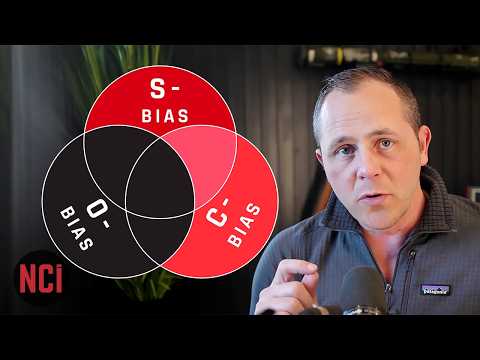
[0:00]What if I told you that tonight's lesson is worth over $6 million? Because it shows you vulnerabilities that nobody else can see. No other coach can see it, no other performance expert can see it. If you're doing persuasion stuff, nobody is going to know how to do what we're doing tonight. So after 20 years of like working with the best people in this field, we'd fly them out to meet us and they all had problems with their techniques. They couldn't perform, they couldn't deliver. They couldn't do it on a whim, they couldn't do it using a random example. None of them could perform, and these are the people that when you think of influence or persuasion, you know all of their names. And they had trouble performing in front of a board, in random scenarios, doing that they write books about, just doing basic stuff. They're like, oh, I might need an hour explain for that. Our operatives don't have that time and you're supposed to be an expert. You should be able to do this ad hoc. Anybody should be able to give you a scenario and walk through this. So, it's after that, that I developed this system. And I had to develop a way that I personally could hand somebody a chart in the government. I'm going to give you this chart as the government official, see is this persuasion expert? Is this sales team good enough? Are they faking their way to the top? And I'm going to literally give you the most detailed description of this method tonight that I've ever in any human being in my life. And I'm going to show you this thing that is going to tell you where you are personally failing in tradecraft development. It also going to show you how to find a fake expert. So if your coach or something like that, you'll be able to very covertly see where somebody's blind spots are. And you'll be able to fix it just about instantly. And if you don't want to do it covertly, I'm also going to give you just an overt system that instantly identifies where somebody's at. So really quick, how often do you tell yourself that you're in total control of your life and your actions? So, do you agree that needs drive human behavior? I hope so. But do you also agree that when this happens that people are going to be driven to action? If the circumstances are right for them to meet the decision map criteria. So if I'm driven to action and the decision matches up with my decision map, I'll probably take some action. But that can happen to us without really knowing it, and that can happen to sales team, especially leaders of teams. And I personally believe that knowing yourself is the most powerful way to be in control of what's going on in your life and with other people. So you'll see the same depth of others, in my opinion, that you're able to see within yourselves. So if you study maybe your profiling and you have no idea who the F you are, you've got a problem. Because all you're going to be doing is seeing yourself and other people. Another word for that is judgment, which is kind of our national pastime. So think about your own tradecraft first, and only then should we be processing this as something that's about those other people. So if we're talking about a profiling system, I try it first. There's three biases we're going to dig into tonight. And the first one is called survivorship bias. So survivorship bias is something that all of us suffer from. And in persuasion, it's huge. It's a logical error where we're presented with some data and it's representative of some percentage of stuff that has survived a few pieces of a process. So I'm viewing data that has survived a process. Think about that for just a second. I might be only viewing data that survived a process, and I might be ignoring the data that did not survive the process. So how many times do you hear somebody tour like an old building or an old church or museum that's like thousand years old or if you're in the US, it's like, wow, this building's 200. And that's super old, but how many times have you heard somebody say, wow, you know what, back in that day, they just made much more stronger and more beautiful buildings that just were meant to survive. But they also ignored that this is one of the only buildings that exists that has really survived that long. So just about any building you look back, back in the time when this building did exist, was a total piece of doesn't exist. They were cheap, they were easily made, they were easily destroyed. So our society, all societies I think, focus on survivors and winners. And this is natural for us because four, five, 10,000 years ago, we're not going to go talk to all of our tribe members that were eaten by the sabretooth tiger. We're going to talk to the tribe members that survived, right? And that was important data. We can't collect the non-data data. Inside of survivorship bias, let's do an example of a company. Let's call it Zenith Solutions. And it's a big ass software company, and this team is led by Martin. And it's a manager who firmly believes in emulating the top performers. Sound familiar? So Martin just meticulously studies all these strategies and stuff of these top two sales people in the company, let's call them Angela and Derek. And they've consistently outperformed everybody else. So Martin is just totally convinced that their methods are the gold standard. So he mandates everybody on the team adopts some of these semi-aggressive sales tactics. And maybe he's got some fast-paced client follow-up, maybe some high pressure closing thing stuff going on. So he builds these workshops and these training sessions where Angela and Derek have to share their approaches. And completely ignores that there's diverse strategies going on that all the other members are using. But Martin ignores the less successful sales attempts and the failures, and just it's a lack of effort or lack of skill instead of opportunities for change. So he encourages his team to focus solely on replicating these success stories. But the narrow focus obviously starts backfiring in any sales team, any persuasion strategy, whatever. The team gets increasingly and increasingly frustrated because there's a one-size-fits-all strategy. If you've been in mastery more than like 24 hours, you know that doesn't exist here. I don't teach anything remotely close to that. Sales figure stagnate, customer feedback is like growing dissatisfaction with his aggressive sales approach. What does Martin do? He's going to 10X it. He's going to 10X that sales process. He's going to do 10 times more. He's going to 10X the business by doing 10 times more training. Ups the trainings by 10X, then the customer complaints go up by 10X. Sales probably go down by about 10X. Now we're going to cover confirmation bias. Now I want you to get this in a persuasion way, not in a way like, oh, I learned about that in college. I wrote it on the back of a note card, so I know what it is, and I'm very familiar with it, Chase, because I've, you know, I passed that exam. Please delete that just temporarily. If I could access the spot that doesn't know, if I could talk to that piece of you right now. So confirmation bias is our tendency to search for, interpret, prioritize and remember information in a way that confirms our beliefs and our hypotheses. Social media is a confirmation bias machine. It is artificial intelligence programmed to manufacture cognitive bias. You're looking at one of the people who helped initially with that stuff. So let's do another example here. Just to kind of show you how it might look in a sales team and I'm only using sales team, not that I think everyone here is in sales. I'm using sales team because it works no matter what. You're talking about your own strategies, your own techniques, it's exactly the same. So let's do a different character now. This guy's name is Dwight Schrute. He's a sales consultant for a paper company. And he's super fascinated by the power of language and in linguistics and sales, and he firmly believes that the perfect sales script. Which is just loaded down with persuasive language and patterns and psychological triggers is the magic key to closing any deal in the world. So Dwight spends countless hours crafting, refining, and memorizing these elaborate sales scripts. So he reads really extensively about linguistic persuasion techniques, goes through these workshops, learns all these linguistics and stuff. So Dwight then goes and trains his team to strictly adhere to these meticulously, perfectly, scientifically designed scripts. And he's convinced that deviation from the script leads to lost sales. So he collects data on the successful sales calls. Attributing all the success to the effectiveness of the scripts. So when sales people bring up the importance of like building rapport, being a good person, having empathy, listening to somebody, adapting to another human being's personality. Dwight says false. And he dismisses these aspects all just off hand. And he says it's all in the power of words. It's proven. But sales start to hit a low, they start getting feedback about disconnected sales people. And calls that maybe just feel impersonal. So Dwight, what does he do? He needs a new script. He needs a he needs to improve that script. So he doubles down, he's going to 10X it. He's going to 10X that script. So he tells the team they aren't following linguistics correctly. Every law sales because somebody deviated from that script, that magic formula. So Dwight was convinced that the scripts run the show. This blindfolded him to sales skills, like listening, empathy, and all that stuff that you know about. So the confirmation bias led this person down a pathway to becoming ignorant of actual skill, just relying on scripts, and this is the one-size-fits-all mindset. So the third bias is called overconfidence bias. But you're like, Chase, you're telling us to be super confident, more confident than everybody. That's not what we're talking about here. So overconfidence bias is the tendency to hold this unjustifiably high level of confidence in your own judgment. abilities, your predictions, that just lead you to bad decision-making. So let's walk through the same sales example. Let's go to a tech firm, like a tech startup. And this guy's name is randomly Jim Halpert. So Jim Halpert is fresh in sales at the tech firm. He got a quick seminar boost. He just went to this seminar. He latched onto these basic selling tricks like the foot in the door, the low ball, and all these other tactics that they teach you in sales school. So he thinks that he's nailed the salesmanship. He's got it all down. So he kind of swaggers into some meetings. And he leaned on just that stuff and neglected to client connection, neglected the all the entire six axis model is kind of what gets neglected here. But early on he had some small wins, and those small wins pumped up his ego. And they make him kind of shrug off the seasoned advice from his boss. Let's call him Michael Scott about understanding human beings. But when he talked to bigger clients, this one trick style starts failing. So the deals that he bet on started falling apart. Feedback back to Michael Scott was that he was pushy. He was rigid. But like most people, what does he tell you about sales when you ask him, how, how is it working in sales? He's going to say, it's a numbers game. If you hear the words, it's a numbers game, this is the bias that you're dealing with. If you ever hear numbers game, you're definitely dealing with this bias, and maybe a blend of another one, which I'll show you in the graphic here in a second. But let's say Jim continues. Jim Halpert clings to the overconfidence. He blames the clients a dickhead, the market's really tough. It's not his narrow skill set to go sell to this one person. And this blind spot is what really becomes the downfall of whoever starts working for him. So let's say Michael Scott joined mastery, learned about the six axis model, started talking about it to them. Boom, pulled them out of that line of thinking. So this leads us to what I call the Tradecraft Blindfold. I'm going to bring up a Venn diagram here in a second. But I want to show you where all of these biases overlap. And it's kind of a map on these three main biases that we talked about tonight where you can identify yourself. You can literally identify any client you're working with. I don't care if you're teaching persuasion, sales, self-development, the person needs more confidence, whatever it is. I use this in jury selection, as well as everywhere else. So, I'll, I'm going to go ahead and bring it up now. So here's what it looks like. So we have survivorship bias that's on the top here and this is just our concentrating only on the success stories. And the people most likely to feel the survivorship bias are the sales managers and the sales team. So we're not hearing a lot of trainers talk about this stuff. So if we mix the survivorship bias and the overconfidence bias, we have unquestioned success fallacy. I made all of these names up, so they're not like, you can't Google them. But when those two are mixed, we're not questioning which parts became successful. We're overconfident in the data that survives and we're not looking at data that has anything to do with failure. So that's the unquestioned success fallacy. So if we mix overconfidence bias with confirmation bias, we have blind certainty. So the overconfidence is I'm overlooking all these risks and errors. And I'm mixing that with confirmation bias. I'm only looking at the positive numbers. I'm only looking at the sales that we won. If I lost a sale, it's because the guy was a or I was off that day, or I was feeling a little bit sick, or biggest of all, sales is a numbers game, that's why I didn't make that sale. So we'll hear that there. If we mix confirmation bias and survivorship, they fall into the echoed success fallacy. This is where they're reconfirming surviving data, not looking at failure data, and they're just looking at survivor data over and over again. So you saw this with a couple of examples that we talked about, the Jim Halpert situation is an echoed success fallacy. Until somebody intervenes into that. And obviously if all three of these are mixed together, this is the, I just call it myopia or myopic. But the full name that I use to describe this is the blindfold collapse. When a person learning persuasion is failing, it's because you are or the sales team is because the sales manager, sales trainer is focused on one of these areas. So, I'm just using the sales example. This applies to everyone, but this is where you're most likely to find sales managers. This is the manager of the company, who's managing the team. They look at survivorship. This is this is the data that's proven to work. These are from sales that work and overconfidence, overlooking the risks, overlooking the mistakes. My team is good. I'm responsible for teaching them or I'm responsible for their numbers, so I'm overconfident in their abilities. This is where sales managers are. The sales team is right here. They're focused on the same data because their manager's focused on the same data that survived, and then they're they're confirming it on themselves. So they're echoing their own success. Then we have sales trainers, which are down here on the bottom. These are the people dealing with the sales tactics and techniques. This is the blind certainty. This is the absolute method that works. Sales scripts are the only way. We did this with the with uh Dwight, I think, in the Dwight Schrute example. We have to do scripts. You have to have a perfect sales script. This is the blind certainty that Dwight went to that seminar, wherever he went, learned about these scripts, and learned about linguistics. And develop a confirmation bias. Because now, you play him from another company. You play him a video of a sales call, where whether it's a Zoom or phone call or whatever. What's he going to be doing? He's listening for those linguistics. And in every sale that worked, he'll hear how the linguistics made the sale happen. Every sale that failed, he'll find linguistic faults, because he's only looking through the one lens, which is the confirmation bias lens, which is where we develop blind certainty. This is where we get people that think stuff like neuro-linguistic programming is all you need for persuasion. Like, okay, what if I gave somebody with severe crippling social anxiety 20 years worth of training in neuro-linguistic programming in all the coolest linguistics that planet Earth has ever come up with? They fail. They fail every single time. Okay, so we talked about all kind of those overlaps there. And that center part being just the collapse. So this is the central point in what I would call an error analysis diagram. The Venn diagram I just showed you is error analysis, where we have confluence of all three of those things, and it is a nightmare. So this is perfectly shows us a state where somebody's vision or a whole team becomes just narrowed down, blinded by their own probably unchallenged assumptions and overconfidence in all the shit that's going on in their company. So the results of all those things come together is collapse, and it's a failure to recognize, adapt, or even consider some alternative viewpoint. I'm going to give you a way to identify where somebody is on the blindfold map. You can literally just ask these questions and figure out where somebody is. Question one is, can you recall a recent instance where you changed your opinion after you received new information? So the insight here, this question is aiming to identify if somebody's more prone to confirmation bias. By examining their openness to new ideas, and I think it reveals whether they're primarily influenced by confirmation bias or if other biases are also at play there. So question two is, how do you typically react to feedback or criticism about your work? And if you're talking to a narcissist, the question changes. Or if you're talking to like the sales manager with a cocky attitude, it's, how do most people typically react to feedback or criticism about their work? Then you'll get an honest answer that's about that person. Because of course, they think everyone is just like them. So the insight checks overconfidence bias. So it's a factor, that's kind of based on their response to criticism. And if they're being honest, it really helps us identify if they're rooted in that bias, or it might intersect with something else on the chart. So question three, so when you're thinking about the success of other people in your field, what are the factors that you attribute most of their success to? Now we're probing this person for survivorship bias. You could do this to yourself. So we're looking at how they perceive other people's success. And it can indicate if they're viewing things just through the lens of survivorship or if they're maybe overlapping on something. Then we move into question four, and this one is a really good one. And if you're talking to an honest person, this is going to rip everything open. So you want to talk to like the people who hire me are never the people that I'm teaching or training or reprogramming. Those people are just full of their own. It's typically their boss's boss's boss's boss, who I can invoice for like 300k or something to go fly out and do something. So I tell him on the phone, give me the person with the lowest ego on the entire team. And then I'm going to use a ton of interrogation strategies on this stuff. But here's question four. So describe a situation where a strategy that worked well for other people failed when you tried it. And what was your takeaway? And this question we're specifically targeting both survivorship and confirmation biases. So it shows if somebody is in the overlapping area of those two biases, just to depending on how they interpret and learn from other people's outcomes. What is something that worked, that supposedly, I usually use the word supposedly in there. What's something that supposedly worked well for someone else, and it didn't work well for you? Question five. How do you personally prepare for a situation or a job or task where you don't have a ton of experience? How do you get ready for a situation where you don't have a lot of experience? So this seeks to uncover if overconfidence bias is present. So the reason we're asking multiple questions about multiple parts here, because we're coming at it from different angles. Because if you ask these the right way, and you kind of minimize, socialize if necessary, you'll get a good answer. So if they rely too much on their own beliefs or their past successes, it, it can show us us that the bias overlaps with confirmation bias at the same time. Let's go to question six. Can you share an example of a time when your initial estimation/judgement of a person/situation was proven to be totally wrong? And this will tell you who you're working with right away. So, this question is pretty effective in detecting confirmation bias, obviously. But it's very powerful, especially if they're resistant to changing their initial beliefs. And it really shows if they're going to be resistant to new training and that kind of stuff. It also indicates if overconfidence might play a role here too. So question seven, when you make decisions, how much do you rely on your past experiences vs. seeking out new information? So where would you put it? So like if we had a scale of one to 100 here, and 50 was, I do equal both, exactly perfect, equal amounts, identically. Obviously, I'm saying all of those words because I never want them to choose 50. Because I want them to admit that they're not perfect, right? I'm saying all those words, so that to push them out of the 50 zone. Not left or right, but out of the 50, out of the midway zone. So we're really examining with this question is the intersection between confirmation bias and overconfidence bias. So depending on their reliance on past experiences compared to new information, it's going to show us us the mix of those two things. So question eight, always start this one with I'm curious. I'm curious, what's your personal process for evaluating either the success or the failure of a project/task/an event? How do you evaluate whether it's successful or failure? So this is all about survivorship bias. So if, very particularly, if they focus only on successful outcomes, it helps you to determine instantly if they're situated inside the cozy little survivorship circle. Or in an area where it overlapped with another bias. Question nine, I'm curious, in your view or your opinion, what's the role of luck? Or what's the role of external factors in your successes and failures as a sales team? So this addresses overconfidence and survivorship, both at the same time. Just by exploring how does this person explain and describe successes and failures? And I think it very, very quickly pinpoint if they're at the intersection of those two on the chart. Number 10, you should always preface this question with, I'm glad you and I are talking because so many people are so dishonest when I ask them this final question here. So we're using a negative dissociation to make the person more open and honest, because this is, this is a question that peels back all of the skin of an onion. Not a psychopath way. And I'm glad I'm talking to you because there's so many people I asked this question to and it's hard to be honest to. A lot of people are dishonest not because they're liars or anything like that, just because it's scary for a lot of people to, to answer. So question 10, personally, how do you react when outcomes don't align with your expectations or your beliefs? Where's the reaction that you have when an outcome doesn't fit what you believe? So we're aiming right here. We're really just digging the shovel underneath confirmation and overconfidence bias together. So it shows us how flexible somebody is in changing their beliefs. Maybe they search for things they want to be grateful, they want to express gratitude. And you can tell if they're bullshitting your profiler at this point. So another way to ask this is about past disagreements. About training, skills development, especially if it's a sales team. Like, how do you react when a disagreement with somebody doesn't really end up the way you expected? What that question secretly does is we're asking them, what do you do when you lose an argument? What do you do when you lose a sale? That's what that question is secretly, kind of covertly addressing. If we just take that, it is extremely powerful. This framework, I want you to maybe try it out this week. I love you, know, run it on your kids. You could take an 11-year-old through this process. And show them these biases. There's really cool videos for kids on YouTube about bias that show them this. It's not just like the woke stuff that's out there. It's all kinds of stuff where they talk about these biases that we talked about tonight. And just going through some of that stuff, it will really change the way we see other people. And hopefully, we can kind of go through this on our own and go through all these 10 questions. If I'm really raw, the answers that I'm giving is going to pinpoint where I am on that map. So the, the moment we go through these biases here, we'll bring this little chart up. This is how you do it, and this is precisely how you do it. If you don't do it like this, you're going to not get hired again. Or you're not going to have a future with this person. But here's the way that you present this. You lay this out. What's even cooler is if you kind of draw it out or have a semi-filled out diagram on just black and white paper. It doesn't have to look like this. The first step, every time. There's no exceptions to this. Especially if you're talking to a person and addressing concerns. You're saying like, well, when we map out the Fortune 500 companies, they tend to fall within either this bracket right here, and you'll kind of move it towards it's just barely touching. Do you see this? How it's just kind of barely coming over the edge? I'll draw a little circle right here, they can fall on this area. I typically make a circle about this big if I'm doing it on paper. So they're typically right in this little area here. Occasionally, we deal with a company where they have cultures about receiving advice from people outside the country, like Japan. When I went to and I was training. We had a whole different process where they were down inside of this and where they were starting to touch into this area. And sometimes it's just repeated confirmation bias because the boss is a total dickhead. So when I work at, or when I went to Motorola, which is not in Japan, even though it's a Japanese company, it's in Austin, Texas. Uh, we talked to them, and we found out they were kind of over in this area, where had a just a tiny bit of it coming out. So what we're doing is surprise anchoring with price. We're anchoring bad news, so that what we show them about their stuff is good news. That's all we're really doing first. So then the next time, wherever they, wherever I had them pinned out on this thing, I'll make the dots smaller than all of those companies. And in a different location. Does that make sense? Smaller in a different location. So like, I'll put it way over here like this. Like you're a miles and miles away from being at a place like this. Everybody's on this, and that's one thing I'll say. Everyone is on this thing somewhere. The good news is that you're right on the edge. So there's not a lot of work to do. No matter how much work there is to do, I say, the good news is, you're right on the edge, so there's not a whole lot of work to do.
[25:50]Hopefully that was fun, but I wanted to show you there's a lot of biases out there. And remember when you're showing somebody on that chart, if you remember coaching somebody, walking somebody through that process, you start in the center. So, when I talk to other people, they're a lot more narcissistic. I talked to these people that are right here, always showing the center first and them being on the edge. That's the best way to deliver bad news. That's all we're really showing is that transition. And even YouTube has confirmed this. Like if you have a YouTube thumbnail that just shows two pictures, they don't even have to be different. So let's say it's two of me going like this. That's it. There's one of me right there. There's one of me right there. And then there's a giant fat green arrow that goes like this. That's all it does. That's the only thing on the entire thumbnail. It doesn't say before and after, nothing. Just the green arrow, the little transition from one place to another increases click rate by 1,800%. Just showing like a transition from one thing to another thing. Unbelievable. So, that's what I'm doing there. It's the exact same thing I'm doing like here's all the bad stuff. Here's the transition to where you are. And here's where we could be. So two of those little fat green arrows is essentially the exact same thing I'm doing with this person's psychology.


