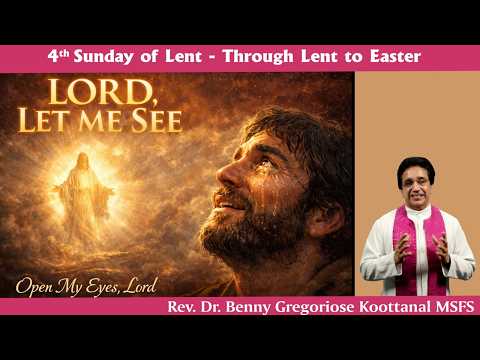
[0:00]Real blindness is the refusal to see. The greatest tragedy in the story is not the blindness of the man, but the stubborn blindness of the Pharisees. They witnessed the miracle but refused to accept it because it challenges their beliefs.
[0:18]When our minds are already made up, we stop seeing truth.
[0:37]Sisters and brothers, hearty welcome to each one of you to the fourth Sunday of Lent. A teacher once noticed that one of her students always sat quietly in the last row of the classroom. He never participated, rarely spoke, and often looked confused when lessons were explained. Some classmates assumed he was lazy or very dull. One day, the teacher decided to sit beside him and asked him gently, Why do you struggle to read the board? The boy hesitated and then whispered, I cannot see it clearly. The teacher arranged for him to get his eyes tested. Within a week, he returned wearing his first pair of glasses. The transformation was astonishing. The boy who had been silent suddenly began answering questions, reading confidently, and participating in class. Later he told the teacher with tears in his eyes, For the first time in my life, I can see the world clearly. The problem was never his intelligence. It was his vision. Many times in life, the greatest problem is not the absence of light, but the inability to see. This is precisely the theme of today's readings. The word of God speaks to us about true sight and spiritual blindness. In the first reading, the prophet Samuel is sent to anoint the new king of Israel. When he sees Eliab, David's elder brother, he immediately assumes, surely, the Lord's anointed stands here before the Lord. But God corrects him with a profound truth. Man looks at the outward appearance, but the Lord looks at the heart. Samuel almost made a mistake because he judged with human eyes. The strongest, tallest, and most impressive sons were rejected by God. Instead, the youngest boy, David, a shepherd forgotten in the fields, was chosen. This passage reveals something important. Human sight often deceives. God's sight penetrates deeper. We often judge people by status, success, wealth, education, and external behavior. But God looks at sincerity, humility, faith, love, and the inner heart. David was invisible to everyone else, but he was visible to God. Sometimes society overlooks people, but the God who sees the heart never overlooks anyone. The miracle in the gospel of John 9 is not just a story about healing physical blindness. It is one of the most theologically rich signs in the entire gospel. John, the evangelist, deliberately structures the narrative to show that faith grows gradually, while spiritual blindness deepens in those who resist truth. Let's look at this miracle more deeply from three biblical dimensions and then draw some practical lessons for our own lives. The gospel begins with a striking detail. As Jesus passed by, he saw a man blind from birth. Notice something very important here. The blind man does not seek Jesus. Jesus notices him first. This reveals a profound biblical truth. God's grace always precedes human response. Throughout scripture, we see this pattern. God calls Abraham before Abraham seeks him. God appears to Moses in the burning bush before Moses understands his mission. God chooses David while he is still a shepherd boy in the fields. Similarly, the blind man in the gospel becomes the object of Jesus' compassionate gaze. Practically this means, sometimes we think we are the ones searching for God. But very often, God has already been searching for us. Many people discover this later in life. They realize that even during their struggles, failures, or confusion, Christ was already waking beside them. Jesus does something unusual. He spits on the ground, makes mud, and places it on the man's eyes. In the ancient Jewish imagination, this action recalls the creation story in the book of Genesis, where God forms the first human from the dust of the earth. By using mud, Jesus symbolically acts as the creator restoring his creation. The man was born without sight. Now the creator himself completes the work of creation. Biblically, this shows that Jesus is not only a healer, but the giver of new creation. Practically, this gesture also reveals another truth. God often works through very ordinary means. Think of the ways Christ continues to heal and transform us today. Through simple water in baptism, through bread and wine in the Eucharist, through the words of absolution in confession, through the advice of a friend or a spiritual guide. What looks simple or ordinary can become a channel of divine grace. Sometimes people expect miracles to be dramatic and spectacular, but God frequently acts through simple and humble realities. One of the most beautiful aspects of this gospel is the gradual growth of the blind man's faith. At first, he knows almost nothing about Jesus. But as the story unfolds, his understanding deepens step by step. The first stage is curiosity. He simply says, the man called Jesus made mud.
[8:40]Jesus is merely a man to him. The second stage is recognition. When questioned by the Pharisees, he says, he is a prophet. Now Jesus is more than a man, he is a messenger of God. And the third stage is conviction. Later he boldly declares, if this man were not from God, he could do nothing. Now he recognizes Jesus as someone sent by God. When Jesus meets him again and reveals himself as the son of man, the man responds, Lord, I believe. And he worshiped him. The journey ends not with a miracle, but with adoration. This progression mirrors the spiritual journey of many believers today. Faith rarely appears fully formed. It often grows slowly, curiosity, questioning, understanding, trust, and finally, surrender. The gospel is not only about a miracle long ago. It speaks powerfully to our daily experience. We must allow Christ to open our face. Sometimes we are blind to our own weaknesses, the pain of others, and the presence of God in ordinary life. Through prayer, scripture, and reflection, Christ gradually clears our spiritual vision. True faith may invite opposition. The healed man begins to see clearly, but immediately he faces criticism. Interrogation, and finally he also faces rejection. He is even expelled from the synagogue. Yet this rejection becomes the moment when he encounters Jesus personally. In life too, standing for truth or faith may sometimes lead to misunderstanding. But those moments often bring us closer to Christ. Real blindness is the refusal to see. The greatest tragedy in the story is not the blindness of the man, but the stubborn blindness of the Pharisees. They witnessed the miracle but refused to accept it because it challenges their beliefs. This reminds us that spiritual blindness often comes from pride, prejudice, closed hearts, and unwillingness to change. When our minds are already made up, we stop seeing truth. Every day we ask God for many things, isn't it? Health, success, and protection. But perhaps one of the most important prayers we should make is this, Lord, help me to see. Help me to see your presence in my life. The goodness in other people, the lessons hidden in my struggles, the path you want me to walk. When Christ opens our eyes, we begin to see the world differently. Like the man in the gospel, we too will discover that the greatest miracle is not simply seeing the world, but seeing the Lord himself. Saint Paul through the second reading summarizes this transformation beautifully. Once you were darkness, but now you are light in the Lord. Live as children of light. Remember, Paul does not say you were in darkness. He says, you were darkness. Without Christ, our life is confused by selfishness, sin, ego, pride, and indifference. But Christ illuminates our life. Light produces three fruits according to Saint Paul, goodness, justice, and truth. Where Christ's light enters, hatred becomes love, confusion becomes clarity, fear becomes courage, and despair becomes hope. The Christian life is essentially a journey from darkness to light. Today the gospel asks a painful question. What kind of blindness exists in our own lives? Not physical blindness, but spiritual blindness. The Pharisees in the gospel were religious people, yet, they were blind. Therefore, the message is not only for sinners, but also for believers. Sometimes we practice religion but failed to encounter Jesus Christ. Let's return to the story of the boy who received glasses. When he first wore them, he exclaimed, I never knew the world was this beautiful. That's exactly what happens when Christ opens our eyes. The world looks different.
[14:32]People become brothers and sisters, suffering becomes meaningful, life becomes a gift, and God becomes visible everywhere. So today, let's pray with humility. Lord, open our eyes. Then, like the man in the gospel, we too will fall before Christ and say, Lord, I believe.


