[0:00]I'm going to show you how small channels are out earning channels with millions of subscribers and how you can make a real income from your content ASAP. I've built a multi-million dollar business using this exact model. And one of our clients actually generated his first million dollars in sales with less than 4,000 subscribers. So even if you think you need more views, more subs, more time, this will work for you. Because right now, most people are playing the wrong game and it's costing them years of effort for almost no return. The people winning today aren't optimizing for views, they're optimizing for something much more controllable. So let me show you exactly how this works and the six shifts that you need to make in order to earn from your channel almost immediately. And before I get into the nitty gritty of this video, be sure to comment "monetize" below this video and we'll send you the link to access our monetize from day one playbook. And it breaks down tactically what needs to happen in order for you to start turning YouTube into an income generating machine. So the truth is, more views does not equal more money. That belief is keeping really smart people really broke. So let me break down how AdSense works, which is how most people think you monetize YouTube. In reality, you're making about 1 to 3 cents per view. So to hit $100,000 a year from AdSense alone, you would need to rack up between 3 to 10 million views roughly. every year consistently. For most people, that is not a realistic path. Because YouTube ultimately is an attention economy and the greatest reward goes to a very small percentage of channels who have the greatest reach. But here's the thing, there is a completely different way to measure success and play the game on YouTube. We call it Dollar Per View. Instead of asking, how many views did I get? You ask, how much is each view actually worth to my business? When you make that shift, the math changes entirely. One of my videos has 6,800 views, not 6 million, not 600,000, 6,800 views. Over 10 months, that video generated $18,000 every single month. That equals $26 per view. AdSense would have paid me 680 to $2,040 total versus 180,000. Same views, completely different outcome. So another way to illustrate this is one of our clients who I mentioned earlier in the video. His name is Brandon, he's a real estate agent, he's awesome. And we started working together when he had less than 100 subscribers. By the time he got to 3,500 subscribers, he had generated $1.1 million in sales directly from his channel. So his dollar per subscriber was $300. Now compare that to a real scenario of a creator who has 200,000 subscribers, but is barely scraping by with $2,000 a month in income. Her dollar per subscriber, about one cent. Again, same platform, very different results. And the only difference is what they're actually optimizing for. So the minute you stop tracking and chasing views and trying to appease the algorithm and you start tracking value, the question stops becoming, how many people watched? How did the video do? And it becomes, who watched? What did they say? And what did they do after they watched? So that shifts the entire foundation of everything that we're covering today, and I know it's difficult. Because this platform is built for you to get hung up on views and subscribers, when in reality, that only serves the actual platform itself. It does not serve you as a business owner, and that brings me to my next point, which is that audience truly is a vanity metric. Clarity is the actual currency. And one of the best examples of this was actually an influencer who had over 2 million Instagram followers. And she launched a t-shirt line. By all accounts, you're thinking, this is gonna just crush. She's gonna do so well. But when she promoted it to her audience of over 2 million people, she couldn't sell a single shirt. 2 million followers, 0 t-shirts sold. If that doesn't flip how you think about audience building, I don't know it will. So it takes it from, let me build an audience of people to entertain. To let me build an audience of ideal clients who actually are interested and have intent in working with me. That will be less people, but you can impact them on a way deeper level, and ultimately, it's gonna be much more profitable for your business. Because the reality is in that influencer example, the audience was built on surface level content, entertainment, relatability, nothing specific. Nothing tied to a real problem or a real transformation. So when she tried to sell something, there was no reason to buy. No trust in a category and no real clarity, and this happens all the time. Big audience, and no revenue to back it up. So yes, YouTube wants you to play the views game, obviously, it's better for the platform, they make more money through AdSense and partnerships and all of that kind of stuff. So the platform benefits when you're obsessing over attention, because attention keeps people consuming and watching content, which ultimately benefits YouTube. But attention is not cash flow, clarity creates cash flow. And what the algorithm needs more than anything for you to control your own revenue streams and your own monetization, it needs to know who you're serving and what you want to be known for. When you clarify those two things, and you serve a specific person with your content, not everybody, not the masses, yes, you're not playing the views game, but you are building something that is much more controllable, and you can turn one viewer into one client. So your audience might be tiny, but it is mighty. Because every single person who lands on your content is there because they actually have the intent to solve the problem that you solve. And that brings me to what I know you're probably asking yourself right now, what am I monetizing? What am I actually selling here? So at the end of the day, YouTube is information, what you have to offer is transformation. And transformation is what people actually pay for. So I want to challenge your belief here, because this is really important to understand. Most people think you need to build an audience first, then figure out how to monetize it, or hope that magically money will flow your way, but that's backwards. To truly win on this platform, you need to know very clearly what is it that you are monetizing first and foremost. So it's about knowing the transformation that you can offer based on your expertise, based on the knowledge that you can share in your content. So it's really about building your content based on your expertise and attracting the exact people who need it. And here's what I've learned, and where he was so many people, you don't need to be the world's foremost thought leader on the topic. You don't necessarily need a PhD. You just need to be ahead of the people you are teaching with real world experience under your belt. So the model that we teach really is mastery, method, mentorship. Once you have mastered a skill set or an area of expertise, you naturally have created your own approach to it, your own method. That allows you then mentor other people and ultimately teach what you know and turn that into a scalable online business. So mastery is what you know, your hands-on experience, your real-world results. Method is how you organize that into a clear, repeatable process that anyone can follow. And mentorship is how you deliver that system through a scalable online program. YouTube proves the mastery and builds trust here. Your program delivers the mentorship at scale. So a perfect example of this is Mike Bausch. He owns 12 restaurants, including one of the top 10 pizzerias in America. And he has two best-selling books and he's a best-selling author. And when he came to us, nobody was buying his online program. He had priced it at $99 a month, paid marketing consultants, brand builders, done it all, and still crickets. The problem was not his level of expertise. He is the go-to in his space. It was that he was just selling information. He wasn't selling an actual transformation or an outcome. Once he got clear on exactly who he was serving and how he could really help them, everything changed. So he went from not being able to sell a $99 program, to his first launch generating just under $100,000 in 30 days. And that was before he even built the program. So he had a tiny, tiny little list of folks that he had connected with and really done the research of, what do they need? Why would they need my help? What is it that they're looking for in terms of an outcome? And based on doing that, out of 35 people he spoke to, 32 of those people said, "Heck yes," enrolled, invested, and became his first clients. He went on to generate multiple six figures that first year, and now he's built a multimillion dollar business. And that was not because he went viral, and he will say this himself, he was not famous on any platform. Outside of his little bubble of an industry, people did not know him. It was because he got really specific about who he served, how he helped them, and ultimately, the outcome that they were going to achieve in working with him in his program. So it's really important to understand, if you have hard-earned expertise that you have lived through experience, you already have something incredibly valuable. It's not about whether your expertise is worth something. It's whether or not you have organized it into a method that can scale and attached it to a vehicle, which can attract the right people who need it. And YouTube is that vehicle. And why is that? Because YouTube is still a search engine at its core. This is not a social media platform, this is a video hosting platform. And people go here with the intent to solve problems and achieve outcomes and learn. So if you teach what you know on a platform like this, you are naturally going to attract the people who need you the most. But most importantly, not every person who comes in contact with your content is ready to become a client today, or is ready to invest in what you have to offer today. And this is really important to understand, and this is where a funnel system is so crucial, but maybe not in the way that you're thinking. Your job is ultimately to meet people where they are. And there are truly three levels of awareness when it comes to your content. So there is top of funnel content, and this is for people who aren't really aware that they have a problem. They're just kind of starting to begin to understand what's even possible. So for these viewers, your goal is to earn trust and welcome them into your world of authority. So that usually means have your video content that teaches something valuable that you know, that can help them. And then guide them to a low barrier to entry, entry point, like a lead magnet, a PDF, a guide. And that is the funnel that you want to get them into to get them onto your email list, because then they become part of your world. And every time that you share new content, or you have something valuable that you want to speak to, you have a built-in audience that you own, and you're not at the mercy of the algorithm. What's also really cool about that is every time you post a new YouTube video, you send it to this email list of high intent people. They then go to watch the YouTube video and it signals to YouTube, wow, this person must be the authority on this, because look at all this traction they're getting right off the bat. So it's an incredible way to really create your own authority. Now there's middle of the funnel. So for these people and these kinds of viewers, they already know they have a problem, and they're actively looking for a solution, kind of comparing options and getting educated. For these people, you want to point them to something deeper, because they are in learning mode. So something like a webinar, or a video sales letter, a training of some kind. Something that walks them through what's possible using the methodology you've created. Because again, that gets people on your email list, and that is the thing that you own, it's the most valuable asset you have in your business. So don't just keep people on YouTube, don't create this amazing content and have people forget about you, move them to your email list. Now, bottom of the funnel. These are people in urgency, ready to invest, ready to do the work, they want the full transformation, not just information. For these people, you want to direct them to the point of purchase, ultimately, so whether that's booking a call, or going directly to purchase, or going to buy something off your website, whatever that may be, because they are ready. So here's why this matters. YouTube is the search engine, and every single day, the people who need you the most, and need to benefit from what you know, they're looking for you and the solution you provide every single day on this platform. Searching to solve their problems from all over the world. And then they get introduced to you by you showing up and providing the value that they're looking for. And when that happens, you are building an evergreen pipeline of potential clients, which builds so much security long-term in your business. And that cycle just compounds on itself, which is a beautiful thing, and every video you post on this platform, unlike other platforms where there's usually a 24-hour shelf life, like on Instagram or TikTok, on YouTube, your videos last a lifetime. I still have videos from like 10 years ago that generate leads for us every single day. So the funnel basically becomes, your ideal viewer discovers you, they watch your video, they join your email list, that builds trust, and then they ultimately become a client. And that cycle works and runs while you sleep. So this is exactly how 6,800 views turned into $18,000 a month for 10 months. It wasn't designed to go viral, it was designed to show up in front of the right people at the right time. They watched, they clicked through, they converted onto the email list, some of them became clients, and that is a content funnel working exactly as it's designed. So the important thing is stop creating random content. The thought you put into the videos you make is so important, answer questions, answer FAQs, solve problems. The more that your content is related to pain points, the more that it's going to attract the precise client that you want. Treat every video like it has a job to do, like it is meant to attract clients on autopilot. And make sure that you're creating content that brings people from awareness to action, and that brings me to measuring the right things and taking the pressure off of yourself. Because when you are just chasing after views on this platform and you're hoping that AdSense is one day gonna make you a millionaire, it becomes a really stressful game and often leads to a ton of burnout. So you want to stop focusing on the views and start focusing on the right metrics of success. So ultimately, that means looking at something like dollar per view versus just the amount of views you're getting. So again, to break down that math, AdSense is 1 to 3 cents per view, and if you want to make $100,000 a year, you need between 3 to 10 million views roughly. Now, flip it, you have an online program, it's priced to, let's say, $2,000. Your conversion rate from targeted YouTube viewers is, let's just go with something conservative and modest. It's 1 in 100 people convert into a client. That means every 100 views is worth $2,000. That is $20 per view, big difference. The numbers even at the super modest scale aren't even comparable. So another great example of this is Zalamay, and she teaches German. When she had less than 1,000 subscribers, she hit her first $10,000 month. So her dollar per subscriber, $10. That is 1,000 times better than one cent. So here's the thing, I get that a lot of people come on to YouTube sharing their expertise and again, magically hoping that they're gonna get paid for it. But the reality is, most people are sitting on a gold mine of expertise and experience that they can share, which is awesome. But if you don't know how to monetize it strategically, it's just gonna put you on that same creator hamster wheel, making a ton of content and not getting a ton in return. So if you spent years building real skills, and if you've solved a problem repeatedly, and help people get a result, that is the recipe for success when paired with an offer you can sell, and reaching the right people via YouTube. So here's the path that I walk every person through who wants to create this kind of expertise-based business. First, identify the transformation you can provide, not just the information you know. How can you turn what you know into an actual transformation? What does life look like on the other side of working with you? Second, build your method. When you know what you're talking about, you can create a duplicatable method to get people from here to where they want to be. Take your experience and organize it into a clear, repeatable system. And three is create your offer, package it into a program, a course, a group coaching program. Something structured that delivers transformation without requiring your one-on-one time forever. Fourth, use YouTube to prove your expertise and build trust, and this is how you build what we like to call a micro universe of authority. A targeted audience of people who are there because of the value that you can bring in the way that you bring it. So no, YouTube is not the business, you have to stop thinking about it that way. YouTube is the vehicle. The business is your expertise, packaged into a method, delivered through a scalable program. YouTube is how the right people find you. Your program is how you serve them at scale. So I opened this video with a gap that most people will find shocking, small channels out earning these massive channels with millions of subscribers. But I hope now that isn't shocking and it's actually logical. Because YouTube rewards relevance, not reach, and dollar per view beats AdSense any day of the week. So the small channels that are winning, they're not lucky, they just know the right game to play and they quietly play it with confidence in the background. And if you want to be next, be sure to comment "monetize" below or click the link in the description to grab our monetize from day one playbook, so you can know the exact step-by-step process to start earning from your channel ASAP. So stop just creating content and start building a real business. And if you enjoyed this video, you'll probably really love this video and how to grow your business without relying on social media. Be sure to leave your comments below with your takeaways, your light bulbs, and they are my love language, and I look forward to seeing you in the next one. Bye.
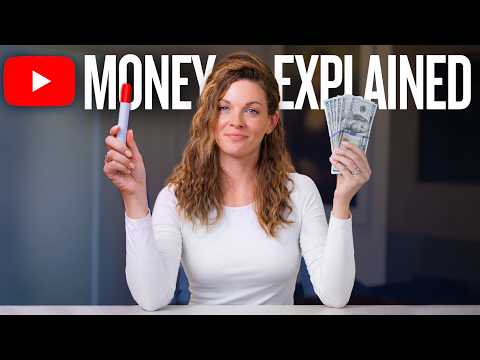
How Small Channels Are Making $1M+ From YouTube
Sunny Lenarduzzi
16m 32s3,384 words~17 min read
YouTube auto captions
Transcript source
YouTube auto captions
This transcript was extracted from YouTube's auto-generated caption track. The transcript below is server-rendered so it can be read, searched, cited, and shared without opening the original YouTube player.
Pull quotes
[0:00]I'm going to show you how small channels are out earning channels with millions of subscribers and how you can make a real income from your content ASAP.
[0:00]And one of our clients actually generated his first million dollars in sales with less than 4,000 subscribers.
[0:00]So even if you think you need more views, more subs, more time, this will work for you.
[0:00]Because right now, most people are playing the wrong game and it's costing them years of effort for almost no return.
Use this transcript
Related transcript hubs
Watch on YouTube
Share
MORE TRANSCRIPTS


