[0:00]Te harías rico vendiendo sprays de graffiti en el antiguo Egipto? Día 1. Llegas a Egipto con una caja llena de sprays de colores. Las paredes de piedra están completamente vacías y sin vida. Agitas una lata y empiezas a dibujar en la pared. La gente se queda mirando, nunca han visto pintura salir así. Un joven toma el spray y dibuja un halcón gigante en segundos. La multitud se queda en silencio. Ahora todos quieren probarlo. Día 2. Decenas de jóvenes hacen fila para comprar uno. Te pagan dos monedas por cada spray. Los llamas "colores de los dioses". En minutos, las calles se llenan de dibujos. Semana 1. Hay un problema. Un sacerdote dice que pintar paredes es una falta de respeto a los dioses. Entonces aparece Sócrates, toma un spray y dibuja un símbolo perfecto de Horus. Luego dice, los dibujos son la forma en que los humanos hablan con el tiempo. Ahora, nadie se atreve a prohibirlo. Mes 1. Los templos empiezan a llenarse de arte. Los jóvenes compiten por hacer el dibujo más grande. Los comerciantes te piden decorar sus tiendas. Los colores atraen más clientes a las tiendas y tú empiezas a cobrar el doble por cada spray. Mes 3. Los nobles quieren murales gigantes. Se empieza a dibujar incluso en las pirámides con diseños completamente imposibles. Año 1. Todo Egipto está lleno de grafitis. Y tú no escribiste la historia de Egipto, la pintaste.
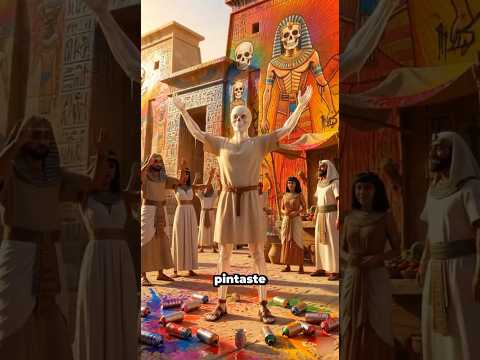
¿Te harías Rico vendiendo Sprays en el Antiguo Egipto? 😮🎨 #shorts #curiosidades #shortvideo
CriticalZone3D
YouTube auto captions
This transcript was extracted from YouTube's auto-generated caption track. The transcript below is server-rendered so it can be read, searched, cited, and shared without opening the original YouTube player.
In this hypothetical scenario, an individual arrives in ancient Egypt with a box full of spray paints. Initially, the local populace is astonished by this new method of painting, with a young man quickly grasping its potential by drawing a giant falcon. This sparks widespread interest, leading to the rapid sale of the spray cans, which are marketed as "colors of the gods." The streets quickly become vibrant with art.
However, a challenge arises when a priest denounces wall painting as disrespectful to the gods. This conflict is resolved when a figure resembling Socrates intervenes, using a spray can to draw a perfect symbol of Horus and declaring that drawings are humanity's way of communicating through time, effectively legitimizing the practice. This leads to an explosion of art: temples are adorned, merchants hire artists to decorate their shops, and even nobles commission large murals, with some designs appearing on pyramids. Within a year, all of Egypt is covered in graffiti, and the protagonist is credited with having painted, rather than written, the history of Egypt.
Key Takeaways
- The introduction of spray paint in ancient Egypt causes immediate astonishment and curiosity among the locals.
- The spray cans are successfully marketed as "colors of the gods," leading to rapid sales and widespread adoption.
- A religious objection to wall painting is overcome by a philosophical justification, legitimizing the new art form.
- The art movement quickly expands to temples, commercial establishments, and even monumental structures like pyramids.
- The protagonist's influence transforms ancient Egypt into a land covered in graffiti, fundamentally altering its visual history.


