[0:02]Breathing might sound like an obvious topic for trumpet playing. I mean, you breathe in, and then you breathe out through the trumpet. But it's not that simple, or rather it is, we just tend to make it complicated. Remember, this thing runs on air. That sounds like an obvious thing to say, but sometimes we forget, particularly in a watch how some people play. They're not thinking about the air. They're thinking about the trumpet or their fingers or something else. Nothing happens without any air. I mean, have a listen to it. It's silent. It's the air that creates and carries the sound through the trumpet. And it's so important how we breathe when we play. Everything after that, our sound, our articulation, even the feeling of the music is going to be very related to how we breathe. Let's have a look at that. One of the things people do when they want to relax is they tend to take in a deep breath and then let it out. You've all been in a situation where someone's getting tense, they say, take a deep breath and they go, That doesn't relax them. It's when they breathe out that they relax. Well, that might be lovely for yoga or for a tense situation, but it's useless for playing the trumpet. Because the breathing out is when the action happens. That's when we make the sound. An audience doesn't come to hear you take a breath in. So, we have to take the breath in in a very relaxed way. You know, it's a thing about how we work physically. You can't do something both ways in a tense situation. We breathe in tense, we'll breathe out relaxed. Well, the reverse works. If you breathe in relaxed, then you can. Now tense isn't the right word. You can apply some focus to the air on the way out. This is essential if we're going to cover all sorts of things we go through later in this tutorial about range, something all trumpeters want to talk about, endurance, uh control in the upper register. It's all related to having focus on the air on the way out. You might be sitting there saying, that's all very well about me, how do you do this? Well, it's really easy. Here's the easy part. To have focus on the air on the way out, we have to be relaxed on the way in. So, take a relaxed breath. Now, if you stand there like this, you go, okay, I'll relax. No air is going in. That's because you're not really relaxed, you just think you are. We tend to always maintain a bit of tension in our diaphragm and muscles around our our torso. The way to really get relaxed is to do the opposite first. Remember, when someone wants to relax, they take a breath and then let it out. Why don't they just let it out? We've got to do the reverse. So let's now push the air out first. No matter how much air you've got in at the moment, try this right now with me, breathe out. And keep breathing out until you run out of air. I can hardly talk. When you get to the end of your air, don't breathe. Don't do this for too long and just wait, you'll start to get tense, like this. When I say go, if you're still doing it, you're doing well, just relax. Do you feel the breath, it went very deep and you didn't have to take it. The air rushed in all of its own accord. Just try it again because I extended it that first time to explain. Breathe out. Wait. Relax. You get a very deep breath. Much deeper than if you now, let's try the other one, just take a breath. It's kind of high, isn't it? Your shoulders lift and it feels like the breath is up here. The other way the breath tends to start from down lower. What's actually happening is you're getting nearly double the air. About one and two-thirds the time, as near as they can tell, when you breathe the way I just showed you. But more importantly than that, because it's not just about how much air you get. What you're really getting is a relaxed feeling. This is a great way to start playing the trumpet. You know, when you scare someone, if you walk up behind them and say boo, they go, And they take a breath. It's a scared breath I call it. They get this look on their face. I'm exaggerating and um, I don't know if you're scared. And it gets you ready to do something, but something not terribly relaxed, you know, it's like run flight or fight they call it, run or fight back. Uh that's not how we want to start playing the trumpet. We don't want to fight this thing at all, although sometimes you want to run. What we need to do is be relaxed and have lots of air. So it's not the scared breath. It's the kind of breath. You know, you ever been camping and you get up in the morning and you walk outside the tent, especially if it's a little cool. And you take that first breath of fresh mountain air, you know, and you go like this and you get a look on your face like this. Silly, isn't it? Rather than the scared one. That's how you need to feel. Because the expression on your face says a lot about what you're feeling. When I take the relaxed breath, I feel like let me out of them. When I get the scared breath, it's like, I hope I get this note. Which often you don't. Okay, the tension in you when you take the other breath is no good for pitching a note. It's no good for getting the sound you want, all sorts of things wrong with it. Do you know what's mostly wrong with it? All you can do after this is relax. Now, as the air runs out, have a think about this. As the air runs out, what's happening? You're becoming more and more relaxed, less and less focused. When do you need the most focus on the air that you're putting through the trumpet? When you're running out. As you get lower and lower on air, if the music suddenly jumps up an octave, good luck if you're in relaxed mode. But the other way, a relaxed breath, then as we blow, we get more and more tense, if you like, focused on that air. So right at the end of the breath, the music jumps an octave, you've got it. Okay. It's a great way. For me, it's the only way to play the trumpet. So, remember, to practice this, you might go, okay, so every time I play, I've got to go, first, hang on a sec, don't count in yet. I'm ready. No, but if you do this a lot, you get used to that feeling, the deep breath. Just practice it anyway, you don't need a trumpet for this. You can do it sitting at the bus stop. Of course, if you're sitting there holding your breath, people will look at you funny, but when you go, you can say, it's okay, I'm just practicing my trumpet playing and they'll move away from you. You'll have plenty of seat. Seriously, try it anywhere, anytime. The more often you do it through the day, just for a couple of minutes here and you start to get used to it. You'll find then when you pick up the instrument, you say, just go straight to the relaxed feeling. Now, I've been doing this for years and it doesn't matter how full or empty I am with there, I can just go relax and top up. Okay. And that's what you want to be able to do. Won't take long. We're talking here a week or two of doing this each day and they'll start to become very, very natural. And you'll do a lot of things like that, not just play the trumpet, when you go to do something and you need to steady yourself, you'll go, take a relaxed breath before you do it. It's fantastic way to do a lot of things, but this, I reckon it's the only way to do it. Now, let's have a look at some of the things that happen when you breathe that way. You know, if you put a battery in a torch, old batteries, this is when I was a kid, used to run down gradually. You know, you had a full, full bright light at the beginning and then it got duller and duller over a long and long time. A lot of torch batteries still are like that. But batteries like that are no good for say a mobile phone because if it gradually runs down what, at some stage you're going to lose the signal, you know, it either has to work or not. Playing the trumpet's like that. If this air is our energy in our battery, it's no good saying to the audience, well, I'm actually halfway through my air now, so it's a bit of a dull light. I don't have that greater sound. I don't have that greater control. Not going to work, is it? You need to be like, uh they have lithium ion batteries now. They go full power, full power, full power. They're done. There's no run down period at all because what they're powering needs to work at optimum performance all the time. So you need to be as a trumpeter. So how do we get this kind of energy? It's that breath again. The tense breath has a gradual run down. The relaxed breath goes and stays completely in control until it stops. The reason I'm telling you this thing about torches and lights and batteries is to get an idea in your mind of that. I need to have full control and full power or not play at all. Because we do start to get used to sometimes, I'm kind of running out of air now, so it's not that good. We keep playing. Don't do it that way. Don't ever blow this thing, unless you're blowing it at your best. And the way to do that is to take deep, relaxed breaths and then focus on the air on the way out. If you do that, and this is why I put breathing as the first chapter on this tutorial, it's going to make everything we do afterwards that much easier and that much more fun.
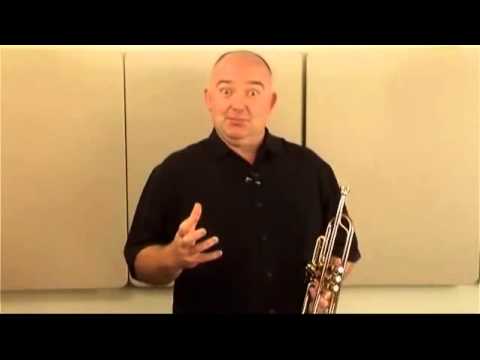
James Morrison's trumpet tutorial: Part 1 Breathing
Philippe Kinnaer
8m 46s1,807 words~10 min read
AI audio transcription
Transcript source
AI audio transcription
This transcript was generated from the video's audio because no usable YouTube caption track was available. The transcript below is server-rendered so it can be read, searched, cited, and shared without opening the original YouTube player.
Pull quotes
[0:02]That sounds like an obvious thing to say, but sometimes we forget, particularly in a watch how some people play.
[0:02]Everything after that, our sound, our articulation, even the feeling of the music is going to be very related to how we breathe.
[0:02]One of the things people do when they want to relax is they tend to take in a deep breath and then let it out.
[0:02]You've all been in a situation where someone's getting tense, they say, take a deep breath and they go, That doesn't relax them.
Use this transcript
Related transcript hubs
Watch on YouTube
Share
MORE TRANSCRIPTS


