[0:00]Many people today say things like, protect your peace, just cut people off, and sometimes that advice makes sense. If someone is abusive, manipulative or constantly hurting you, creating distance can be healthy. But in many situations, people start cutting others off, not because those people are truly harmful, but because they feel overwhelmed, stressed or emotionally tired. And over time, this can lead to isolation. Psychology actually shows that while boundaries are important, humans still need healthy relationships and connection. So the real challenge is this, how do you protect your peace without removing everyone from your life? Here are a few things psychology suggests. One, not every conflict means someone is toxic. Social media often labels difficult people as toxic. But in real life, relationships are more complicated than that. Disagreements happen in friendships, misunderstandings happen in families. Even supportive people can sometimes say the wrong thing. Psychologists explain that occasional conflict is normal in any relationship. If someone repeatedly disrespects you, that's a different situation. But if the issue is occasional tension or misunderstanding, cutting someone off might not be necessary. Sometimes the healthier solution is simply addressing the issue or adjusting expectations. Two, boundaries are more helpful than avoidance. A lot of people try to protect their peace by avoiding situations or people completely. But psychology often emphasizes boundaries instead. Boundaries are simply limits you set to protect your mental and emotional well-being. For example, you might decide not to respond immediately to messages when you're resting. You might avoid conversations that always turn into arguments. You might limit how much personal information you share with certain people. These actions allow you to stay connected to others while still protecting your mental space. Three, you don't need to be available to everyone all the time. One common cause of stress is feeling responsible for everyone else's emotions. Some people feel pressure to always listen, help or solve other people's problems. Over time, this can become exhausting. Psychologists call this emotional overload. It's healthy to care about people, but it's also healthy to recognize that you cannot manage everyone's feelings. Sometimes protecting your peace simply means saying things like, I can't talk about this right now. I need some time to focus on myself today. This doesn't make someone selfish, it just means they're protecting their energy. Four, not everyone needs the same level of access to you. Another useful idea in psychology is that relationships can exist at different levels. Some people are very close to you, some people are casual friends, some people are just acquaintances. The problem happens when we treat everyone like they belong in our inner circle. You don't have to completely remove someone from your life just because they're not a safe person to share everything with. Instead, you can simply adjust how much time, trust or emotional energy you give them. Five, emotional detachment can protect your peace. Another skill that helps protect your peace is emotional detachment. This doesn't mean you stop caring about people. It means you stop absorbing every emotion or opinion around you. For example, if someone criticizes you, it doesn't always mean you have to take it personally. If someone is in a bad mood, it doesn't mean you have to carry that mood with you. Psychologists often explain that emotionally healthy people learn to observe situations without immediately internalizing them. This helps them stay calm even in stressful interactions. Six, accepting that you can't control other people. One of the biggest sources of stress in relationships is trying to change other people. We want them to behave differently. We want them to understand us better. We want them to react the way we expect, but psychology consistently shows that people only change when they choose to. Protecting your peace often means accepting that some people will never fully meet your expectations. Instead of trying to control them, you adjust your response and your boundaries. Protecting your peace doesn't always mean cutting people off. Sometimes it simply means setting clearer boundaries, managing your energy more carefully, and understanding which relationships deserve your time and attention. Healthy peace is not about isolation. It's about learning how to stay calm and balanced while still maintaining the connections that matter.
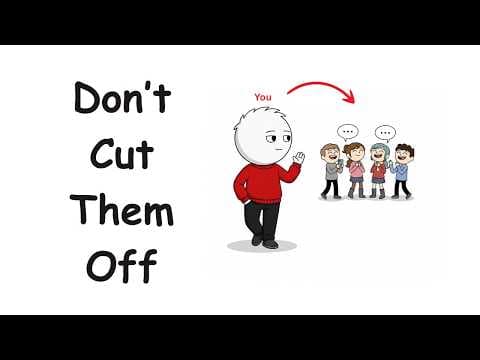
6 Ways to Protect Your Peace Without Cutting Everyone Off
MindFrame
4m 43s712 words~4 min read
YouTube auto captions
Transcript source
YouTube auto captions
This transcript was extracted from YouTube's auto-generated caption track. The transcript below is server-rendered so it can be read, searched, cited, and shared without opening the original YouTube player.
Pull quotes
[0:00]Many people today say things like, protect your peace, just cut people off, and sometimes that advice makes sense.
[0:00]If someone is abusive, manipulative or constantly hurting you, creating distance can be healthy.
[0:00]But in many situations, people start cutting others off, not because those people are truly harmful, but because they feel overwhelmed, stressed or emotionally tired.
[0:00]Psychology actually shows that while boundaries are important, humans still need healthy relationships and connection.
Use this transcript
Related transcript hubs
Watch on YouTube
Share
MORE TRANSCRIPTS


