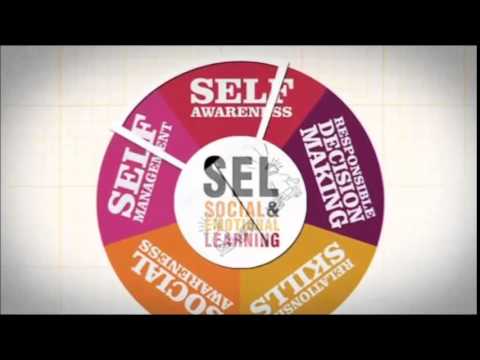
[0:23]Every child needs social and emotional skills. Being able to make and build relationships with others and being able to manage their own emotions can help every child to feel better and to learn better. The collaborative for academic, social and emotional learning or castle, leads research into ways for children to achieve better academic success and personal wellbeing and has identified five key social and emotional competencies. We're going to look at all of them, but let's start here. Self-awareness is a child's ability to understand themselves and identify the emotions that he or she is feeling. This is stupid.
[1:20]Stupid, stupid, stupid.
[1:27]Every child experiences a broad range of emotions. Learning how to recognize those emotions is a vital step to managing their consequences.
[1:52]Hot. Fast. Frizzy.
[2:03]I'm angry. So it's really important for a child to be aware of those, their own temperament characteristics so they can say to themselves, well, you know, Johnny over there's going to go and join that group of new kids really easily. That's much harder for me. I'm a bit more shy. So I need to develop ways of managing that or, well, I know I fly off the handle really easily when I'm frustrated, other kids don't seem to. And you know, that awareness helps them then build strategies for dealing with it with the support of teachers and parents and others. Closely linked with self-awareness is the next social and emotional competency, self-management. If a child can recognize the emotions he is experiencing, then with support from others he can learn to cope with things that don't go to plan. What is it, Aaron? This is making me upset. I think one of the key social and emotional skills in childhood is self-regulation skills. And that means your ability to control understand and manage and control your own feelings so that you don't, you know, fly off the handle when you're frustrated. You can calm yourself, you can, you know, understand your emotional reactions and find ways of, of resolving them, and also self-regulation of behavior. So again, you can, you can inhibit that impulsive response.
[3:47]We've looked at two of the key castle key competencies. Self-awareness and self-management. Now, we're going to look at social awareness. Social awareness is a child's ability to show understanding and empathy for others. It is her ability to place herself in other people's shoes and to think about how her actions may affect other people. Okay, morning tea time.
[4:39]That idea of social awareness or empathy, it's a fundamental skill. On one level, empathy is something that's quite innate in most people. It's really that uh innate ability to actually pick, you know, this person's angry, this person's aggressive, this person's friendly, you know. People are very generally very good at that, but there's another level of empathy is what does that mean? So I I can sort of pick up how that person feels, why might they be feeling like that? Why might that, you know, why might they be behaving like that, you know, that sort of thing? Now, that's quite a sophisticated thinking skill and once again, some links to that whole idea of your capacity to develop your thinking. You tend to get better at empathy, I think, as your thinking skills develop because you have to have that rich imagination. You have to be able to put yourself in other people's shoes. Bethany, how do you think Louis is feeling in this picture? Upset and sad because his friend's moving away. The next competency is relationship skills, which is about getting along with others, working in teams and dealing effectively with conflict. Some people find creating relationships easy. Some don't.
[5:46]Okay everyone, why not go introduce yourselves? Hi. Have you heard Stink Hans Cancerto?
[6:01]Hey. Hey, hey.
[6:12]They don't want to talk to me. They won't like me. They might think I'm weird.
[6:28]Weird. Good relationship skills can be hard to learn because they involve skills from all of the other competencies, as well as some new ones. Now, we're going to look at the final key competency. Responsible decision-making is about how to take the time to consider choices and thinking enough about consequences to make the best one. No way!
[7:12]I'm a megaformer, Miss. I rescue summer bot.
[7:25]No way!
[7:29]A mega morpho starship vacu head Super Blisterbot.
[7:54]Excuse me. Responsible decision making relies on many different abilities. Students who make good decisions are able to bring together a lot of skills that help them think about choices and consequences and how the actions they take will affect not only themselves, but others. The five competencies are really the basis to really knowing how to negotiate life. They're the basis for actually being able to have some insight into who I am.
[8:29]Uh they're they're the basis for having some insight of my behavior being able to manage my behavior. If you're trying to talk to kids about their behavior, they then they need to have basic competencies around social emotional learning to be able to negotiate your life in a democratic society, be able to operate into a a workplace or to be able to have a a family. You know, these are just fundamental skills and instead of saying to kids, don't do this, don't do this, actually show them this is what we want you to do, what you find is overwhelmingly, kids will do it.


