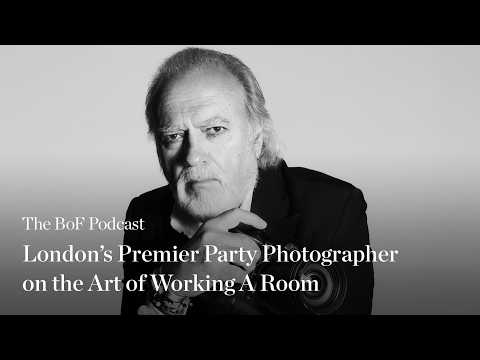
[0:00]Dave Bennett. Hi there. I never thought I would get to interview you. This is very exciting for me. I can't remember the first time I saw you taking pictures at a party, but it's so long ago that it feels like You've always been there. I had no idea that you were born in Mauritius. So for the uninitiated, where is Mauritius and what was it like going up there? So, Mauritius is a small a tiny dot in the Indian Ocean. Just um, east of Madagascar and um, makes a lot of noise for such a small place Mauritius to be honest with you. It's, you know, it it's idyllic islands on for beaches and lots of hotels. Is that sort of a place, but very busy, busy guys. Are here, they're very um, busy in finance and all sorts of things and skulduggery they're up to at the moment. But the Mauritius I was born in, it was really just turning towards independence, Circa 1967. Independence from from England. So then obviously became part of the Commonwealth. Um, and my childhood, I see that all happening. You remember it? Yeah, totally. What do you remember the most? Mauritius was the playground for us, you know, so innocent, you know, we just run around, go getting in trouble because when a cyclone was arriving, my father said, sent the car to get us, and we decided to walk home for the, you know, because we realized that everyone would be indoors so we could steal the mangoes and lychees, just yeah. Cyclones, mangoes, lychees are definitely not something one encounters here in the UK. So when did you first, come here? So, I first came here in 62, 64, again because of Dad, and I lived in North London, North Finchley. And then went back, and then, my sadly, my mom and Dad get divorced and then he meets a new lady, she wants to come back to England. So in 1969, he comes back to becoming the prison surgeon, Walton Prison, in Liverpool. Oh God, okay. And um, so So, were you living in Liverpool then? So then Richard and I stay in Mauritius for a year while he's organizing all of this with his new wife, and we live with, again, with family, with aunts and uncles. And again, the life incredibly, 11 years old, you know, and Richard was 12, just gone to to secondary school. We used to walk and see an uncle who was in the Ministry, and literally think Port Louis, the capital, was our, our playground. Wow. We just walk into anywhere and just mess about. You know, that was the life. So finally, in December 1970, we take the plane thinking we're going to London. And I wake up the next day, and I said, where are we? He said, oh you're in a place called Liverpool. So then I do a five-year stretch in Liverpool from 70 to about 75. That must have been a real shock. Oh yeah, a huge change, right? We're going, we're so you're talking about Ted Heath, talking about immigration, funnier stories of immigration, Dockers strikes, three-day week. So all of that negativity was flying around when we first got there. So at what point in this journey did you first pick up a camera? Nowhere near it. Okay. I mean literally, I think my father got the Sunday Times and that was the only newspapers and that was on for show, probably, you know, on on the coffee table. Um, not an idea about media. Not didn't even know that world even existed. You know, we were running around, Liverpool was really, you know, in the end, quite fun. Even then, then I come to London, Yeah. Go to a school called William Ellis, North London, again a large grammar schools, just the, it's the edges of the grammar schools. Where I'm a late boy and another late boy comes down from, What's a late boy mean? He comes in the sixth form. I arrived at sixth form. So because I'd already done my GCSES, so I come in at sixth form. And the headmaster welcomed me, I was doing English lit, French, British government. And a young guy came down from, he he was Welsh, but he'd come from Highgate Boys School, he didn't like the boarding school. And he and I became pals because we were both late boys and his mother was a journalist. Ah. And now it starts. Okay. So she happened to live 300 yards from school. Beautiful little uh, a flat and apartment. So like all good boys, we were cuckoos, we were, I was in there, I was the second son by the end of, you know, first term. And um, so But the deal was this, and this is this is so ridiculous.
[6:03]The deal was that we'd take her into Luggate Circus where the Daily Mirror was, she was a big columnist for them. And wherever she was in London, we'd pick her up. And um,
[6:18]Luggate Circus, you know my first job in London was right near Luggate Circus. That was where Fleet Street, that's where we go to. So Fleet Street is where all of those newspapers were based.
[6:30]Luckily, for me, I don't realize this, but I end up this is what I'm this is where this all goes towards catching the last years. Of Fleet Street. Yeah.
[6:43]So basically, our A levels it was the summer of 76, I'll never forget it, it was the hottest summer in London. Everyone was sunbathing, people were having such a great time. London was really, you know, kicking in those, and the A levels came in not as good as we expected. Too bad. Too bad, and Paul, my friend said, oh my mom's got me in this agency in Farringdon Road, just off or in Exmouth Market, off Farringdon Road. It's a shortcut into Fleet Street, if you don't want to go to university or local paper, because the agencies in those days all the way circled Fleet Street. So you had sport in general, London News Service, Fleet Street News Agency, Barrett's and what would these agencies The agencies were exactly what they are, so now we talk of Getty and shutters and staff.
[8:00]So you were photographing outside courthouses and stuff. So this happened, so basically he, he got the intro and he said to me, what are you going to do? And I said, I don't really know. He said, why don't you be a photographer? I said, what do you mean? He said, you know those guys that were at the bar, you know, in the white, in the stab in the back, wherever we were, these guys are actually very famous photographers, Ken Gavin, Mike Maloney, all these guys. I said, yeah, they're all pretty cool, I'd like to do that. He said, okay. So you literally became a photographer because your friend randomly suggested it to you and you'd never considered it ever. This is must be a BAF podcast first because usually everyone who's on this this show, they say, you know, I dreamt of becoming a stylist or I wanted to become a designer. Yeah. You just stumbled into it. It gets worse, so then, obviously I go for an interview, not to be a photographer, but to be what they call an apprentice, they were called lads. So like, imagine Charles Dickens, imagine, Oliver Twist, the Artful Dodger, that sort of period. You know, these sort of guys, that sort of, so I go, I get an interview. So I go to the Swiss Cottage library, get a book out on SLR cameras. Not because I'm going to amaze him by with pictures, but at least I know what I'm talking about when he says to him, if he did, but he actually didn't bother at all. He just said, oh hi, you're a bit old because you should be 16. I had my A levels. But, okay, we'll give you a go.
[9:39]And basically what a lad is, is a kid that washes the prints, clean, keeps everything clean in the dark room, and they start to show you how to print. So it's a real apprenticeship, your training. And then your biggest job of the day, ready, was to run to Fleet Street with 10 envelopes with the photos of the day and slip into the newspapers, get past security, get past everyone and hand your envelope to the picture editor. So once the editor has those photos, he'd open them up and, oh, let's see what general have done today. So the agency like PR coming through on the wire. There's only AP and PA. So all these pictures were given by hand, all printed in a 10 by eight, uh, size. And then if they ran one of your photos, the agency, if they ran it, the agencies photos, they would get paid. Yep, be stamped on the back, your copyright, but would be stamped on the back. And how much would they get paid to run a photo, do you remember? I'd say, you know, between minimum of 50 pounds to no, to, you know, if it was used well, 200 pounds, 300 pounds, you know, on the front page. You know, and that increases and then finally decreases, but yeah. Yeah. Wow. Okay. So how long did you do this kind of photography for? So, I actually, so, I needed a camera. Now, Jill had another son called Simeon, and he had a SLR. This is your friend's brother. And they were going to LA. And the morning of them leaving, we were all kissing by, good luck, Simeon, mom. And I just noticed that his SLR was sitting on the sofa. So I just threw a pillow over it, and he forgot it. You just didn't ask, why didn't you just ask him? I can use your camera. No, you just, Anyway. And um, so that was my camera. I still got it. And how many years did you use that camera? About six months, that's all. Okay. Because once I started, I realized, and it's amazing how lucky is it that you'll find a job that you very quickly understand and So it's a classic. You're in the dark room, you're cleaning, you're this is your job. I was a bit old to be honest with you. So it was that that did affect me because the the amount of work, the stress level and the bigger the party, the bigger the bigger the stress because you are being you just said that.


