[0:00]If Aya Koji Kyotaka ever handed you a list of books he read in the white room, you wouldn't find a cozy fiction or feel-good story among them. Nah, it'd be a straight-up arsenal of psychological warfare, human nature, persuasion, and mental mastery. And if you really want to think like him, or at least fake it till you make it, then these 50 books are your crash course into high-level manipulation. Ice-cold decision-making and world-class self-control. So let's dive deep, not just into the titles, but into the core lessons and how to apply them like someone who sees 10 steps ahead. Let's start with The 48 Laws of Power by Robert Green. Not because it's edgy or overhyped, but because it teaches you how people actually move in the shadows. I learned that being underestimated is a deadly weapon. Same goes for The 33 Strategies of War. That book taught me not every war is fought on battlefields. Most happen in conversations, classrooms, job interviews, and relationships. Then there's The Laws of Human Nature, which completely shifted the way I look at people. Once you realize most actions come from hidden wounds or unresolved ego battles, you stop getting surprised. You start predicting, and that's where thinking fast and slow by Daniel Kahneman comes in. It trains your brain to notice when you're being emotionally baited and when your system one thinking is hijacking logic. It's like emotional martial arts. Pair that with verbal judo and you've got a combo so powerful, you could diffuse an argument with just your tone. I've actually used that in real life. Once diffused a heated situation at school just by mirroring tone and redirecting the convo. But Ayanakoji isn't just cold and calculated. He's also a master of influence. So if you want his charm without the smiles, start with influence and persuasion by Cialdini. Those books break down exactly how people get nudged into saying yes without knowing why. Then dive into how to win friends and influence people, but don't read it like a nice guy. Read it like a tactician. It's not just about being kind, it's about being memorable. And if you really want to amp it up, The Charisma Myth shows you how confidence, presence, and warmth are skills, not gifts. Combine that with get anyone to do anything, and suddenly you're walking through life like a mind reading magician. But to really reach Ayanakoji levels, you need stoic control. That's where Meditations by Marcus Aurelius and The Obstacle Is the Way by Ryan Holiday come in. Those books taught me that emotions are loud liars and silence is a weapon. When you learn to delay your reactions, you gain power. Speaking of silence, The Art of War by Sun Tzu and On War by Clausewitz taught me that the best strategy is often not to fight at all, just maneuver. And Machiavelli's The Prince, that one showed me the dark side of leadership, the side people pretend doesn't exist, but secretly follow. The world isn't fair, and this book doesn't try to fix it. It teaches you how to operate within. Then there's The Art of Seduction, and no, it's not just about dating, it's about magnetism, about being so intriguing that people lower their guard around you. One of the most terrifying powers Ayanakoji has is making people trust him even when he's doing absolutely nothing. That's charisma on mute. But none of this matters if you can't understand group behavior. The Crowd by Gustave Le Bon and The Social Animal by Aronson break down herd mentality and conformity. These books made me realize most people don't act from logic. They follow emotion, identity, and group think. Once you see the pattern, you stop following the crowd. You start moving it. For deeper psychological tactics, dive into The Art of Deception and The Art of Intrusion by Kevin Mitnick. These books teach social engineering through real hacker stories, basically how to trick systems and people using nothing but information and tone. And that blends beautifully with propaganda and crystallizing public opinion by Edward Bernays. The guy who made smoking cool and bacon a breakfast food, not by logic, but by narrative. That's what makes Titan by Ron Chernow such a powerful contrast. It shows you how Rockefeller used influence, silence, and an never-ending hunger for efficiency to build an empire while staying in the shadows. It's the ultimate flex. Now, if you want to train your brain like a weapon, read Limitless by Jim Kwik, Smarter, Faster, Better, and The Power of Habit. These three taught me that mental energy is more about routine than willpower. You don't rise to the level of your goals, you fall to the level of your systems. Then stack that with Atomic Habits, and you basically have a blueprint for rewiring yourself. Want Ayanakoji's discipline? Make it boring. Make it automatic. Want his mental dominance? Read Mastery by Robert Green. That book drills in the idea that genius is earned, not gifted. It's about reps, silence, and patience. Three things that society hates but greatness demands. And if you're looking to weaponize your presence, pick up The Way of the Superior Man. A little deep, a little controversial, but it forces you to face your core self. Combine that with Awaken The Giant Within and The Seven Habits of Highly Effective People, and you're not just improving, you're evolving. Those books taught me that control isn't about dominance, it's about clarity. And clarity only comes from knowing your values. When things get hard, and they will, Can't Hurt Me by David Goggins reminds you that pain is part of the price. No fluff, no comfort, just suffering and what's waiting beyond it. That's white room energy. Pair that with Hard Times Create Strong Men and The 50th Law, and you realize fear is the leash most people never try to break. You cut that leash and the world opens up. For more battle tactics, read Rules for Radicals and The Dictator's Handbook. These books don't sugarcoat politics. They reveal how systems are rigged, alliances are bought, and control is never clean. Dark? Yes. Useful? Absolutely. And for when you're facing high-level decision-making, yes, by Cialdini and the ultimate introduction to NLP teach you how to frame, pace, and mirror your way into people's heads without them even noticing. You ever watch Ayanakoji in a conversation? It's like he already knows your script. These books explain how. Now sprinkle in How to Use Your Enemies by Baltasar Gracián and The 36 Stratagems, and you've basically got an ancient playbook on manipulation. One strategy per moment, one mastery per scene. Add The Campaigns of Napoleon, The Book of Five Rings by Miyamoto Musashi, and you realize that warriors don't win by chance. They win by preparing for every outcome. These books don't just teach war. They teach perception. The moment you see like a strategist, you stop living reactively. And to truly read people like a book, well, read read people like a book by Patrick King. Sounds basic, but the way it breaks down micro expressions, tone, hesitation, it's deadly when combined with everything else. And just when you think you've figured it all out, Feel Good Productivity by Ali Abdaal reminds you that burnout kills even the most capable minds. Efficiency isn't about doing more, it's about doing what actually matters. So yeah, these aren't just books, they're blueprints, manuals, mirrors. They reveal how the world works, how people move, and how your mind can either be a prison or a weapon. Ayanakoji didn't become the way he is by luck. He was forged in pressure, silence, and study. And now so can you. Remember to like, subscribe, and follow me on IG. Let's hit 60k this year. Peace.
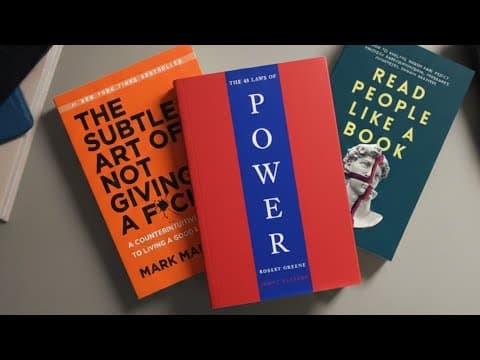
50 Books that AYANOKOJI would have Read in the WHITEROOM
Semper
6m 31s1,311 words~7 min read
YouTube auto captions
Transcript source
YouTube auto captions
This transcript was extracted from YouTube's auto-generated caption track. The transcript below is server-rendered so it can be read, searched, cited, and shared without opening the original YouTube player.
Pull quotes
[0:00]If Aya Koji Kyotaka ever handed you a list of books he read in the white room, you wouldn't find a cozy fiction or feel-good story among them.
[0:00]Nah, it'd be a straight-up arsenal of psychological warfare, human nature, persuasion, and mental mastery.
[0:00]And if you really want to think like him, or at least fake it till you make it, then these 50 books are your crash course into high-level manipulation.
[0:00]So let's dive deep, not just into the titles, but into the core lessons and how to apply them like someone who sees 10 steps ahead.
Use this transcript
Related transcript hubs
Watch on YouTube
Share
MORE TRANSCRIPTS


