[0:00]I'm Mandy Goodman with Aaron. We are less than a week from President Obama's second term inauguration. Two of the leading figures nominated to head the foreign policy establishment have their political roots in the Vietnam war. Chuck Hagel, tapped by President Obama to be Secretary of Defense is a former Army sergeant and if confirmed will become the first Vietnam war veteran to head the Pentagon. Obama's name for Secretary of State, John Kerry became one of the most prominent veterans to oppose the Vietnam war after his return. Testifying before the Senate in 1971, Kerry discussed the atrocities on earth in the winter soldier investigation. Where over 150 veterans testified to war crimes committed in Southeast Asia. They told the stories of times that they had personally raped, cut off ears, cut off heads, taped wires from portable telephones to human generals and turned up the power, cut off limbs, blown up bodies randomly shot at civilians, raised villages in the fashion reminiscent of, shot cattle and dogs for fun, poison foons and generally ravage the countryside of South Vietnam in addition to the normal ravage of war and the normal uh and very particular ravage which is done by the applied bombing power of this country. John Carey testifying in 1971 after he returned from Vietnam. Although the Vietnam war is far far behind them, Carey and Hagel will now have to contend with the longest running war in US history, Afghanistan. President Obama has announced plans to speed up the transfer of former military control to Afghanistan forces. But it's unclear how the new time table will change operations on the ground as tens of thousands of US troops remain in Afghanistan until the withdrawal deadline of late 2014 and possibly even beyond. Speaking on Monday after meetings with President Obama, Afghanistan President Hamid Karzai said Afghanistan would be better off without foreign troops. I am not sure. The main question is that whether by the withdrawal of foreign troops from Afghanistan will the situation become insecure. No, by no means. It's the other way around. Afghanistan will be a secure and better place. We should remove this idea from our mind that if there are no foreign troops in our country, we will not be able to protect the
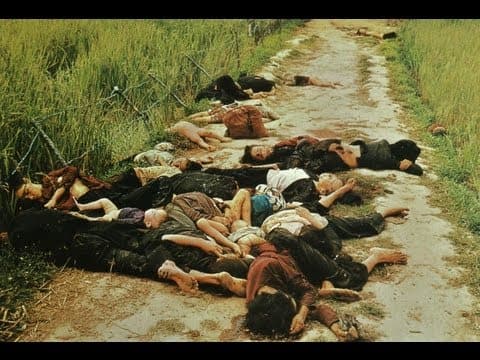
[2:32]We're joined right now by author and journalist Nick, managing editor of Tomdispatch.com. His most recent book is kill anything that moves, the real American war in Vietnam. The title is taken from an order given to the US forces who slaughtered more than 500 Vietnamese civilians in the notorious massacre of 1968, but drawing on interviews in Vietnam in a trove of previously unknown US government documents including internal military investigations of alleged war crimes in Vietnam. Turs argues that US atrocities in Vietnam were not just isolated incidents, but the inevitable outcome of deliberate policies dictated at the highest levels of the military. Nick Turs's other books include the case for withdrawal from Afghanistan and the complex. Welcome to democracy now. Thanks for having me on. So the foreign policy establishment of confirmed Turs and and John Kerry both uh fought in Vietnam. When John Kerry came home, he famously talked about um the atrocities that were going on in Vietnam. So it's decades later, Nick, there have been tens of thousands of books written about Vietnam. Why did you choose to go there as well and write kill anything that moves? Well, uh you know, as you said there have been 30,000 books or so written on the war, but uh but none that I found that truly addressed when I believe is the signature aspect of the war, which was Vietnam's civil suffering. Uh, this isn't just uh, atrocities, the types of things that we heard John Kerry just talking about, but also uh, this the systemic use of heavy fire power in the country side, uh, unshakable bombing, the use of of helicopter gunships, uh, artillery fire, they called it harassment, interdiction fire, which is basically just blanketed the countryside with uh, with heavy artillery. This is where people lived and people worked and tremendous numbers of Vietnam's died as a result. Let's go to for a minute. The massacre that took place on March 16th, 1968, but it wasn't until November 12th, 1969 that the world found out about it when investigative journalist Sherman Brink the story about the massacre and its cover up. He was awarded the police surprise for the ex-seize. Democracy now spoke to Sayash on the 40th anniversary of the massacre about what happened. The analogy with Iraq is pretty acute. Basically, it's a group of soldiers that landed. Uh they were mostly uh educated, the high school graduates and dropouts. Um who were told they were fighting communism going to save America. They got to Vietnam. They spent 10 11 weeks uh in the, you know, hamping it in the Boeties and in the villages and patties of of uh of South Vietnam and never saw the enemy. Maybe they lost 15 or 20% of their company through uh snipers, landmines, etc. but they never engage and over the period of 10, 11, 12 weeks between the period they landed around New Year's Day of 68 until March 16th. They became increasingly brutal. Uh so randomly going through a village and whacking people sometimes an old man they saw one soldier would just hit him with a rifle butt, nobody said anything because what happens inevitably is when you don't see an organized enemy and you lose people, you lose your buddies and your mates and you're angry. You take it out on the villagers, you take it out on the civilian population. That's uh speaking about the media massacre. And Nick, uh in your book, you talk about the testimony of soldiers who uh actually spoke of of a media each month for a year. and actually saying that these types of atrocities were carried out by every single unit that was deployed in Vietnam. Can you talk about what you found in the US government archives that that speak to this level of killing that uh that you're discussing in your book. Sure. This was uh I when I was a graduate student, I found these records.
[6:37]They'd been sitting on the uh in the National Archives for years, but no one had worked with them. It was a a secret Pentagon task force called the Vietnam War Crimes working group. It was set up in the wake of the Meili massacre to make sure that the army was never caught flattened again by an atrocity scandal. This was run out of the office of Williamless Morlin in the Pentagon, who at the time was a chief of staff. He had previously been the supreme US commander in Vietnam. So he had a real stake in uh in finding out what atrophy allegations might bubble up and then uh tapping them down whenever possible. And this uh this working group put together records of uh hundreds and hundreds of uh uh horrific atrocities. We're talking about massacres, murder, assault, rape, torture. Uh it was uh really a just uh to call it a a treasure trove records of some wrong phrase. It was it was a horror trove and uh when I looked at this, I realized These records weren't in the literature anywhere and uh and I saw that it showed a a systematic use of atrocity throughout the country side. Uh these were atrocities committed by every uh US major US army unit that was involved in the conflict. Let's go to Westmorland now. Let's turn to a 1974 American documentary film about the Vietnam War called hearts and minds that was directed by Peter Davis, well very well known film in this clip. General William Wesson, the former commander of the American military operations in the Vietnam war reveals his views about the Vietnamese people. Well, the Oriental doesn't put the same high price on life as does the Westerner. Life is plentiful, life is cheap in the Orient.
[8:24]And uh as the uh philosophy uh of uh of the Orient uh uh express is it uh uh life is uh is not important. That's General William Westland. Yes, uh, you know, and and the filmmaker Peter Davis actually asked him that question a number of times to make sure that Westland was uh was expressing his views and and uh this is exactly what he meant to say and this was this was the type of uh mindset that suffocated the US military at the time. They uh there was a an acronym used, MR was uh stood for the mere group. Uh this uh this was what the the US military was stationed at the time, a type of racism and dehumanization of the Vietnamese that they weren't uh real people that they were subhuman, who could be abused or killed at will. Now meanwhile the church there were soldiers at the time, not just John Kerry who were trying to uh publicly reveal the atrocities that were taking place. And uh you mentioned this Vietnam War Crimes working group um and uh in your book you actually talk about taking the the these secret documents that hadn't been released before, taking them to the veterans that had tried to speak out way back then. and one of them is uh Jamie Henry and wondering if you can talk about him. Sure. Uh the records that I found at Jamie Henry's case really they stuck with me and I I knew I had to find find this man. They were several phone book size files. Uh this a major investigation was done. And uh you know, Jamie was a a reluctant drafty, but he went to Vietnam. He was a medic. Uh he saved a lot of American lives. And uh but once he got over there, he he saw things that really disturbed him on his first day in the field, he watches the point man, the lead man of his patrol, stopped a young girl uh on a trail and molested her. And uh and Jamie said to himself, my god, you know, what's going on here? And day after day he saw things that that really disturbed him. A young boy who was captured and beaten up and then executed, uh an old woman who was shot down, a man who was used for target practice, a prisoner who was beaten and thrown off a cliff. On and on he saw these these things. And uh and it culminated one day on February 8th, 1968, it's about a month before the media massacre. Uh his officer while they were in a village gave an order to kill anything that moves. And Jamie heard this over the radio and he set out to to go to the scene to try and stop it. Well, there were 20 women and children who were rounded up and by the time Jamie got there, the men opened up on them on automatic with their M16 automatic rifles and killed them all. And uh and Jamie watched this happened and he told me that uh 30 seconds later, he vowed that he would make sure that the story got out, no matter what it took.
[11:51]So um, you know, Jamie did, but once he got back, he he went and met with a army lawyer and uh this guy told him, look, there's a million ways that the army can make you disappear. So you better keep your mouth shut. He went and spoke to an army criminal investigator and this man threatened him. He went to a private attorney and asked for advice and this guy said you should get some political backing. He wrote to some congressman but no one wrote him back. So he went public. He uh he spoke out at the Winter Soldier investigation among other public forums on the radio. Uh he published an article, had a press conference, but he just couldn't get any traction. And eventually, you know, years later he just gave up. Uh what Jamie didn't know was that the army conducted a very thorough investigation, interviewed uh all the other members of this unit. They co-borated exactly what he said and they even painted a more chilling picture because some of them saw things that that Jamie hadn't. And uh but Jamie didn't know until I called him up and then knocked on his door and brought those investigation files. He was in uh Northern California. He was a a skyline logger and you know, he just never knew that uh that these records existed that that anyone knew that that he was actually telling the truth. So when you brought him these um phone book size investigations into his allegations, what did he do? Well, I mean he he was shocked. He did feel uh you know, vaccinated. There was a little tribulation there because um, you know, it was a lot of years later to dredge all this up and uh he was a little bit scared, but he told me that uh, you know, if it was right back then, then it was right to expose now. Uh, and and it wasn't easy on him. After the the first day that I I spent talking with him and going through the records, he told me that uh that night after I left, he went and and sat in his easy chair and he shook uncontrollably for an hour. You know, he said, you know, I had some sort of stress reaction. He said, but uh, but he thought about it. He talked to his wife and he said that this was it was important to uh, to go on the record again and and uh and make sure that that people knew that this is really what happened to be. And you wonder where so many cases of post-traumatic stress disorder come from that everything you learn is wrong in this country when you're growing up.
[14:16]Um you then either commit, see others commit or force to cover up or choose not to cover up. Now today in our headlines, we just read this year the worst year for suicides almost one a day and that's just active duty soldiers um right now uh in uh in the wars now. That doesn't even include the record number of veterans who killed themselves. That's right. and uh you know, one thing also to to keep in mind about Vietnam veterans like Jamie. I mean, uh this was a a largely drafty army and uh these were I mean these were mostly teenage boys, 18, 19, 20 years old.
[15:01]Uh today uh some of the troops are are a little older at that time these these men were were even uh less psychologically able to to deal with the types of things that they were seeing and and called upon to do. Now you've also written a book called the case for withdrawal from Afghanistan. Uh what is that case and and can you talk about um the significance of having now carry and Hagel Vietnam veterans now heading US foreign policy, which is of course overseeing it the longest war in US history in fact. If confirmed. If confirmed, of course, yeah. Well, um, you know, I I I I guess there are reasons to to be hopeful. I mean, these men have actually uh seen combat. Uh, you know, John Kerry did speak out at one time. It seemed like uh he began backing away from that almost uh immediately and and by the time uh, you know, he made his presidential run in 2004, he uh, you know, he he really wouldn't address the topic in any any serious way. But uh, you know, I I I think they at least do bring a realization of of what was about. Uh, you know, Chuck Hagel, he saw he's never I don't know that he's ever been completely honest about what he's seen. If you read the accounts of his brother, who served in the same unit as him uh during the war. Which is very unusual. Very unusual. Maybe the only time in Vietnam, but but his brother paints a very brutal picture of the war, very similar to the one that that I that I talk about and kill anything that moves. Uh and and they served under one of the most notorious commanders in Vietnam. A general named Julian, who was uh became known within the military and also outside of it as the uh Butcher of the Mekong Delta. And uh uh was a was a what they called a body count fanatic and he demanded uh Vietnamese bodies and he was uh wasn't very discerning about uh who they belonged to. So just about any who was uh was called in as a enemy casualty was uh was counted up as enemy. But uh, you know, just as the as the Hegel brothers were were leaving Vietnam, you will kicked off an operation called Speedy Express, which I I talk about in the book, which led to 11,000 uh Vietnamese casualties, but only resulted in around 750 weapons uh being recovered. Some news week reporters looked into this a couple years after Speedy Express ended and came up with an estimate of uh of 5,000 civilians uh killed during that operation. And when I went into the archives, I found the military's own secret reports that uh the news week reporters didn't know about and the estimates were uh they they showed that the news week estimates were low. The military estimated about 7,000 civilian casualties. So, I mean this is the the type of war that uh that that Chuck Hagel saw down there and uh and and John Kerry operated in in roughly the same area down in the Delta. So they do know something about the brutality of war. Nick Turs, uh his book is kill anything that moves, the real American war in Vietnam. This is democracy now, democracy now.org. Thanks so much for watching this report from democracy now, your daily independent global news hour. We don't accept advertising or corporate funding, but rather rely on donations from viewers like you, please make your contribution by visiting democracy now.org. We need your support today to keep bringing you this hard hitting in depth reporting.