[0:04]Raise your hand if you've ever picked up a book to read, only to abandon it halfway. Honestly, so have I, and I am a writer by trade. We live in this age of digital distractions, and so if you are someone that has picked up a book but were unable to finish it, you're not alone. So today I want to talk to you about reading and the impact of reading. Now quite frankly, we all know that reading is a good habit to have. It's something we should all do. And I'm not here to tell you what you already know. But what I am saying is that reading is no longer a habit. In fact, it's an exercise, and like all exercises, it rewards our body and our mind. Reading can only help us if we do it often enough. So as I was saying earlier, I am a writer, which means that I am a 26-year-old adult and I still live with my parents. Which isn't so unusual in our culture or in our economy. But what I have learned is that even when we don't have the power to be as financially independent as we want to be, it's still important to think independently. Sometimes our proximity to our loved ones both in the professional and personal space can blanket our ability to make our own decisions, think for ourselves and form our own opinions. So what does thinking independently have to do with reading? A lot. I find that every time I read a book, I am able to experience the world from another person's point of view, compare that point of view with my own and in this process, learn something new. When I was studying how to be a writer in a small college in New York, I had the opportunity to read a lot of books. Of course, there can never be any writing without reading, so I was only happy to do so, and it was during this time that I read Mohsin Hamid's The Reluctant Fundamentalist. In this book, Mohsin Hamid introduces us to the life of a young Pakistani man making his way in America. As a young Indian girl, it surprised me how much I could understand this man's point of view when my social conditioning has taught me that I have to be skeptical of everything on the other side of the border. During this time, I also read Stephen Chbosky's The Perks of Being a Wallflower. Reading this book was a delight because it introduced me to this fantastic movie called The Rocky Horror Picture Show, which is something I hope all of you look up, not right now, after we're done. Uh, but also this book, a story about a 15-year-old American boy really stayed with me. And that's what surprised me, I had nothing in common with this character, and yet his perspective on life, on love, and on relationships was so endearing to me, and I could deeply feel his hurt. During this time, I also read Patti Smith's Just Kids and classic Catcher in the Rye amongst other books, and what really stayed with me was that here was a variety of writers who lived in a different time than I did, many of whom belonged to different generations and had completely different backgrounds and realities than my own. And yet there was this common ground we could all meet at and connect that. Today I think we can make success and our life look as successful as we want to. Recently, I read Malcolm Gladwell's Outliers. And in this book, Gladwell shows us what success really is, and how success isn't always dependent on obvious factors such as talent and opportunity. In fact, success can also be dependent on less obvious factors. And since we live in this time where we can each make our lives look as fantastic and successful as we want, it's interesting to note that we get to decide what we want to show to the world, where we're eating, where we're going, who we're hanging out with. But this creates a false sense of reality. I think I was from the last generation that grew up without social media and a cell phone. I didn't have a cell phone until I was in high school, and Instagram only launched in my last year of college when I was 21. Now this may be shocking because I think I still look like I'm 21. The secret to that is that I do a lot of face masks, but that is a whole separate Ted Talk in itself. Uh, but even before social media came around, I remember being this awkward child and I would run up to the library every lunch break in grade seven. I would run up to the library every lunch break because, as you can imagine, I was quite popular. Uh, but what that time gave me was a healthy attention span. Something that I think kids today just cannot access because our attention span is constantly being stretched in so many different directions. There's Netflix, iPads, drones flying around in the sky, and God knows what else. So what this healthy attention span gave me was the ability to finish reading a book, even if I had read a better book before that one. And this is why I realized that reading is in fact an exercise because it is an active experience. So let's try this together. Consider your reading a book and there's a line that goes, an attractive man walks down the street. Think about this for a few seconds. For each of us, that attractive man could look different. For one person, an attractive man could be someone with a stubble, slightly rugged and a pair of ripped jeans. For somebody else, an attractive man could be someone clean-shaven in a suit. Even the street can look different for each of us. For some people, the street could be a beautiful cobbled stone sidewalk in Europe. For a Bombay girl like myself, a street is often a very crowded place with pan stains everywhere. But if we were to see the same scene, an attractive man walks down the walks down the street on film, on screen. There's no doubt in my mind that we'd all have the same experience. We'd all look at the same man and we'd all look at the same street. This is because reading is active, but seeing is simply observing, which is passive. If we think about it, in recent times, there have been so many instances when powerful stories and powerful books have gone on to make massive profits at the box office. Movies, video games, TV shows, and even theme parks are based on books. So some books that turn into movies make massive amounts of profit. Some not as much, right? Some movies just don't make it. This is because not all books are made equal. Not all movies are made equal, and quite frankly, not all stories have the power to make big profits. But the best part about reading is that we get to decide what's an interesting book and what is a dull one. Each of us can have a different taste, we can each have different opinions, and somehow we can all coexist. If we think about it, words really are the essence of all human experience. We make sense of everything around us through words. This is a chair, that is my friend, and so on. I find that when I spend an hour with my phone, I sometimes leave it feeling slightly bad about myself, but if I spend an hour with a book, I leave it feeling slightly better about myself. This is because with social media, through our phone, we are often comparing ourselves to other people. But with books, we're living through other people. What a book does is even if briefly, we start to befriend the protagonist or the character we're reading. We start to see the world from their point of view, we understand their actions, and we start to empathize with them. And if we do this often enough, that same empathy transfers to people in other areas of our life. So in many ways, reading can make us empathize. In many ways, everything around us, whether it's the blueprint of a skyscraper, a hit movie, a hit song, everything starts with words. And even when we don't realize it, we're reading anyways, whether you're reading the captions under a photo on Instagram, whether you're reading comments, an article or blog online, or all you can eat buffet of opinions, also known as Twitter, anytime we're reading any of these things, we're reading, but it's just the landscape of language online and in books is massively different because it takes so much more effort to put a book together. If there's so many more layers of publishing and work involved. Which is why all I want to simply remind you this morning is that even when it seems like an exercise, we must push ourselves to read, because when we do, it expands the boundaries of what we know, of who we are, and what we can do. It helps us memorize better, empathize with people, and it ignites our imagination and mobilizes our mind. So I hope that you will read more. Thank you for your time.
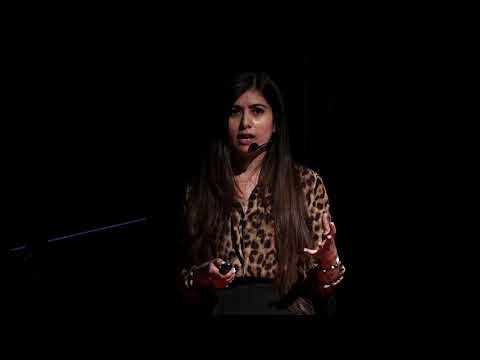
Read More. Think More. | Alisha Rajpal | TEDxYouth@OIS
TEDx Talks
9m 35s1,592 words~8 min read
YouTube auto captions
Transcript source
YouTube auto captions
This transcript was extracted from YouTube's auto-generated caption track. The transcript below is server-rendered so it can be read, searched, cited, and shared without opening the original YouTube player.
Pull quotes
[0:04]Raise your hand if you've ever picked up a book to read, only to abandon it halfway.
[0:04]We live in this age of digital distractions, and so if you are someone that has picked up a book but were unable to finish it, you're not alone.
[0:04]In fact, it's an exercise, and like all exercises, it rewards our body and our mind.
[0:04]So as I was saying earlier, I am a writer, which means that I am a 26-year-old adult and I still live with my parents.
Use this transcript
Related transcript hubs
Watch on YouTube
Share
MORE TRANSCRIPTS


