[0:00]During a heart transplant, surgeons begin by making a precise incision down the center of the chest. The breastbone, also known as the sternum, is carefully divided to access the heart. Once the chest is opened, the failing heart is exposed. Major blood vessels are clamped and carefully disconnected, and then the heart is removed. At this moment, the chest cavity is temporarily empty. So how is the patient still alive? The answer is the heart-lung machine, also called a cardiopulmonary bypass machine. This machine takes over the job of the heart and lungs. It pumps blood throughout the body and adds oxygen to it. This allows surgeons to operate on a heart that isn't beating. Meanwhile, a donor heart preserved in a sterile cold solution is brought into the operating room. It is carefully matched for blood type and size. The new heart is placed inside the chest and meticulously connected to the major blood vessels. Once everything is secured, the clamps are removed. Blood begins to flow into the new heart. In many cases, the heart begins beating on its own. If it doesn't, surgeons deliver a small electrical impulse to stimulate it. And just like that, a new heartbeat begins. Have you ever seen something like this? Do let me know in the comments.
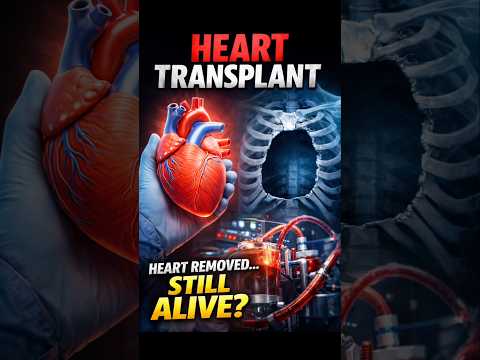
How Can You Live Without a Heart? | Heart Transplant Explained #shorts
Between The Thoughts
1m 10s217 words~2 min read
YouTube auto captions
Transcript source
YouTube auto captions
This transcript was extracted from YouTube's auto-generated caption track. The transcript below is server-rendered so it can be read, searched, cited, and shared without opening the original YouTube player.
Pull quotes
[0:00]During a heart transplant, surgeons begin by making a precise incision down the center of the chest.
[0:00]The breastbone, also known as the sternum, is carefully divided to access the heart.
[0:00]Major blood vessels are clamped and carefully disconnected, and then the heart is removed.
[0:00]The answer is the heart-lung machine, also called a cardiopulmonary bypass machine.
Use this transcript
Related transcript hubs
Watch on YouTube
Share
MORE TRANSCRIPTS


