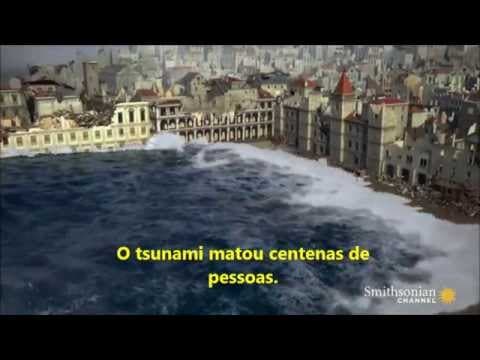
[0:00]Lisbon, capital city of Portugal and one of the oldest cities in Europe. But today, remnants of its ancient glory are hard to find. 300 years ago, a very different Lisbon stood on this site. A guilded city at the center of a world empire. Until the day disaster struck. Moments before 9:30 a.m. on November 1st, 1755, a sudden sliding movement between two gigantic tectonic plates occurs. The result, a massive magnitude 8.5 earthquake. One of the most powerful in modern European history. 150 miles from the epicenter, the full power of the earthquake strikes Lisbon. Nobody knows exactly how many people were crushed in those first terrifying moments. But time and place would conspire to seal the fate of tens of thousands. Survivors flee towards open ground down by the Tagus River. 150 miles offshore, the earthquake has displaced trillions of gallons of water. It results in a tsunami which takes less than 40 minutes to reach Lisbon.
[1:25]The tsunami kills hundreds. But in a cruel twist of fate, just before the earthquake strikes, thousands of candles are lit in Lisbon to celebrate the feast of All Saints. As the waters recede, it's not enough to extinguish the gathering flames that spread and engulf the city. After earthquake, tsunami and fire, Lisbon, one of Europe's richest seaports, has been transformed. No more a city of gold, it has become a repository of charred and blackened bones.


