[0:00]10 years, that's how long the Islamic world has before starvation dooms them all. Not a prediction, a calculation. From Egypt to Pakistan, over a billion people live in nations where the water is running out. The crops are failing and the money to import food is disappearing. The Aquafers that sustained civilizations for millennia are being depleted. The rivers that built empires are being weaponized and the currencies needed to buy wheat on global markets are in free fall. This is already happening. Children are being born stunted, brain damaged by malnutrition before they reach school. Ancient cities are being abandoned as farmland turns to salt. Governments are facing a choice they cannot win. Feed their people or pay their debts. And the most terrifying part, nobody knows how to stop it. What you're about to see is the Islamic world is being starved into collapse, and why the systems that could have prevented it have already failed. It starts underground when nobody's looking. The wells are empty and they're never coming back. For decades, nations across the Islamic world pumped ground water as if it was endless. Saudi Arabia, Iran, Pakistan, they drilled deeper and deeper chasing what geologists call fossil water. Ancient reserves trapped in rock layers for thousands of years, water that took millennia to accumulate. It's gone in a single generation. In mid-1990s, Saudi Arabia became a global wheat exporter. Fields bloomed in the desert. The kingdom celebrated its agricultural miracle. Television broadcast showed golden wheat swaying in winds that only had known sand. But it was a mirage built on borrowed time. Today, satellite data shows that more than 80% of Saudi Arabia's non-renewable ground water has been pumped dry. The wells that made those wheat fields possible are now just holes in the sand. The wheat program was quietly abandoned. The desert returned. In Iran, the crisis has a name, water bankruptcy. Driven by an ideological obsession with food self-sufficiency, the government encouraged farmers to sink over 1 million wells across the country. 1 million, each one drilling deeper, extracting faster, competing with neighbors for water that would never be replaced. The result, nearly half of Iran's plains are now depleted, and the land itself is collapsing, sinking at rates up to 30 cm per year. 30 cm every year. This isn't just dramatic, it's permanent. And when the ground subsides, it crushes the geological pores of the aquafur, the microscopic spaces in rock that hold water. Even if heavy rain returns, the earth can no longer hold the water. It's like crushing a sponge until it becomes a solid brick. The ancient Qanat systems, gravity fed irrigation networks that sustained Persian civilization for over 2000 years, have been abandoned. Replaced by electric pumps that hollowed out the future. The numbers tell a story. The Middle East and North Africa hold less than 1% of the world's renewable fresh water. Yet their homes over 6% of the global population. By 2030, just a few years from now, the average person in this region will have access to less than 500 cubic meters of water per year. That's the threshold for absolute scarcity, the point where even basic survival becomes a daily struggle. But underground water isn't the only thing disappearing. The rivers that built empires are being strangled. Egypt doesn't control the Nile anymore, Ethiopia does. For thousands of years, the Nile was Egypt's lifeline. It provided 98% of the country's water. Entire civilizations rose and fell along its banks. But in 2020, Ethiopia completed the Grand Ethiopian Renaissance Dam, one of the largest hydroelectric projects in Africa. And with it, they seize control of the Blue Nile, the source of 86% of the river's flow. During droughts, the dam's operation could reduce water flow to Egypt by 25% or more. Experts warn this could lead to loss of one third of Egypt's agricultural land. For a country that imports most of its wheat and feeds almost 120 million people, that's not a statistic, it's an existential threat. And Egypt isn't alone. In Iraq, the Tigris and Euphrates, the river that gave birth to human civilization, are dying. Turkey's Southeastern Anatolia project has built dozens of dams upstream. These projects can reduce water flow into Syria by 40%, into Iraq, as much as 80%. The Iraqi Ministry of Water Resources has issued a chilling warning. The Euphrates could run dry within Iraq's borders by 2040. Already the receding waters are revealing ancient cities, settlements that were submerged for over 3,400 years. A grim reminder that civilizations in this region have collapsed before when their water failed. Rivers are being weaponized. Upstream nations hold the power, downstream nations are left to watch their crops wither and their cities choke on dust. And when the water dies, the food dies with it faster than anyone predicted. There's a temperature at which wheat simply stops reproducing. We're hitting it every summer. The Islamic world sits in a geography that's warming at twice the global average. And this heat isn't just uncomfortable, it's reaching the biological limits of the crops that feed the population. Rice and wheat have strict thermal thresholds. For rice, the primary calorie source for billions, temperatures exceeding 35 degrees Celsius during the flowering stage cause immediate pollen sterility. If a heat wave lasts just three consecutive days during pollination, the pollen grain becomes weak, loses viability, and fertilization fails completely. In Pakistan's Punjab province, which produces 90% of the country's basmati rice, temperatures are now regularly breaching these limits. This threatens both domestic food security and Pakistan's vital export earnings. Wheat follows the same deadly path. When temperature climbs above 30 degrees Celsius during the reproductive phase, pollen abortion occurs. The grain filling period shortens, yields plummet. Research shows that for every 1 degree Celsius increase in average temperature during the growing season, rice and wheat yields across the region will decrease by 6 to 10%. That's catastrophic. And you can't fix it with more fertilizer. You can't irrigate your way out of a heat-induced crop failure. The plants are hitting their physiological ceiling, the point where biology simply breaks down. But it's not just the heat killing the land. It's the salt. In arid regions, irrigation water evaporates quickly, leaving behind mineral salts. Without enough fresh water to flush them away, the soil becomes toxic. In Egypt's Nile Delta, rising sea levels are pushing salt water into the groundwater. The lack of Nile silt trapped behind dams prevents natural soil renewal. In Iraq and Syria, millions of hectares of once fertile land have already been abandoned. Farmers discovered that the cost of growing food now exceeds the value of the harvest. This triggers a massive demographic shift. In Iran alone, it's estimated that over 70% of villages are at risk of being abandoned due to water scarcity and drought. Between 2002 and 2017, more than 12,000 Iranian villages were entirely deserted. Their residents moved to the edges of already overcrowded cities like Tehran and Mashhad. And when the countryside can no longer feed the city, the city becomes a trap. Egypt spends more than 50% of its government revenue just paying interest on debt. And the IMF wants them to cut food subsidies. Once a nation's domestic agriculture collapses, it enters total dependence on the global food market. For countries like Egypt, Jordan, and Lebanon, this is a death sentence waiting to happen. Egypt relies on imports for 60 to 70% of its wheat consumption. Much of it historically came from Russia and Ukraine. When the war erupted in the Black Sea region in 2022, global wheat prices soared. Ships couldn't leave port, future markets went haywire, import dependent nations panicked. But the real guillotine isn't global supply. It's the currency. In 2024, the Egyptian pound and Pakistani rupee lost nearly half their value against the U.S. dollar. Nearly half in months. When a currency collapses like that, the cost of imported wheat doubles or triples in local terms. Even if global prices stay perfectly stable, a family that could afford bread last year now watches prices climb beyond reach. To prevent mass starvation, governments are forced to provide massive subsidies. They buy wheat at international prices and sell bread to their citizens at a fraction of the cost. The difference, paid for by borrowing, by printing money, by mortgaging the future. In Egypt, the baladi bread subsidy is a red line in the social contract. It's not negotiable. It's not optional. The government sells a loaf of bread for five piastres, while it costs 60 piastres to produce. A 90% subsidy funded by ballooning national debt. The math is broken, completely broken. Egypt spends nearly 50% of its entire government revenue just to pay interest on its debt. Not building hospitals, not fixing roads, just interest. Half the budget disappearing into the pockets of international creditors. When the IMF steps in with emergency loans, their primary condition is structural adjustment, a polite term for cutting the subsidies that keep people alive. Remove the price controls, let the market decide, fiscal responsibility. The state faces a choice it cannot win, raise food prices and trigger riots, or keep prices low and face total sovereign default. This isn't theoretical. In 1977, Egypt's government attempted to cut bread subsidies. Within 24 hours, riots erupted across the country. Nearly 100 people died, the military deployed to the streets, the government reversed the cuts immediately. In Sudan, a free fall increase in bread prices in 2018 sparked a nationwide uprising that eventually toppled the government and plunged the country into civil war. In the coming decade, as water and heat decimate domestic crops, the demand for imports will surge just as the ability to pay for them disappears. And when the state can no longer maintain the subsidies, the collapse moves into the cities. In Karachi, water costs more than food because organized crime controls the pipes. Modern mega cities like Karachi are metabolic miracles that should not exist in the desert. They depend on constant massive inflows of water, food, and electricity. When one system fails, the city transforms from refuge to predator. Karachi, a city of about 20 million, receives only half the water it needs from the official utility. The gap is filled by the water tanker mafia, a loosely organized network that siphons water from public pipes and sells it back to the residents at inflated prices. For the poor, water now consumes between 15 to 60% of their monthly income. Meanwhile, the wealthy with pipe connections pay only 2%. This is the privatization of survival. As food prices rise and currencies collapse, black markets for bread and grain explode. Poor starve first, but they're followed quickly by the working class. Hospitals fail not from lack of medicine, but from lack of water and power. In Syria, low water levels in the Euphrates have created stagnant pools that foster cholera outbreaks. A disease of the 19th century returning to haunt the 21st. At this stage, the state's role shifts. It's no longer a provider of services, it becomes a manager of scarcity. Security forces deploy not to protect the people, but to protect the supply lines of the elite. In 2008 and 2011, food prices spikes were the catalyst for the Arab Springs. Uprisings driven as much by the price of bread as by the political freedom. In the next decade, as shortages become permanent rather than episodic, the responses will be brutal. Because the state no longer has the tools left, but the worst part, the ones who suffer first are the children, stunted. That's the medical term. One third of all children in South Asia are stunted. Their brains are permanently damaged before they reach school age. We're not just watching the collapse of a political system, we're witnessing the biological degradation of an entire generation. Stunting occurs when a child doesn't receive adequate nutrition during the first 1000 days of their life. The damage is irreversible. A stunted child develops a brain with a shrunk gray matter and slower nerve communication. They lose on average 10% of their lifetime income potential. They achieve less than 50% of their full productive capacity as adults. At a national level, this translates into a permanent 9% annual loss of GDP. This is the human capital of the region being incinerated, and it creates a vicious feedback loop. A nation of stunted cognitively impaired adults cannot manage a complex failing state. They cannot innovate their way out of a water crisis. They cannot build a high-tech economy. They become a trapped population, integrated into a global system only as recipients of dwindling humanitarian aid or as a source of refugees. In Iran, over 70% of villages are at total risk of abandonment. Entire rural populations are migrating to urban slums. The countryside empties, the city swell beyond capacity, and the technology that's supposed to save them, it can't. Saudi Arabia can desalinate water for its cities. It cannot desalinate water to grow wheat for 100 million Egyptians. Desalination is often presented as the silver bullet, the technology that will save water scarce nations. But it's an energy intensive, expensive solution that only works for drinking water in wealthy coastal cities. You cannot scale desalination to meet the agricultural needs of nations with populations in the tens or hundreds of millions. Saudi Arabia and the UAE can afford to desalinate for their urban centers. But it's physically and economically impossible to produce enough fresh water to irrigate the crops needed to feed Egypt's 119 million people or Pakistan's 257 million. And desalination comes with a cost. The process produces hypersaline brine that destroys marine ecosystems. The same ecosystems that provide the region's only other source of food, fisheries. Technology isn't coming to the rescue. So what happens when the food runs out, the money runs out, and an entire generation has already been broken? This isn't a disaster that will appear in a headline. It's a slow finning of life. The collapse of the Islamic world is not a single catastrophic event. It's the quiet disappearance of the elderly who can no longer find bread. It's the child who stops growing because milk is too expensive. It's the farmer who walks away from dead fields and vanishes into an urban slum. It's the mother who dilutes formula with dirty water because clean water costs more than she can earn in a day. It's happening right now in real time. Decades of mismanagement, demographic pressure, and a refusal to acknowledge the limits of the earth have created a system that is now crossing the point of no return. Governments ignored warnings, they prioritized short-term policies over long-term survival. They built cities in deserts and promised water would always flow. They told farmers to drill deeper, plant more, produce more, knowing the aquafers would run dry. And now the bill has come due. Aquafers do not feel on human time scales. Soil destroyed by salt does not recover in a season. Currencies usually do not stabilize when the population is starving. And once a generation is stunted, once those first 1,000 days pass without adequate nutrition, the damage is permanent and the future is already lost. The world will watch as these nations slide out of the global system one by one. First the agricultural collapse, then the currency crisis, then the subsidy cuts and the riots, then the mass migration, then the silence. There will be no miracle. There will be no reform that refills the rivers or cools the sun. No technological breakthrough that will desalinate enough water to feed hundreds of millions. No international aid program will be large enough to substitute for collapsed ecosystems. What follows is not chaos. It's the architecture of a slow, predictable, and unstoppable death. By the time the world agrees that the Islamic world is starving, it will be because the millions who could have been saved are already gone. The warnings have been ignored. The reports will have been filed. The data will have been clear, and nothing will have been done because saving a civilization requires admitting it's failing. And that admission never comes until it's too late. What do you think happens when 1 billion people run out of water and food in the same decade? Let us know in the comments and subscribe to Fall of Nations for more analysis you won't find anywhere else.
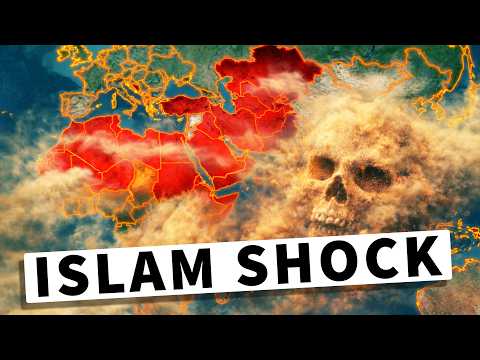
Something Worse Then DEATH is About to Happen to ISLAM
Fall of Nations
20m 6s2,752 words~14 min read
YouTube auto captions
Transcript source
YouTube auto captions
This transcript was extracted from YouTube's auto-generated caption track. The transcript below is server-rendered so it can be read, searched, cited, and shared without opening the original YouTube player.
Pull quotes
[0:00]10 years, that's how long the Islamic world has before starvation dooms them all.
[0:00]From Egypt to Pakistan, over a billion people live in nations where the water is running out.
[0:00]The rivers that built empires are being weaponized and the currencies needed to buy wheat on global markets are in free fall.
[0:00]Children are being born stunted, brain damaged by malnutrition before they reach school.
Use this transcript
Related transcript hubs
Watch on YouTube
Share
MORE TRANSCRIPTS


