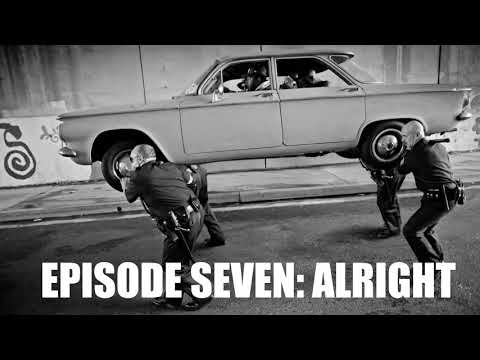
[0:00]Hello everyone, and welcome back to another episode of To Pimp a Butterfly analysis. Today we'll be analyzing one of the lead singles off the album, all right. Unlike the previous song, you, all right takes a more optimistic approach. As we saw before in you, Kendrick essentially tore himself apart over several different aspects, the main one being how he blamed himself over the death of his best friend, Chad. In all right, Kendrick is seen to be searching for a way to get out of this depressive self-loathing state, and as we'll see as we start to look into the lyrics, Kendrick does manage to find his way for the most part. So, the song starts with the line,
[0:39]Alls my life I has to fight, nigga. Here, Kendrick is referring to a speech given by the lead character in the 1982 novel, The Color Purple, which later was given a film adaptation in 1985. All my life I had to fight. I had to fight my daddy. I had to fight my uncles. I had to fight my brothers. The novel focuses on the life of an African-American woman in the 1930s with the themes of violence, religion, and most poignantly, race. With the novel being set in the 1930s, it was making commentary on things at the time like legal segregation and Jim Crow laws. In the novel, the lead character, Seely, like many other black women at the time, is far too often victims of violent crimes committed by white men. However, as the novel progresses, much like Kendrick, Seely learns about the rich cultures and civilizations that existed in Africa and takes pride in her ethnic heritage. As you can probably tell, all these aspects linked to the themes constantly being touched on so far in To Pimp a Butterfly. And as we progress through the song, there will be more instances of this self-pride. The following lines of this intro and the chorus share relatively the same themes and points, so I'll let them play out now. Alls my life I had Hard times like, yeah Bad trips like, yeah Nazareth, I'm fucked up. Homie, you fucked up But if God got us, then we gon' be alright. Nigga, we gon' be alright. Nigga, we gon' be alright. We gon' be alright. Do you hear me? Do you feel me? We gon' be alright. Nigga, we gon' be alright. Huh? We gon' be alright. Nigga, we gon' be alright. Do you hear me? Do you feel me? We gon' be alright. As we can see in the first four lines, Kendrick is looking onto himself as well as others and shouting out all of their problems. In an air of confidence and pride, he's owning how he felt and knew and looked back on it and can now say that his faith in God is going to make everything okay. The chorus reinforces the same idea of people's faith in God, ensuring them that everything will eventually be okay, no matter what kind of hardships one may be experiencing at a certain point of time. This chant of we gon' be all right, became deeply associated with the recent Black Lives Matter movement at the time and can even be seen in this clip being chanted by a group of Black Lives Matter activists. We gon' be alright. We gon' be alright. We gon' be alright. Uh, and when I wake up I recognize you're looking at me for the pay cut. With Kendrick's mental health tribulations out the way for the most part, Kendrick puts his focus back on the record industry, which we saw him last mention in Institutionalized. Kendrick is now realizing the reality of the industry's working in, and that Kendrick is wanted purely for economic reasons, not to do with his personality or actual musical talent. When Kendrick mentions the phrase pay cut here, it's obviously related to how the record industry sees Kendrick. However, it could also be talking about the more common African-American, and how the industry and big businesses are always willing to pray on black consumers to get them to buy expensive things. But homicide be looking at you from the face down. Here, Kendrick brings back the theme of race and the countless cases of police brutality in America, especially towards black people. What MAC-11 even boom with the bass down? Kendrick goes on with this concept of police brutality in the US and brings up a gun known as the Mac-11. Kendrick references the attachment of a suppressor that can be equipped to the Mac-11 to minimize the sound of gunfire. This is a clever way of calling out how the truth about police brutality and institutional racism is kept hushed by the media and general public, making most people unaware of the casualties of this police brutality, especially towards the black community. Schemin', and let me tell you 'bout my life Painkillers only put me in the twilight Where pretty pussy and Benjamin is the highlight. Kendrick brings back the themes of you, claiming how these drugs only create this temporary happiness. He also mentions Benjamin, which is obviously a reference to one of the founding fathers of the USA, Benjamin Franklin, whose face also appears on the $100 bill. Kendrick here is seen exposing his sexual and monetary temptations. Now tell my momma I love her, but this what I like, Lord knows Twenty of 'em in my Chevy, tell 'em all to come and get me Reaping everything I sow, so my karma come in heaven No preliminary hearings so my record And my motherfucking gang can stand in silence for the record, uh. Kendrick is reinforcing his love for his mother and family, but does this because he feels like he's disappointing them for giving in to his vices. He also makes the comment of reaping what he sews, which is a phrase used to describe getting what you give out, most commonly in reference to a person's karma. Kendrick is looking at the parts of his life where he sinned and assures his mother that he knows that his sinful ways will come back to haunt him, with Kendrick fearing that this bad karma will deny him from heaven. Kendrick also mentions the term preliminary hearing, which is in reference to the criminal justice system where a judge has to decide whether there is enough sufficient evidence to begin a trial. Kendrick's using this phrase in a spiritual sense, by relating it to how Kendrick's karma will deal with him while he leaves his gang out of it. However, bringing up this term may also be referencing back to the justice system, which links to the police brutality themes that we saw previously. Tell the world I know it's too late Boys and girls, I think I gone cray Drown inside my vices all day Won't you please believe when I say. Kendrick wants the world to know that it's already too late for him to change his karma or the way he chooses to now live his life. Kendrick is telling us that he thinks he's gone crazy and that he's drowning in his vices. However, he's doing it over this upbeat song with a positive message and even switches up his flow here to insinuate that he's going to actively ignore these problems from now on. Kendrick is still seeing worrying about things like his karma and reputation, worrying that people won't listen to him after he drowns in his vices. But he's contrasting it with this mostly positive outlook the song has had so far. Wouldn't you know We been hurt, been down before Nigga, when our pride was low Lookin' at the world like, "Where do we go?" Kendrick goes back to the race theme by using the idiom, wouldn't you know to introduce the material, emotional, and psychological consequences of being black in America. The line, looking at the world like, where do we go, is an authentic question of action that is the primary referent underlying all studies of the African Diaspora. The African Diaspora is a term commonly used to describe the mass dispersion of people from Africa during the transatlantic slave trades from the 1500s to the 1800s. This diaspora took millions of people from Western and Central Africa to different regions throughout the Americas and the Caribbean. Kendrick suggests that identity conflicts and a lack of pride are often corresponding conditions. He draws a connection between the positive development of black pride/power and the potential personal/social/political revolution that can arise from struggling. Nigga, and we hate po-po Wanna kill us dead in the street fo sho'. This line again refers to the constant brutality African-Americans faced by the police and how this long-standing theme of hatred towards the police in hip hop isn't unwarranted. Nigga, I'm at the preacher's door My knees gettin' weak, and my gun might blow But we gon' be alright. After Kendrick has reflected on his sins, he visits the preacher looking for forgiveness. It's implied here that Kendrick's knees are getting weak, due to the act of kneeling, which is used as a way to submit to God. Kendrick has spent so long kneeling and praying for patience, that his willpower is forcing him to eventually make an action. This leads us back into the chorus before going into the second verse where we see the introduction of the figure, Lucy. Nigga, we gon' be alright. Nigga, we gon' be alright. We gon' be alright. Do you hear me? Do you feel me? We gon' be alright. Nigga, we gon' be alright. Huh? We gon' be alright. Nigga, we gon' be alright. Do you hear me? Do you feel me? We gon' be alright. What you want you, a house? You, a car? 40 acres and a mule? A piano, a guitar? Here we see the return of the music industry aspects of the album coming back into play, with the character of Lucy, short for Lucifer, asking what Kendrick wants. Lucifer is simply another name for the devil, and as we can see here, Lucy is trying to entice Kendrick with a number of material things like cars and houses in an attempt to get Kendrick to lose his faith in God.
[8:58]Anything, see my name is Lucy, I'm your dog. Here, Lucy repeats the exact same lines seen in Wesley's theory, Anything, see my name is Lucy, I'm your dog. Motherfucker, you can live at the mall. Except replaces the name with their own. This is a way of saying that the record industry that's trying to pimp Kendrick and trick him into doing things for their own motives alone, are equally as bad as the devil. They both are trying to gain Kendrick's trust by saying that they are Kendrick's friend. However, like before, Kendrick is wise to this. Motherfucker, you can live at the mall. Kendrick is making a comment on consumer culture by mentioning them all, as Lucy tries to bargain with Kendrick yet again. I can see the evil, I can tell it, I know it's illegal. Here, Kendrick comes back, telling us that he can see the evil for what it is, and that in a spiritual and religious sense, it's illegal. On top of this, the term illegal being used, could also be bringing back the themes of police brutality and their illegal targeting of black people. I don't think about it, I deposit every other zero. While Lucy and the record industry is constantly trying to bargain and tempt Kendrick, he can see this very easily. However, with the influence of Lucy being so strong over Kendrick, he's actively trying to ignore this evil as he deposits every other zero. Kendrick is starting to commit evil acts despite realizing this, as he is most likely depositing this money to some form of illegal drug trade. Thinking of my partner, put the candy, paint it on the Regal. Here, Kendrick is referring again to these monetary temptations by mentioning a candy painted regal car. Digging in my pocket, ain't a profit big enough to feed you. Kendrick is digging through his pockets that we would imagine would be filled with huge amounts of money. However, although this is true, it puts into perspective that no amount of money will be good enough to satisfy Kendrick's greed, which is being fueled by Lucy. Every day my logic get another dollar just to keep you In the presence of your chico... Ah! It's revealed here that Kendrick is actually getting these dollars in order to keep Lucy around. Perhaps in an attempt to make his mind focus on his vices, rather than his depressive side seen in you. Kendrick's continuous flow here, could be seen as a continuous internal dialogue between Kendrick and Lucy. He breaks this by screaming, which could show how Kendrick realizes how caught up he is with this greed, and how it's starting to take over his entire life. I don't talk about it, be about it, every day I sequel If I got it then you know you got it, Heaven, I can reach you. Kendrick is again reinforcing that he knows what he's doing is not right. However, he keeps choosing to ignore and not talk about it. The phrase every day I sequel, may also show that this is a cycle that Kendrick is stuck in under the influence of Lucy and his vices. Kendrick is also turning this money round for a positive reason this time, making conversations with a charitable state. Kendrick is referring back to his homies in Compton, and how Kendrick's money can actually help uplift his friends. Kendrick looks at this charity as a way to secure his place in heaven, hoping that it can make up for any of the sins Kendrick previously committed. Pat Dawg, Pat Dawg, Pat Dawg, my dog, that's all Bick back and Chad, I trap the bag for y'all. Kendrick mentions his cousin Pat Dawg, who sadly passed away during the time of the recording of T-Pup, as well as mentioning Kendrick's homie Chad again. Members and peers that are affiliated with the Bloods habitually replace letters with the 'c' sound with the letter 'b' to represent their affiliation. Kendrick is telling his dead homies to kick back in heaven while he brings in all the money as if he were in the trap. I rap, I black on track so rest assured My rights, my wrongs; I write 'til I'm right with God. Kendrick writes songs/poems about both his good deeds and his sins in order to repent and be morally good with God. As he stated on "Poetic Justice": “I could never right my wrongs ‘less I write it down for real. “Right with God” could also mean right next to God, or in other words, deceased. This line can also be heard as “I black,” as in “I black out” on tracks (going into a trance and destroying any competition). From here the song repeats the same pre-chorus and chorus before going into the outro sung by Kendrick and Thundercat, which I'll let play out now. Wouldn't you know We been hurt, been down before Nigga, when our pride was low Lookin' at the world like, "Where do we go?" Nigga, and we hate po-po Wanna kill us dead in the street fo sho' Nigga, I'm at the preacher's door My knees gettin' weak, and my gun might blow But we gon' be alright. Nigga, we gon' be alright. Nigga, we gon' be alright. We gon' be alright. Do you hear me? Do you feel me? We gon' be alright. Nigga, we gon' be alright. Huh? We gon' be alright. Nigga, we gon' be alright. Do you hear me? Do you feel me? We gon' be alright. I keep my head up high I cross my heart and hope to die Lovin' me is complicated Too afraid of a lot of changes I'm alright, and you're a favorite Dark nights in my prayers. Continuing from where the hook of u left off, Kendrick admits it's difficult to love someone as troubled as him. When experiencing sudden fame, his entire lifestyle and people's perception of him changed, which was possibly frightening. The fear of not knowing how to handle the resulting stress led him to depression. Despite all the hardships, Kendrick promises that he'll fight his depression and would rather die than to break his promise. He doesn't think too highly of himself, but people he admires provides him the light to push forward. This helps him keep his head high through his struggles. The song closes with the poem again, now adding new lines referring to Lucy. I remembered you was conflicted Misusing your influence, sometimes I did the same Abusing my power, full of resentment Resentment that turned into a deep depression Found myself screamin' in the hotel room I didn't wanna self-destruct The evils of Lucy was all around me So I went runnin' for answers. As we've seen, Kendrick has realized the influence of Lucy over his life and knows that the actions he's doing are wrong. These final lines set up the next song, for sale, as Kendrick tries to put an end to Lucy's influence in his life. We will be analyzing for sale in the next episode of TPAB analysis. Thank you for watching, and if you enjoyed, a like and a subscription would be hugely appreciated. And peace.


