[0:00]And I stabbed him. I please, man. I got a little girl. Shut the fuck up, faggot. Bless his ass. I have a little girl. Training day is a movie packed with unforgettable moments, largely thanks to Denzel Washington's powerhouse performance. But the scene I want to focus on today stands out as the best in the entire film, and it doesn't even feature Alonzo, Denzel's iconic character. Instead, it revolves around Jake, Alonzo's rookie partner, along with Smiley, Moreno, and Sniper. And it ranks as one of the most intense and suspenseful moments in cinema. But before diving into this breakdown, let's first set the stage and provide some context for what has led up to this chilling moment. In Training Day, rookie cop Jake Hoy, played by Ethan Hawke, is thrust into the high stakes morally ambiguous world as he spends his first day on the job with Detective Alonzo Harris, played by Denzel Washington. Alonzo is a charismatic yet corrupt narcotics officer. As Jake follows Alonzo through the CD streets of Los Angeles, he quickly realizes that his partner's methods are far from legal, exposing him to a world of crime, deception, and violence. Over the course of the day, Jake is forced to confront his own morals and beliefs, as Alonzo manipulates, tests, and ultimately betrays him. The tension builds, culminating in a terrifying moment as Alonzo walks Jake right into a trap. Our scene begins just as Jake is left alone with Smiley and the Mexican gangsters. This scene will mark a turning point for Jake, as he goes from being a naive idealist to a man pushed to the brink of his own survival. From the very beginning of this scene, the framing tells us everything. Jake is visually trapped, positioned squarely between Moreno and Sniper, almost as if he's already a prisoner. The setup doesn't just imply physical confinement. It underscores Jake's isolation and his vulnerability in this hostile environment. Then there's Smiley, the camera angles on him are strikingly confrontational, placing us directly in Jake's shoes and heightening the tension. The way Smiley is framed suggests that the showdown is brewing, hinting at an inevitable clash between him and Jake. This careful framing isn't just about where the characters stand. It's about building a subtle psychological tension that keeps us on edge. As Jake joins the trio for a game of cards, the mood shifts subtly but unmistakably. After the first hand, Smiley and his crew start to toy with Jake, testing his boundaries. Yeah. Mr. there. What? You're gone, Holmes. They don't need to show. Ah, it's all right, man. They casually ask to see his gun, a seemingly simple request, but Jake's polite refusal only serves to escalate the situation. Smiley, in a move heavy with unspoken threat, reveals his own gun, pushing Jake further into a corner. This one here. Just like that one. Here, the framing becomes crucial. We get a series of tighter shots of Jake and Smiley, pulling us deeper into the confrontation that's brewing between them. They amplify the psychological pressure bearing down on Jake. Meanwhile, Moreno and Sniper's teasing only intensifies the tension, and Smiley's constant calculating gaze is like a predator sizing up his prey. Every glance, every subtle gesture heightens the feeling that Jake is being pulled to a game he can't win. When Jake realizes Alonzo has abandoned him in Smiley's home, he instinctively tries to leave, but Smiley isn't having it. He forces Jake back into his seat, asserting control and leaving Jake with no way out. Then comes the line that cuts through everything. Alonzo played you for a fool, ese. We get a strikingly tight close-up on Moreno as he delivers this line, the closest shot in the entire scene. This choice highlights the brutal seriousness of Jake's situation. Alonzo's betrayal isn't just a slight, it's a calculated setup, leaving Jake at the mercy of people who have no reason to let him walk away. In that single intense frame on Moreno, we feel the weight of the situation, underscoring the finality of Jake's predicament. This is where any illusion of truth shatters, replaced by a visceral sense of danger. After three minutes of building tension, the scene plunges into its longest silence so far. In this quiet, something shifts. Jake's expression shows that he's starting to piece things together. And the silence becomes a pressure cooker, amplifying his realization as he senses the trap is closing in. Then, the silence is broken as a girl from the other room casually informs Smiley. Smiley, Alonzo's here. So is there? Sure. If you don't believe me, you can count it yourself. The line seems innocent, but its meaning is deadly. Alonzo's payment for Smiley to kill Jake is all accounted for. Up until this point, the scene has relied on tight static framing to trap Jake in the growing tension. But here, we get the first of three push-ins in this scene. The camera slowly inches forward as Smiley begins telling the story of why Alonzo has been stealing all the cash throughout the day. This movement isn't just technical, it underscores the mounting significance of Alonzo's actions, revealing the depth of his desperation. The push-in sharpens the focus, intensifying the gravity of Alonzo's betrayal and the chilling reason Jake is left with Smiley. Alonzo wants him dead to keep the truth buried. Then, in a moment that shifts the entire dynamic, Moreno asks Jake. Hey, pig, you ever had your ship pushed in? It's their way of signaling that the physical and psychological assault on Jake is about to begin. But Jake, in a burst of defiance, flips the table. It's not just a physical action, it's a dramatic shift, flipping the entire scene upside down, both literally and figuratively. He punches Smiley, trying to take control, but before he can make his escape, Moreno glasses him over the head, instantly knocking him down. Jake falls to the ground, now framed at the bottom of the three gangsters. This positioning isn't just physical. It symbolizes his powerlessness, trapped under their control with no way out. His fate is sealed and for the foreseeable future, he will remain framed beneath them. Fucked up. As they drag Jake through the hallways and into the bathroom, the moment takes on a nightmarish quality, almost like something straight out of a horror film. We get our first overhead shot here, as if God himself is watching. And in that instant, the audience is forced to feel as if a life is about to be taken. What amplifies this is the next cut to a picture of Jesus Christ. It's quick, but we clearly see him just before Sniper pulls open the shower curtains. Jake is then placed in a bathtub surrounded by Christian iconography, turning the scene into something deeply symbolic. The room, dotted with religious imagery, makes the moment almost feel like a twisted baptism, an ominous ritual, marking Jake's potential rebirth. After Jake is thrown into the bathtub and Smiley prepares to kill him, the framing shifts dramatically. Smiley, Sniper, and Moreno are now shot from below, emphasizing their dominance and complete control over Jake's fate. They fill the entire frame, flanked by the shower curtains, trapping Jake visually and symbolically. There's no escape for him, at least not yet. When Moreno robs Jake last minute of any cash he might have in his wallet, he realizes that it's Smiley's cousin's wallet. The same girl Jake saved earlier in the day in the alley. It's also funny to note here that even when Moreno realizes it's Smiley's cousin's wallet, he still pockets the cash. I've always found that funny. Anyway, the revelation forces Smiley to question Jake, who pleads for his life. Where'd you get this? Alonzo gave it to you? I found it in McArthur Park. Where? McArthur Park. As Jake tells the truth, we get our second push-in of the scene. This marks the second of three push-ins in this scene, each carrying its own significance, which I'll explain further when we get to the third. After Smiley calls his cousin to verify Jake's story, the extreme low angle on the gangsters begins to ease and lose its oppressive edge. The tension lightens, and for a brief moment, we're allowed to breathe. Jake might just make it out alive. Smiley calls his younger cousin, and in a clever reversal, she's framed from above, just as Jake was when he was dragged into the bathroom, facing imminent death. This overhead shot is more than just a framing choice. It subtly mirrors the connection between these two characters. Jake saved her life earlier, and in a moment of poetic symmetry, she's about to return the favor. The shot visually links their fates, telling the audience that their lives have intertwined in a way that will ultimately shift the power balance. Jake's salvation now lies in her hands, and the framing highlights the significance of this unexpected turn. And here, we get our third and final push-in. This time on Smiley's cousin, as she confirms Jake's story. The three push-ins throughout the scene serve as a visual progression, each one marking a pivotal moment. The first comes when Smiley recounts Alonzo killing the Russian. The second when Jake reveals how he saved Smiley's cousin from being attacked, and the final one as Smiley's cousin tells the truth about Jake's actions. Given the heavy religious symbolism in this scene, these three push-ins feel like a deliberate visual cue to reinforce the central moral lesson of the story. Do unto others as you would have them do unto you. The framing mirrors this concept, with each push-in representing a key moment in the cycle of actions and consequences. Just as Jake saved Smiley's cousin, her truth-telling is ultimately what saves him, creating a full circle moment in the narrative that speaks to the power of compassion and reciprocation. And just as Alonzo beat a Russian to death for no reason, so too will a similar outcome happen to him. Smiley now hands the shotgun to Moreno and pulls Jake out of the bathtub, returning the framing to a normal eye level, signaling a shift in Jake's journey. Smiley's cold words. You know this shit was just business, right? Further reinforce the transactional nature of everything that's happened, stripping the moment of any personal sentiment. But Jake's expression tells a different story. The baptism, this brutal near-death experience, is over. And in that moment, Jake has been reborn. He's no longer the rookie cop who was manipulated by Alonzo. The scene subtly marks his transformation into someone who has been hardened by the ordeal, someone who now has the strength and clarity to confront Alonzo, finally ready to take him on.
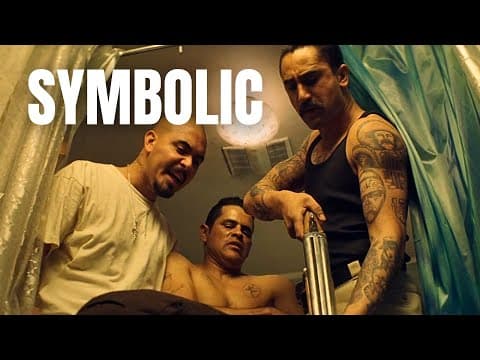
How this scene takes Training Day from epic to masterpiece
From The Screen
9m 36s1,807 words~10 min read
YouTube auto captions
Transcript source
YouTube auto captions
This transcript was extracted from YouTube's auto-generated caption track. The transcript below is server-rendered so it can be read, searched, cited, and shared without opening the original YouTube player.
Pull quotes
[0:00]Training day is a movie packed with unforgettable moments, largely thanks to Denzel Washington's powerhouse performance.
[0:00]But the scene I want to focus on today stands out as the best in the entire film, and it doesn't even feature Alonzo, Denzel's iconic character.
[0:00]Instead, it revolves around Jake, Alonzo's rookie partner, along with Smiley, Moreno, and Sniper.
[0:00]But before diving into this breakdown, let's first set the stage and provide some context for what has led up to this chilling moment.
Use this transcript
Related transcript hubs
Watch on YouTube
Share
MORE TRANSCRIPTS


