[0:07]This is the story of three plastic bottles, empty and discarded. Their journeys are about to diverge with outcomes that impact nothing less than the fate of the planet.
[0:19]But they weren't always this way. To understand where these bottles end up, we must first explore their origins.
[0:27]The heroes of our story were conceived in this oil refinery. The plastic in their bodies was formed by chemically bonding oil and gas molecules together to make monomers.
[0:37]In turn, these monomers were bonded into long polymer chains to make plastic in the form of millions of pellets.
[0:46]Those were melted at manufacturing plants and reformed in molds to create the resilient material that makes up the triplets' bodies.
[0:55]Machines filled the bottles with sweet bubbly liquid, and they were then wrapped, shipped, bought, opened, consumed, and unceremoniously discarded.
[1:05]And now here they lie, poised at the edge of the unknown.
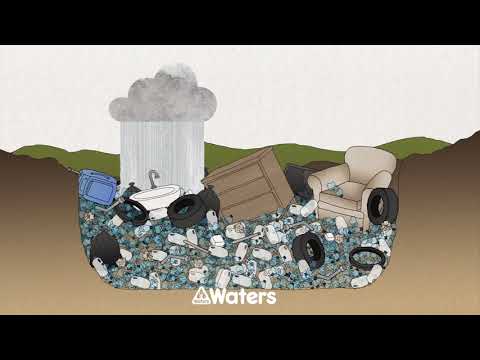
[1:10]Bottle one, like hundreds of millions of tons of his plastic brethren, ends up in a landfill.
[1:16]This huge dump expands each day as more trash comes in and continues to take up space.
[1:23]As plastic sits there being compressed amongst layers of other junk, rainwater flows through the waste and absorbs the water-soluble compounds it contains.
[1:34]And some of those are highly toxic. Together, they create a harmful stew called leachate, which can move into groundwater, soil, and streams.
[1:44]Poisoning ecosystems and harming wildlife. It can take bottle one an agonizing 1,000 years to decompose.
[1:54]Bottle two's journey is stranger, but unfortunately no happier. He floats on a trickle that reaches a stream,
[2:00]a stream that flows into a river, and a river that reaches the ocean.
[2:06]After months lost at sea, he's slowly drawn into a massive vortex where trash accumulates.
[2:14]A place known as the Great Pacific Garbage Patch. Here the ocean's currents have trapped millions of pieces of plastic debris.
[2:22]This is one of five plastic-filled gyres in the world's seas. Places where the pollutants turn the water into a cloudy plastic soup.
[2:32]Some animals like seabirds get entangled in the mess. They and others mistake the brightly colored plastic bits for food.
[2:42]Plastic makes them feel full when they're not, so they starve to death.
[2:47]And pass the toxins from the plastic up the food chain. For example, it's eaten by lantern fish.
[2:52]The lantern fish are eaten by squid, the squid are eaten by tuna, and the tuna are eaten by us.
[3:00]And most plastics don't biodegrade, which means they're destined to break down into smaller and smaller pieces called microplastics, which might rotate in the sea eternally.
[3:12]But bottle three is spared the cruel purgatories of his brothers.
[3:17]A truck brings him to a plant where he and his companions are squeezed flat and compressed into a block.
[3:25]Okay, this sounds pretty bad too.