[0:02]In 1859, John Tyndall first proved the greenhouse effect, the temperature increasing effect of gases, such as carbon dioxide, methane, nitrous oxide, and ozone.
[0:15]It's not until 1960s when National Oceanic and Atmospheric Administration or NOAA's laboratory developed the first of its kind climate model, that we understood and predicted global warming.
[0:29]By the 1990s, it was apparent that the Earth is warming up.
[0:35]Two weeks ago, we found out that the natural cycle of the Gulf of Alaska is increasing our oceans' acidity.
[0:43]And the Australian wildfires triggered massive algal bloom.
[0:48]Last week, the worsening global warming has decreased the food webs of polar oceans once again.
[0:59]In the same warming Earth, with aid of technology, more and more humans are turning to their screens for direction.
[1:07]Apparently, Google Maps can tell you which route will lead you to your destination the fastest, given your current speed and the level of traffic on all available routes.
[1:21]Stunning, isn't it? What helped us predict the catastrophe of a warming Earth six decades ahead of its time and helped us navigate in the labyrinth of urban cities with ease and efficiency nowadays?
[1:40]Are two technologies that relied on one thing: Mathematical models.
[1:44]Hello, students, hello debassmcat, I'm Mark Jay Aquillia and today, we'll talk about an introduction to mathematical modeling.
[1:54]And here we'll learn about what models are, what are the types of models?
[2:04]What mathematical modeling is? What's the advantage of mathematical modeling? What objectives can be achieved by mathematical modeling?
[2:16]Models describe our beliefs about how the world functions.
[2:21]You see a globe before you, and it describes how you think the world looks like or how it's tilted on its axis.
[2:32]Or what happens to each region as it revolves around it.
[2:38]Globe is a model. A model can come in many shapes, sizes, and styles. It is important to emphasize that a model is not the real world but merely a human construct to help us better understand real world systems.
[2:55]You see a tiny model of a car, but you don't think it's a car. You can't ride it and it cannot transport you anywhere. It's a human construct that help you understand a real car a bit.
[3:10]How it looks like and how it moves.
[3:15]Depending on your sources, the number could vary but generally, there are five model types.
[3:25]We have the conceptual models made out of verbal or graphical representations of how a system works.
[3:32]We also have graphical models that helps us understand data quickly through visuals like maps, charts, and diagrams.
[3:41]We have physical models or three-dimensional models that enable us to interact with it by touch.
[3:50]The fourth type of model is computer model. It represents complex processes of a system using a computer.
[4:02]This is a powerful model built with algorithm based on math models and can even perform experiments.
[4:10]Lastly, we have mathematical models, or descriptions of how the real world functions only in the form of equations.
[4:21]In mathematical modeling, we translate our observations and beliefs about how the world functions using the language of mathematics.
[4:31]Of the five models presented, we're going to explore mathematical modeling in this class.
[4:39]If used correctly, mathematical models are powerful tools that could assist us in our day-to-day life.
[4:46]Can even help us predict the future with relatively remarkable accuracy and precision.
[4:53]The advantages of modeling in mathematics are the following.
[4:58]First is, mathematics is a precise language.
[5:04]Say you measure an apple once, and found that it weighs 100 grams.
[5:13]You can measure as many times as you like, but you'll always end up having 100 grams, or at least very close to it.
[5:21]In mathematical modeling, this precision is important because it tells you that when you describe a system using the language of mathematics, it'll always end up having the same result no matter what.
[5:35]If there's a deviation, it's minor or insignificant.
[5:40]Mathematics is a concise language, with well-defined rules for manipulation.
[5:46]Newton's law of motion for instance, the second law of motion is but a centimeter long, or even shorter depending on the font you use.
[6:00]If expressed mathematically, it's F = M * A. Yet it describes precisely the relationship between the force exerted by the object with the product of its mass and its acceleration.
[6:14]Or take the famous Friedmann equation, dubbed as the most important equation by Forbes Magazine.
[6:21]Around 2 inches long, it describes with remarkable precision the rate of the expansion of our
[6:30]universe.
[6:33]All the results that mathematicians have proven over hundreds of years are at our disposal, that's the second advantage of mathematical modeling.
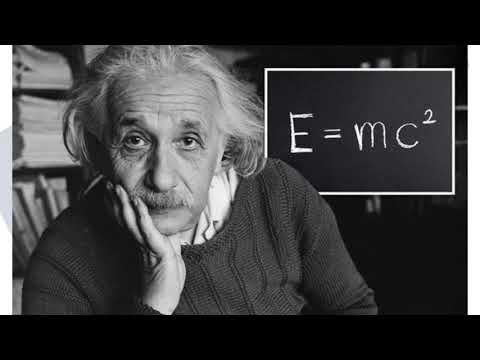
[6:45]When Einstein worked as a patent office clerk, everyday he sits around the mathematical models being applied for patent.
[6:54]This job only gave him time to revel on the marvels of the universe, but it has also sharpened his skills and inspired him.
[7:05]First, he published the photoelectric effect, then he went on to writing a math model for the size of an atom, way ahead of his time.
[7:13]And then ended up with the revolutionary E = mc squared.
[7:19]Now, with the advent of the internet, all math equations proven over the years are available at our disposal.
[7:29]Lastly, computers can be used to perform numerical calculations.
[7:35]Whenever we build mathematical models or too complicated to solve manually, we can also turn to powerful computers to do the equations for us.
[7:46]Currently, the world's fastest computer, Japan's Fugaku, is churning 415 quadrillion computations a second in search for the cure for COVID-19.
[7:59]Now what objectives can modeling achieve?
[8:04]It has three objectives. First one is, it develops scientific understanding.
[8:10]Using what we know about a system expressed in numbers, we can identify what we know so far and what we don't know yet.
[8:20]Until the early 1920s, we've always believed that the universe expanded after the Big Bang.
[8:28]The expansion is slowing down because of the gravitational pull of all matter in the universe and eventually it will collapse back in a big crunch.
[8:42]By plotting our observation in the form of numbers, we found out in 1926 that the universe is expanding.
[8:52]Not crunching down, or we're still in a state of expansion.
[8:58]In 2016, looking at more recent data and numbers, NASA and ESA, or the European Space Agency reported that the universe is expanding 5% to 9% faster than we initially thought.
[9:13]Which made us understand the science of our universe further, even coming up with the idea of dark matter and dark energy.
[9:24]Second adven- second objective, to test the effect of changes in a system.
[9:34]When Wu, an assistant professor of mechanical engineering worked with two professors at John Hopkins University.
[9:42]They developed a mathematical model to estimate the risk of airborne transmission of respiratory infections, including COVID-19.
[9:52]With the model, we can now test the effect of a change. Say, we can adjust the duration of a person's exposure to COVID patient and see how it affects the rate of infection.
[10:05]Without risking a real person to expose himself to real COVID patient.
[10:10]Lastly, mathematical models aid decision-making.
[10:14]By looking at a stock market graph and using a math model to predict the movement of the prices, one can describe whether to buy or sell with precision.
[10:25]Thereby increasing his chances of winning a profit then losing an invest.
[10:32]That ends our lesson in the introduction to mathematical modeling. I'm Mark Jay Aquillo, instructor for mathematical investigation, problem solving, and modeling.


