[0:00]Okay. Theory of constructed emotion. This is, this is wild, guys. Theory of constructed emotion suggests that 50% of the emotion that we experience, up to 50% is actually creatable, modifiable. We create our emotional experience. And the reason that we are so emotionally fucked up is because no one taught us that. See, we go through life thinking that our feelings are not ours to control, and this is what's so unfortunate. We have this like weird therapy speak kind of epidemic going on where people are like, you're entitled to your feelings. Right? Your feelings are true. We sort of take feelings as something that we are given. And it's sort of like, the feeling is not changeable, it's not modifiable. You shouldn't even try to change it. You should just accept it. Like if you feel angry, you're entitled to feel angry. We what we sort of say is that if you have an emotion, you should accept what it is, accept your emotion. Don't try to change it, don't try to control it, don't try to suppress it, and then down the road. Sure, your feelings are valid. Your conclusions based on those feelings may not be valid. The behaviors that the feeling is driving you to do may not be appropriate, but the feeling itself is not something that you have any control over. So just accept it, your feelings are true. Not the consequences of the feeling. We're not saying if you feel angry, you should attack people. That is wrong, but the feeling itself is totally fine. That's not what the Buddha said. And this is what's so interesting is like, you know, a psychologist in psychiatry, we get trained that there's no such thing as a good feeling or a bad feeling, they're just all feelings. And there's a good argument for that, right? So we've evolved to have anger and anxiety for reasons, they all serve an evolutionary purpose. But hold on a second. Don't we strive for more positive feelings? We have words, positive feeling and negative feeling. That just happens to not be true. So here's the, here's the insane thing. You can actually control what you feel. And by control, I don't mean suppress. You can control what your emotional, what emotion is generated in response to a particular situation. And that sounds insane, except it's not and we do this every single day. Because when someone comes in with a generalized anxiety disorder and experiences anxiety when they're ordering a hot dog, and when they go to work, and when they're checking out at the grocery store, we will literally alter their the creation of emotion within them over the course of treatment. That is literally what we will do, what we will train them in. Interesting, right? Because we look at some people and we envy them because they're like, oh my god. This person responds to this situation with so much resilience, whereas I feel hopeless in the same situation. There is something special about them and but hold on a second. The only way that that's true is if we start with the assumption that the emotion that I create is not modifiable by me. And as we have sort of moved towards this emotional acceptance, we have actually given up, like we've sort of thrown in the towel on a very, very, very difficult battle. Very important battle, which is that you can actually generate a certain kind of emotion. You can alter your emotional experience. Another really good example of this is imposter syndrome. When you look at people with imposter syndrome, and they do a good job, they generate a certain kind of emotion, which is fear. So literally what happens in their head is they, when they do a good job, they attribute their successes to circumstances. And they attribute the successes of other people, when somebody else does a good job, it is through their hard work, talent or effort. When I do a good job, it is because of my circumstances or luck. The situation is the same, I got an A, you got an A. When I look at you, my mind generates a certain kind of answer, when my mind looks at me, it generates a different kind of answer. Those two things also generate a different kind of emotion. So when I look at somebody else succeed, I feel admiration. I feel happy for them. When I look at myself succeed, I feel panic. And this is torture. It's adaptive, because when I do a good job and I feel panic. What do you think I do next time? I don't relax. That panic drives me to keep doing well, keep doing well, keep doing well, which is why we see so much imposter syndrome. At places like, so I went to medical school at Tufts, I did residency at Harvard, way more imposter syndrome at Harvard than there is at Tufts. Tufts is like a bunch of people who were like, basically kind of chilling. We like work pretty hard, we do a pretty good job. We're not the smartest kids in the class. We're sort of okay with that, right? We got some gumption. When people hear about our coaching program, their first response is usually, why would I work with another human being when I can watch YouTube videos all on my own. Working with a coach is about amplifying your time and effort. We're great at wanting things and even making some progress, but we usually struggle with follow through or have some kind of setback. And that's exactly where working with a coach can help. Coaches provide personalized support to help you set appropriate goals, make progress and even work through setbacks. Just let us know what your goals are, what kind of support you're looking for, and we'll match you with the best coach for your unique needs. Check out the link in the description below to see if coaching is right for you. But you can literally create your emotional experience. You can create which emotions come up in the first place. And I think Buddhism is I think the best system for this. Hinduism in that way is kind of like, eh. Not so concerned about that. They're like transcend the mind entirely. Just like leave it all behind. Whereas the Buddhist, they're like cultivate compassion, cultivate equanimity, you know, cultivate all these positive emotions. So you can change the way that you emotionally react to things. You can generate a different set of emotions. And at the beginning this requires a little bit of work because you have to, usually it starts with cognition. Literally think about the situation in a different way, cultivate compassion for this person. What is it like to be this person? Let me really try to understand. And then another really good example of this is like, take a look at think about someone who's like your bully. And oftentimes bullies, the weird thing, right, is that bullies are oftentimes popular. And so you think to yourself like, why is someone this way when they have everything? When they have friends, they're captain of the football team. Like what must it be like to have so many of the things that I don't have, the things that would make me content? The things that would make me feel so much happier. And if I had all of those things, what would have to be going on inside me to be an ass to other people? Changes your perspective. And then what happens? This is what the cool part. This is why it requires training, conditioning, neuroplasticity. The first time that we think a different way, it's really hard. And then as we think a different way again and again and again, then it starts to become automatic. This is what we do in psychotherapy for generalized anxiety disorder. We alter the baseline emotional response that people have as they navigate through the world. And you can do it too. When you're talking about me changing at the fundamental level and not the environment, are you talking about changing the ego/sense of self? I'm actually talking about even a deeper layer than that. So your ego or your sense of self is your identity. What we're talking about is changing the automatic response that is generated by you in a particular situation. Ego responds to that. How does ego death affect that? It's going to fucking, it's going to be a riot. Okay. Near death experiences and personal values. Near death experiences reportedly foster value transformations and decrease suicidal ideation. Eighty-nine survivors of near death experiences judged values related to material and social success as less important than did 175 control subjects. So here's what's really interesting. I observed something, very strange as a psychiatrist. If you look at the data on risk factors for suicide. One of the risk factors, no surprise, is a history of prior suicide attempts. Another risk factor is completed suicide in the family. Now there's a problem with these risk factors. Which is that what we do with risk factors is we look at a large population. Let's say we look at 10,000 people and we look at, let's say the 1000 people, the 10,000 people who attempted suicide. And then we discover that, okay, out of the 10,000 people that attempted suicide, 3000 of them attempted it before. So we say that's a risk factor. Makes sense, right? But 7000 people didn't attempt it before. So oftentimes, even though something is a risk factor, it's not a risk factor for everybody. And something really strange happened. I I once had a patient and they had a history of multiple suicide attempts and I was doing a a safety assessment one day. And I said, you know, do I need to be worried about you attempting suicide? And my patient said, no. And I said, why is that? And he said, well, you know, the last time I attempted suicide, I realized that I'm trying to kill myself and there is something within me that wants to live more than I want to die. So even though I want to end my life, my heart wants to keep living, my liver is detoxifying things. My respiratory, my lungs are like breathing no matter how much I want to stop. So something in me wants to live more than I want to die. And that's why I won't try to kill myself. I was like, that's a really fucking profound answer, man. So here's the other thing. One of the most protective factors, and I'm not suggesting that you go do this, and if you're, you know, having thoughts about hurting yourself, you should absolutely see a mental health professional and call 911 and go to the emergency room. I really believe that stuff, okay? I believe that as someone who's worked in the emergency room and helped people when they're thinking about suicide. Immediately tried suicide, I really don't think it's a good option. But the weird thing is that a passion for life can sometimes come from almost dying. And this is something that I know sounds crazy, but it's actually not when you think about it, right? When someone almost dies and they survive, they have a zest for life. And it's really interesting because if you look at this paper, what they sort of show is that when someone almost dies, they divest and detach from social and material success. And it kind of makes sense, like sometimes when people, someone almost dies, their subjective experience will be is like, it made me realize what's important in life. And that a lot of their lust for life improves because they no longer care about money as much. They no longer care about being well liked as much. The really interesting thing is that if you look at this paper, there's actually, um, let me show you guys. It's fascinating. Yeah, so it did not find that the study group valued self-actualization, altruism or spiritual spirituality more highly than did the control group. I think this is a really cool finding. Because it's not like almost dying brings you closer to God or makes you meditate more, anything like that. It actually doesn't do that. Doesn't make you like a better human being. All it does is causes you to divest from material and social success as things that are important to you. And it decreases your desire to die. Fascinating.
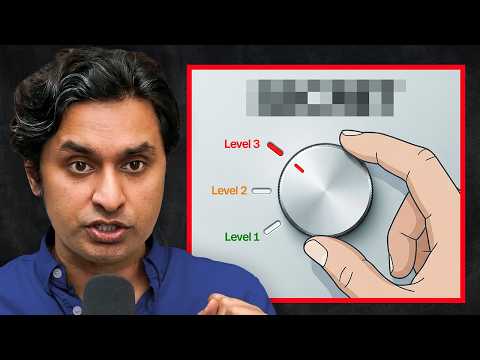
Dr. K Explains: Theory of Constructed Emotion
HealthyGamerGG
12m 18s2,117 words~11 min read
YouTube auto captions
Transcript source
YouTube auto captions
This transcript was extracted from YouTube's auto-generated caption track. The transcript below is server-rendered so it can be read, searched, cited, and shared without opening the original YouTube player.
Pull quotes
[0:00]Theory of constructed emotion suggests that 50% of the emotion that we experience, up to 50% is actually creatable, modifiable.
[0:00]And the reason that we are so emotionally fucked up is because no one taught us that.
[0:00]See, we go through life thinking that our feelings are not ours to control, and this is what's so unfortunate.
[0:00]We have this like weird therapy speak kind of epidemic going on where people are like, you're entitled to your feelings.
Use this transcript
Related transcript hubs
Watch on YouTube
Share
MORE TRANSCRIPTS


