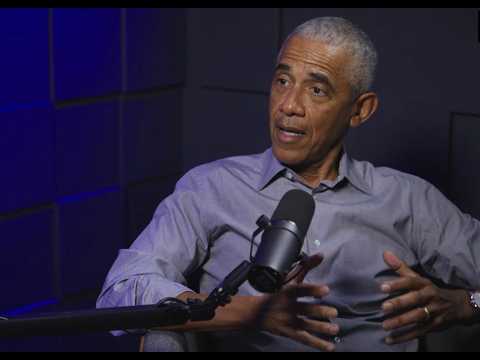
[0:00]It is my honor to be joined by the 44th President of the United States, Barack Obama. Mr. President, thanks so much for joining me.
[0:06]It is wonderful to be here, Brian. Thank you for having me. So, as you know, better than anybody, the discourse has devolved into a level of cruelty that we haven't seen before.
[0:17]Um, what was disqualifying just a few years ago now, not only feels fine, acceptable, but actually rewarded.
[0:26]Um, you have administration officials saying that the victims of ISIS aggression are domestic terrorists.
[0:33]You have J.D. Vance coming out and saying that it's okay, uh, you don't have to apologize for being white.
[0:39]Just days ago, Donald Trump put uh, a picture of you, your face on an ape's body.
[0:46]And so again, this is, you know, this is kind of we've seen the devolution of, of the discourse.
[0:52]How do we come back from a place that, that we have fallen into? Well, first of all, I think it's important to recognize that the majority of the American people find this behavior deeply troubling.
[1:04]Uh you know, it is true that it gets attention. It's true that it's a distraction.
[1:13]But you know, as I'm traveling around the country as as you're traveling around the country, you meet people, uh, they still believe in decency, courtesy, kindness.
[1:31]And there's this sort of clown show that's happening in social media and on television. Uh, and what is true is that there doesn't seem to be any shame about this among people who used to feel like you had to have some sort of decorum and, and, and, uh, a sense of propriety.
[1:54]And respect for the office, right? So, so that's been lost.
[2:04]But, but the reason I, I point out that I don't think the majority of the American people approve of this is because ultimately the answer is gonna come from the American people.
[2:16]And we just saw this uh in Minnesota, in Minneapolis. Um, it it is important for us to recognize the, uh, unprecedented nature of what ICE was doing in Minneapolis, St. Paul, the, the, the way that federal agents, ICE agents were being deployed without any clear guidelines, training, uh, pulling people off, uh, you know, out of their homes, using five-year-olds to try to bait their parents.
[2:49]Bait their parents.
[2:52]Uh all the stuff that we saw. Teargassing crowds simply who were standing there not breaking any laws.
[3:02]Um, so, so the rogue behavior of agents of the federal government, we is is deeply concerning and, and, uh, dangerous.
[3:22]But we should take a moment to appreciate the extraordinary, uh, outpouring of organizing, community building, decency, neighbors buying groceries for folks, accompanying children to school, teachers who were standing up for their kids.
[3:44]Uh, you know, not just randomly, but in a, you know, systematic, organized way. Citizens saying this is not the America we believe in.
[3:55]And we're gonna fight back and we're gonna push back with the truth and with cameras and with peaceful protests and and shining a light on uh the, the sort of behavior that uh you know, in the past we've seen in authoritarian countries and we've seen in, uh, dictatorships, but we have not seen in America.
[4:19]And that kind of heroic, uh, sustained behavior in subzero weather by ordinary people, uh, is what should give us hope.
[4:34]And it should should remind us that at the end of the day, the way we get a democracy that's working, the way we get policies that actually uh are helping working families, uh, you know, get ahead.
[4:47]The way that we restore norms, rule of law, decency, it's gonna be because we citizens are activated and paying attention and saying enough and saying, you know, uh, we have a different idea of of what, uh, the American family should look like and, and, and community should look like.
[5:12]And, and that is what I'm seeing, uh, across the board. So, you know, I, I was, um, on a panel a while back and I said, you know, a lot of the values that we say we subscribe to, um, during easy times, during peaceful times, um, it's easy to say we believe in those things.
[5:36]Right, when they're not challenged. When they're not challenged. you know, it's easy to believe in free speech when, uh, it doesn't seem like the government's trying to crack down on free speech. It's, it's easy to, to say that, um, you know, we believe in the golden rule when we aren't at risk of being arrested when we exercise the golden rule.
[5:56]Yeah. Right now we're being tested.
[6:00]And, you know, the good news is what we saw in Minneapolis and, and St. Paul and what we're seeing in, in places across the country, including here in Los Angeles, uh, has been, uh, the American people saying, no, you know what, at least a good number of the American people saying we're gonna live up to those values that we say we believe in.
[6:17]And as long as we have folks who are doing that, um, I feel like we're gonna get through this.
[6:24]So I hear and appreciate what you're saying about the agency of individuals.
[6:30]As we look toward our elected officials, our democratic leaders, I think something that I've been having a lot of trouble reconciling is for so long, it's felt like Democrats are solely focused on protecting norms, institutions, processes, and then you've got a Republican party that sees what it wants and will find a way to get it, laws be damned, Constitution be damned, rules be damned.
[6:50]And we're seeing that play out right now.
[6:58]And so, you know, given this massive asymmetry, where, where it often leaves us feeling like it's a Lucy pulling the football away from Charlie Brown over and over and over again situation.
[7:11]What needs to be done? And do you think that that that's, that our Democratic leadership and our Democratic elected officials understand that for the first time?
[7:14]Well, look, I I think we have to acknowledge that, uh, we've got the harder job.
[7:25]Right? So, we, we believe in government as a tool for good, for as a potential force to, uh, create more jobs and as a way to make sure that the planet doesn't roast and to make sure that, uh, as as we move forward, um, and the economy grows that everybody and not just some are benefiting and, and that kids are getting a good education.
[8:04]And what that means is that, um, we have to think about the consequences of our actions. We have to, uh, try to figure out how do we get working majorities to actually pass laws and to implement those laws and to make things happen.
[8:21]Tearing stuff down doesn't require all that.
[8:24]So when you, you, you talk about Republicans, for example, it seems like they see what they want and they just go after it.
[8:31]Well, they've passed one significant piece of legislation since they've been for all the hoopla.
[8:44]They haven't actually codified and institutionalized much of anything. They have poured a huge amount of money into ICE and their immigration agenda.
[8:55]Um, and they've cut taxes for really wealthy people and now they're trying to unravel a bunch of rules and norms and laws that are already in place.
[9:03]That's an easier job. So, I I say that because, uh, we should accept the responsibility and the challenge that our job's gonna be a little bit harder.
[9:17]Because in order for us to get stuff done, like let's say the Affordable Care Act, well, we've got to cobble together a majority and we've got to persuade and we've got to convince.
[9:27]And so I do think that there have been some, there's been some unwillingness on the part of Democrats in the past to break down some of the institutional barriers for us getting stuff done just because, well, it's always been done that way.
[9:47]And I'll give you an example that frustrated the heck out of me when I was president, which was the filibuster in the Senate.
[9:55]Um, the Senate is already structurally, uh, skewed and anti-majoritarian, right?
[10:02]I mean like the it's it's hard for majorities to get stuff done, whether it's trying to pass civil rights legislation in the sixties or, you know, trying to get gun control legislation or what have you, because, even though majority people support it,
[10:13]Yeah.
[10:19]Delaware and Wyoming have the same number of senators as California.
[10:22]Yeah. Right? Uh, so that that would require a constitutional amendment.
[10:28]You then compound that with the filibuster and the truth is that Democrats for some time have been traditionalists in wanting to preserve that when it blocks us from making government effective, which in turn makes people feel like government is corrupt and not caring about them.
[10:44]Which lends itself to the, the kind of, uh, it gives folks like Trump an opening.
[10:52]Yeah. Right? So, redistricting is another good example of where, uh, I strongly believe we should not be having politicians draw lines that determine who's voting for them.
[11:08]We should have voters decide who their politicians are. And, you know, I've worked with Eric Holder to help set up, uh, the terrific work that, uh, you know, the NDRC has been doing to try to make sure that we have fair maps.
[11:27]But the fact that Governor Newsom here in California, uh, and others said, well, if they're gonna try to gerrymander their way out of losing this upcoming midterm, then we're gonna respond and we're gonna respond in a lawful way where we put it up to a referendum and and let people decide and not just give away the store because of tradition.
[11:51]That was the right response. So, I I do think that I don't want us to simply duplicate the behavior of the other side. I, I, I don't want us to have a slash and burn strategy where we don't care about rule of law.
[12:05]We don't care about some of the guard rails around our democracy. We start lying and, and, and having no regard for the truth the way the other side seems to be comfortable with right now.
[12:10]Yeah. Because if if if that's how we fight, then we lose what we're fighting for.
[12:24]But that doesn't mean we have to get punked or or be ssaps and I do or or to to cling to traditions just for the sake of tradition.
[12:35]I think what we have to continually, uh, evaluate is in this moment in time, how do we make sure that we can advance our agenda in a way that reflects what's good for ordinary folks, not special interests, not simply the well-to-do.
[12:59]And how do we do that in a way that's consistent with integrity, honesty, democracy, uh, the values that we claim to want uphold. And, and I think it's possible to do that.
[13:13]But, but I I I do think that I'm not making a hard and fast rule here, but I do think that Democrats do well when we have candidates who are plugged into the moment, to the zeitgeist, to to to the times and the particular struggles that folks are thinking about as they look towards the future rather than look backward towards the past.
[13:38]And some of it is choosing candidates who, who who check that box.
[13:59]Um, I do think that there is an element of joy that needs to that Democrats lost sometimes.
[14:04]The, the, the our campaign was fun. We had some, look, it wasn't always fun for me.
[14:08]But we built a community. We, we gave people a sense that if you are part of this, you're doing something meaningful.
[14:12]And it wasn't just talk. Young people ran our campaigns. We empowered them. We put them in charge. They were out there figuring stuff out.
[14:21]I'm not the person who was figuring out our media strategy. I was not the person who was out there, uh, you know, knocking on doors and, and, and, you know, talking to voters and, and, and creating events.
[14:38]It was 20 and 30 year olds.
[14:44]And, so, what happened in our campaign and what you recently saw in the, in Mondami's campaign in New York.
[14:50]When, when there's that sense of joy and engagement and involvement, then people feel like, all right, this is not just some transitional grind. This is, this is me becoming part of a community and, and, and joining with others.
[15:19]And I, I think young people respond to that. And then a a corollary to that is I, I, I do think that culturally, I and I've talked about this before, um, we did turn off.
[15:32]I think I think there was a certain way of talking about issues for Democrats where we sounded like scolds.
[15:47]And I, I, I've said this before, um, that there was, there was a, a virtue signaling that made it seem as if ordinary folks if they did not say things in exactly the right way or meet this litmus test that they were being, uh, chastised, pushed away.
[16:11]And the truth is, most of us, all of us are complicated and we have blind spots and sometimes we say dumb stuff.
[16:21]And we and and if you want to create an environment that is welcoming and makes people feel, okay, there's room for me here.
[16:32]Then the message and the story we tell has to be, all right, none of us are perfect. All of us count. We all have good in us that we can tap into.
[16:44]We can all learn from each other.
[16:49]And, and I think that, that is something we need to recover.
[16:55]That's part of the fun of politics. That's part of the community and the social bonding that can come about.
[17:02]And we saw that in Minneapolis.
[17:05]I mean, somebody showed me a, a friend of mine, Michelle Norris, who's from Minnesota and she was up there and, and she was going around talking to neighbors and people she'd known for a long time as they were mobilizing, uh, protests and, and activities around ISIS.
[17:23]And, and, uh, she showed me a clip of this street band that was performing every night after all these activities had been taken place and protest etc.
[17:40]And they were just out there and they were playing music and I'm trying to figure out how they're playing, you know, horns and drums etc in like zero degree weather cause I would not have been able to put my lips on on a trumpet.
[17:50]And people were celebrating, uh, what they had accomplished.
[18:05]Um, and, and it was an embodiment of the values that, um, make us care about other people. Uh, and and that I think is a spirit that when Democrats tap into that spirit, then we win.
[18:24]The other side does the mean, angry, you know, exclusive, us them, you know, divisive politics.
[18:38]That's their, that's, that's their home court.
[18:42]Our court is coming together. Our court is, look, you know, a great example. It wasn't political. Bad Bunny's halftime show.
[18:53]I knew you were gonna say that. Yeah. Well, it, it was, it, it resonated. It was smart.
[19:04]Because it wasn't preaching, it was showing, it was demonstrating and displaying, this is what a community is. And people who did not speak Spanish and have never been to Puerto Rico, they saw that elderly woman serving a drink in the kids dancing with their grandmas and it was intergenerational and it, it was, it was a reminder of what Dr. King called the beloved community can look like, which is not perfect and it's messy sometimes and you know, I guarantee you not all those lyrics were probably politically correct and if you translated them and, you know, people are complicated, but there was a sense of, all right, there's room for everybody here.
[19:56]Yeah.
[19:59]And that I think is where we win. You know, your presidential center is opening up this summer and you've dedicated your post-presidency to lifting up the next generation of leaders, oftentimes in defiance of people begging and pleading with you to stay involved in the political process.
[20:18]And so, why is it important for you in this moment to make sure that you defer to others?
[20:23]Well, first of all, I'm not a politician anymore and I can't be, right? I mean, I guess technically I could run for, you know, city council or something, but I'm not an elected office. I don't have levers of power. I'm term limited out and by the way, I believe in the Constitution and also, I believe in my marriage and Michelle would divorce me if I even if I could run again.
[20:38]Um, but I've always believed, I mean, this has been a central tenant of, of my work even before I was in elected office, that our job as leaders is to lift up other leaders, to to to empower others, to to to find their gifts and, and help them exercise those gifts. And, so, what I left the presidency, I said, what, what's our foundation gonna do?
[20:53]We, we care about climate change, we care about, uh, racial justice, we, we care about, uh, healthcare, we care about, we care about a whole bunch of issues and I work on those issues.
[21:07]Now, right now I'm spending a lot of time, uh, help, helping to, to think about how we're gonna respond to AI as it's coming down the pike and it's moving fast. So, I care about specific issues.
[21:26]But my, the thing I thought I could do uniquely, Michelle and I still have the capacity, not just here in the United States, but globally to inspire and motivate young people and invite them into this process. And that's what we need.
[21:44]We just talked about it.
[21:50]You look, you look at, um, you know, where excitement's gonna come from. It's gonna come from the 20, 30 year olds who know firsthand what it means to not be able to buy a house. No firsthand what it means to, to see some of the opportunities being taken away.
[22:04]Have, have, you know, grown up in a moment in which there's, there's more social isolation, right? And, and so, and and understand both the good and the bad of social media and, and so, they're the ones who are gonna craft these, you know, the, the, who are gonna remake our institutions so that they are consistent with the, the values that are, I think, timeless.
[22:40]And, so, what we've tried to do at the foundation is been to, uh, identify potential leaders, not just with traditional credentials, not just the kids coming out of fancy schools or with the top grades or, uh, but union organizers and grassroots organizers, as well as, you know, journalists and teachers and healthcare professionals and, and human rights activists.
[22:50]And, you know, we've now had thousands of folks go through the program and these are folks who are doing remarkable stuff at very young ages.
[23:00]I mean, they're setting up health clinics in Sub-Saharan Africa or they're, uh, you know, designing new programs for intervention in in to help with the opioid crisis in Appalachia or they're working on, uh, you know, how do we educate kids in use, using technology in in remote rural areas and, and, uh, Native American reservations.
[23:19]Remarkable folks doing amazing stuff. And the presidential center, which will be opening up in June is gonna be the hub around which all this activity happens.
[23:40]Um, and, you know, there'll be a music studio where, you know, young people are learning how to tell stories through music and, and a place to record podcasts. So they, they can learn how to, you know, talk about the issues in, in ways that resonate and, um, there's a Chicago Public Library in there and there's an auditorium where, you know, young people will be exposed to world leaders who are coming through and can talk about their own journey.
[23:59]And what that does is it builds a community of activists and it reminds people you're not alone.
[24:16]You're not alone in your sorrow when you see some of the stuff that's been happening, uh, in this country over the last year.
[24:28]But you're also not alone in being able to figure out how do we push back and come up with new solutions and how do we remake these institutions so that they work for this generation?
[24:45]And that kind of, uh, reinvigorating our our civic muscles, uh, giving people a sense of, uh, you know, I'm not gonna just sit here and doom scroll or occasionally, you know, tweet some complaint about what's happening but that I actually have agency and I can actually make a difference.
[24:59]You know, we want to encourage that and, and, and that's what we saw and have been seeing across the country, uh, in response to the, the violations and overreach and and lawlessness, uh, that that's been coming out of this administration.
[25:10]We just have to encourage that and cultivate that and and not assume that it happens on its own.
[25:21]I, I became president because very early on in in my career, I had people teach me the power of community and other people joining together around common interests.
[25:40]And I tried to, um, I tried to manifest what I'd learned in every campaign I ran and tried to ride that all the way through my presidency.
[25:52]And, um, you know, I didn't figure out all that stuff on my own.
[25:57]Uh, and and we have a long history in this country, you know, dating back to the abolitionist movement and the suffragist movement and on through the civil rights movement and the union movement.
[26:11]And we have a long history internationally of Gandhi learning from Thoreau and who then inspires King, who then inspires Mandela, who in the meantime, like Valesa is, you know, helping to, and solidarity or helping to bring down the iron curtain and inspiring the, you know, people power in the Philippines and, you know, there, that that spirit, that energy, uh, it's out there.
[26:40]And you can feel it, but it's bottled up. We haven't given enough outlets for young people to, to, to figure out how do I become a part of that.
[26:51]And it and it and that's an, a, this enormous untapped power that we have to get back to.
[26:57]So, I want to do a little bit of a lightning round here because it's not often I'll get access to, I'm sorry.
[27:00]Come on. President of the United States. So, a couple questions here.
[27:07]Are aliens real? Uh, they're real but I haven't seen them and and and, uh, they're not being kept in, uh, what is it, Area 51.
[27:17]Area 51. Uh there, there's no underground, uh, facility unless there's this enormous conspiracy and they, they hid it from the president of the United States.
[27:24]What was the first question you wanted answered when you became president?
[27:28]Um, where are the aliens?
[27:32]Where are the aliens? Um, who, uh, is there, is there a person that you most want to meet that you haven't met yet?
[27:42]I'll be honest with you, it, being president or even being an ex-president, I can kind of meet everybody. So I've met a lot of folks. Uh the person who I have not yet met, uh and that I'm looking forward to meeting and I I hope I get an opportunity sometime in the future is, uh, the new pope, who's from Chicago and a White Sox fan.
[28:00]I had the pleasure of getting to know Pope Francis pretty well. Um, and, and he was legit. You know, there, there's some figures, he's one, the Dalai Lama was another is another, who, they're how you hope they are. They kind of walk the walk, uh, and my sense of this new pope is he's from that, he's cut from that cloth, you know, somebody who, you know, worked in places where you know, that really needed help.
[28:36]And, and, uh, what wasn't just, uh, preaching from a pulpit, but getting his hands dirty trying to, trying to help people.
[28:44]So I'm, I'm looking forward to talking to him. I think we can, I think, I think at some point he'll probably have it.
[28:49]What world leader did you like the most and the least?
[28:52]Um, you know, I, I there are a lot of world leaders I enjoy. Angela Merkel, I became very close to because she really was the leader of Europe, um, during my presidency and we were grappling with a bunch of different stuff.
[29:07]She came from a center-right tradition. I obviously come from a left, center-left position, but she had integrity, very, you know, wicked smart and, um, you know, worked in places where, you know, that really needed help and, and, uh, what wasn't just, uh, preaching from a pulpit, but getting his hands dirty trying to, trying to help people.
[29:39]So I'm, I'm looking forward to talking to him.
[29:43]I think we can, I think I think at some point he'll probably have it.
[29:48]What world leader did you like the most and the least?
[29:51]Um, I, I, there are a lot of world leaders I enjoy. Angela Merkel, I became very close to because she really was the leader of Europe, um, during my presidency and we were grappling with a bunch of different stuff.
[30:06]She came from a center-right tradition. I obviously come from a left, center-left position, but she had integrity, very, you know, wicked smart and, um, you know, worked in places where, you know, that really needed help and, and, uh, what wasn't just, uh, preaching from a pulpit, but getting his hands dirty trying to, trying to help people.
[30:38]So I'm, I'm looking forward to talking to him.
[30:42]I think we can, I think I think at some point he'll probably have it.
[30:47]What world leader did you like the most and the least?
[30:50]Um, I, I, there are a lot of world leaders I enjoy. Angela Merkel, I became very close to because she really was the leader of Europe, um, during my presidency and we were grappling with a bunch of different stuff.
[31:05]She came from a center-right tradition. I obviously come from a left, center-left position, but she had integrity, very, you know, wicked smart and, um, you know, worked in places where, you know, that really needed help and, and, uh, what wasn't just, uh, preaching from a pulpit, but getting his hands dirty trying to, trying to help people.
[31:37]So I'm, I'm looking forward to talking to him.
[31:41]I think we can, I think I think at some point he'll probably have it.
[31:46]What world leader did you like the most and the least?
[31:49]Um, I, I, there are a lot of world leaders I enjoy. Angela Merkel, I became very close to because she really was the leader of Europe, um, during my presidency and we were grappling with a bunch of different stuff.
[32:04]She came from a center-right tradition. I obviously come from a left, center-left position, but she had integrity, very, you know, wicked smart and, um, you know, worked in places where, you know, that really needed help and, and, uh, what wasn't just, uh, preaching from a pulpit, but getting his hands dirty trying to, trying to help people.
[32:36]So I'm, I'm looking forward to talking to him.
[32:40]I think we can, I think I think at some point he'll probably have it.
[32:45]What world leader did you like the most and the least?
[32:48]Um, I, I, there are a lot of world leaders I enjoy. Angela Merkel, I became very close to because she really was the leader of Europe, um, during my presidency and we were grappling with a bunch of different stuff.
[33:03]She came from a center-right tradition. I obviously come from a left, center-left position, but she had integrity, very, you know, wicked smart and, um, you know, worked in places where, you know, that really needed help and, and, uh, what wasn't just, uh, preaching from a pulpit, but getting his hands dirty trying to, trying to help people.
[33:35]So I'm, I'm looking forward to talking to him.
[33:39]I think we can, I think I think at some point he'll probably have it.
[33:44]What world leader did you like the most and the least?
[33:47]Um, I, I, there are a lot of world leaders I enjoy. Angela Merkel, I became very close to because she really was the leader of Europe, um, during my presidency and we were grappling with a bunch of different stuff.
[34:02]She came from a center-right tradition. I obviously come from a left, center-left position, but she had integrity, very, you know, wicked smart and, um, you know, worked in places where, you know, that really needed help and, and, uh, what wasn't just, uh, preaching from a pulpit, but getting his hands dirty trying to, trying to help people.
[34:34]So I'm, I'm looking forward to talking to him.
[34:38]I think we can, I think I think at some point he'll probably have it.
[34:43]What world leader did you like the most and the least?
[34:46]Um, I, I, there are a lot of world leaders I enjoy. Angela Merkel, I became very close to because she really was the leader of Europe, um, during my presidency and we were grappling with a bunch of different stuff.
[35:01]She came from a center-right tradition. I obviously come from a left, center-left position, but she had integrity, very, you know, wicked smart and, um, you know, worked in places where, you know, that really needed help and, and, uh, what wasn't just, uh, preaching from a pulpit, but getting his hands dirty trying to, trying to help people.
[35:33]So I'm, I'm looking forward to talking to him.
[35:37]I think we can, I think I think at some point he'll probably have it.
[35:42]What world leader did you like the most and the least?
[35:45]Um, I, I, there are a lot of world leaders I enjoy. Angela Merkel, I became very close to because she really was the leader of Europe, um, during my presidency and we were grappling with a bunch of different stuff.
[36:00]She came from a center-right tradition. I obviously come from a left, center-left position, but she had integrity, very, you know, wicked smart and, um, you know, worked in places where, you know, that really needed help and, and, uh, what wasn't just, uh, preaching from a pulpit, but getting his hands dirty trying to, trying to help people.
[36:32]So I'm, I'm looking forward to talking to him.
[36:36]I think we can, I think I think at some point he'll probably have it.
[36:41]What world leader did you like the most and the least?
[36:44]Um, I, I, there are a lot of world leaders I enjoy. Angela Merkel, I became very close to because she really was the leader of Europe, um, during my presidency and we were grappling with a bunch of different stuff.
[36:59]She came from a center-right tradition. I obviously come from a left, center-left position, but she had integrity, very, you know, wicked smart and, um, you know, worked in places where, you know, that really needed help and, and, uh, what wasn't just, uh, preaching from a pulpit, but getting his hands dirty trying to, trying to help people.
[37:31]So I'm, I'm looking forward to talking to him.
[37:35]I think we can, I think I think at some point he'll probably have it.
[37:40]What world leader did you like the most and the least?
[37:43]Um, I, I, there are a lot of world leaders I enjoy. Angela Merkel, I became very close to because she really was the leader of Europe, um, during my presidency and we were grappling with a bunch of different stuff.
[37:58]She came from a center-right tradition. I obviously come from a left, center-left position, but she had integrity, very, you know, wicked smart and, um, you know, worked in places where, you know, that really needed help and, and, uh, what wasn't just, uh, preaching from a pulpit, but getting his hands dirty trying to, trying to help people.
[38:30]So I'm, I'm looking forward to talking to him.
[38:34]I think we can, I think I think at some point he'll probably have it.
[38:39]What world leader did you like the most and the least?
[38:42]Um, I, I, there are a lot of world leaders I enjoy. Angela Merkel, I became very close to because she really was the leader of Europe, um, during my presidency and we were grappling with a bunch of different stuff.
[38:57]She came from a center-right tradition. I obviously come from a left, center-left position, but she had integrity, very, you know, wicked smart and, um, you know, worked in places where, you know, that really needed help and, and, uh, what wasn't just, uh, preaching from a pulpit, but getting his hands dirty trying to, trying to help people.
[39:29]So I'm, I'm looking forward to talking to him.
[39:33]I think we can, I think I think at some point he'll probably have it.
[39:38]What world leader did you like the most and the least?
[39:41]Um, I, I, there are a lot of world leaders I enjoy. Angela Merkel, I became very close to because she really was the leader of Europe, um, during my presidency and we were grappling with a bunch of different stuff.
[39:56]She came from a center-right tradition. I obviously come from a left, center-left position, but she had integrity, very, you know, wicked smart and, um, you know, worked in places where, you know, that really needed help and, and, uh, what wasn't just, uh, preaching from a pulpit, but getting his hands dirty trying to, trying to help people.
[40:28]So I'm, I'm looking forward to talking to him.
[40:32]I think we can, I think I think at some point he'll probably have it.
[40:37]What world leader did you like the most and the least?
[40:40]Um, I, I, there are a lot of world leaders I enjoy. Angela Merkel, I became very close to because she really was the leader of Europe, um, during my presidency and we were grappling with a bunch of different stuff.
[40:55]She came from a center-right tradition. I obviously come from a left, center-left position, but she had integrity, very, you know, wicked smart and, um, you know, worked in places where, you know, that really needed help and, and, uh, what wasn't just, uh, preaching from a pulpit, but getting his hands dirty trying to, trying to help people.
[41:27]So I'm, I'm looking forward to talking to him.
[41:31]I think we can, I think I think at some point he'll probably have it.
[41:36]What world leader did you like the most and the least?
[41:39]Um, I, I, there are a lot of world leaders I enjoy. Angela Merkel, I became very close to because she really was the leader of Europe, um, during my presidency and we were grappling with a bunch of different stuff.
[41:54]She came from a center-right tradition. I obviously come from a left, center-left position, but she had integrity, very, you know, wicked smart and, um, you know, worked in places where, you know, that really needed help and, and, uh, what wasn't just, uh, preaching from a pulpit, but getting his hands dirty trying to, trying to help people.
[42:26]So I'm, I'm looking forward to talking to him.
[42:30]I think we can, I think I think at some point he'll probably have it.
[42:35]What world leader did you like the most and the least?
[42:38]Um, I, I, there are a lot of world leaders I enjoy. Angela Merkel, I became very close to because she really was the leader of Europe, um, during my presidency and we were grappling with a bunch of different stuff.
[42:53]She came from a center-right tradition. I obviously come from a left, center-left position, but she had integrity, very, you know, wicked smart and, um, you know, worked in places where, you know, that really needed help and, and, uh, what wasn't just, uh, preaching from a pulpit, but getting his hands dirty trying to, trying to help people.
[43:25]So I'm, I'm looking forward to talking to him.
[43:29]I think we can, I think I think at some point he'll probably have it.
[43:34]What world leader did you like the most and the least?
[43:37]Um, I, I, there are a lot of world leaders I enjoy. Angela Merkel, I became very close to because she really was the leader of Europe, um, during my presidency and we were grappling with a bunch of different stuff.
[43:52]She came from a center-right tradition. I obviously come from a left, center-left position, but she had integrity, very, you know, wicked smart and, um, you know, worked in places where, you know, that really needed help and, and, uh, what wasn't just, uh, preaching from a pulpit, but getting his hands dirty trying to, trying to help people.
[44:24]So I'm, I'm looking forward to talking to him.
[44:28]I think we can, I think I think at some point he'll probably have it.
[44:33]What world leader did you like the most and the least?
[44:36]Um, I, I, there are a lot of world leaders I enjoy. Angela Merkel, I became very close to because she really was the leader of Europe, um, during my presidency and we were grappling with a bunch of different stuff.
[44:51]She came from a center-right tradition. I obviously come from a left, center-left position, but she had integrity, very, you know, wicked smart and, um, you know, worked in places where, you know, that really needed help and, and, uh, what wasn't just, uh, preaching from a pulpit, but getting his hands dirty trying to, trying to help people.
[45:23]So I'm, I'm looking forward to talking to him.
[45:27]I think we can, I think I think at some point he'll probably have it.
[45:32]What world leader did you like the most and the least?
[45:35]Um, I, I, there are a lot of world leaders I enjoy. Angela Merkel, I became very close to because she really was the leader of Europe, um, during my presidency and we were grappling with a bunch of different stuff.
[45:50]She came from a center-right tradition. I obviously come from a left, center-left position, but she had integrity, very, you know, wicked smart and, um, you know, worked in places where, you know, that really needed help and, and, uh, what wasn't just, uh, preaching from a pulpit, but getting his hands dirty trying to, trying to help people.
[46:22]So I'm, I'm looking forward to talking to him.
[46:26]I think we can, I think I think at some point he'll probably have it.
[46:31]What world leader did you like the most and the least?
[46:34]Um, I, I, there are a lot of world leaders I enjoy. Angela Merkel, I became very close to because she really was the leader of Europe, um, during my presidency and we were grappling with a bunch of different stuff.
[46:49]She came from a center-right tradition. I obviously come from a left, center-left position, but she had integrity, very, you know, wicked smart and, um, you know, worked in places where, you know, that really needed help and, and, uh, what wasn't just, uh, preaching from a pulpit, but getting his hands dirty trying to, trying to help people.
[47:21]So I'm, I'm looking forward to talking to him.
[47:25]I think we can, I think I think at some point he'll probably have it.
[47:30]What world leader did you like the most and the least?


