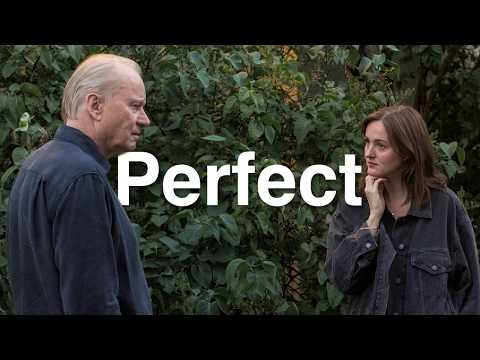
[0:00]Sentimental Value is the most beautiful film I've seen in years, and it's personally my favorite movie of 2025. I truly believe that this film can be a catalyst for healing in many broken families and in the next 25 minutes or so, I want to show you what I mean by that and highlight some of the hidden themes and motifs from the movie, backing up my points. Let's get into it. In Sentimental Value's opening shot and the accompanying music, many of this movie's rich hidden themes are outlined for us. We open with a beautiful view of the Oslo skyline as Dancing Girl by Terry Callier plays in the background. This song is part of an album released in 1972 called What Color is Love, which is fitting because there are many distinct color motifs in this film like blue, red, gold, and white. I'll talk about them in a second. The opening lyrics for this song read, I saw a dream last night, bright like a falling star, and the sources of light, seemed so near, yet so far. Terry Callier sings of disconnected connection in these opening lines. This light feels near to him, but yet so far at the same time. This song works so well for Sentimental Value because this film is fundamentally about something I'll call disconnected connection. Nora's family house represents this idea perfectly. In the opening narration, we get background on both the history of the house and Nora's family. One moment I particularly love is when the narrator tells of how the same room that Nora's great-great-grandfather died in, is the same room that her grandmother was born in, which is the same room her parents slept in. We also hear that Nora, for a class project in sixth grade, was told to write a paper as if she were an object. She chooses her home, and for the rest of the movie, this house is given a consciousness of sorts. You get the sense that it's alive and has stories to tell, if you'll only lean in to listen. It reminds me of when Gustav shows Rachel Kemp the room that his mother commit suicide in. He tells her that the stool she's sitting on is the one his mother used on that fateful day, even though it's from IKEA. Rachel jumps out of the chair, scared of the history that's just been thrust upon it.
[2:16]And that's such a core concept to this movie. How close we actually are to things that don't seem close at first glance. Even though generations of Nora's family have come and gone in that house, family that Nora never knew, there's an eerie connection to them, seen in the similar acts this family engages in across generations. For instance, how multiple generations listen to their family down below through the upstairs stove. They are disconnected, yet connected at the same time, because they do the same things. Just like how multiple generations died in, were born in, and slept in the same room. One of the questions that Sentimental Value asks is, are we really all that different from our ancestors? This is a movie about generational trauma. My favorite moment in the film is this montage shot showing the faces of Gustav, Agnes, and Nora, shrouded in darkness as a spotlight rotates around them. This is the thesis statement of the entire movie shown in visual form. We can't run away from the fact that we are who our family was and is. This disconnected connectedness is shown most in the relationship between Gustav and Nora. Gustav wasn't there during Nora's childhood, and Nora tells him at Eric's birthday party that he doesn't even know them. You two turned out fine, didn't you? How can you tell?
[3:37]You don't even know us. But as we find later when Nora reads her father's script, he does somehow know her, even though he wasn't actually there a lot when she was a girl. That's because they both went through the same trauma. It's mixed up with a lot of things about his mother. But in some scenes, it's as if he was there when you went through it. Gustav's mother disappeared from his life when she commits suicide, and Gustav disappeared from Nora's life when he divorced from her mother. In a narration about Gustav, we hear, it was obvious to Sissel that moving back proved more complicated than he liked to admit. The house works as a perfect metaphor for generational trauma because it implies closeness. The place where Gustav's mother commit suicide is right down the hall. These events, this trauma is very close to him both emotionally and physically, and that's what the house is. It's the physical representation of this generational trauma and how close it actually is to us. For instance, in the opening narration, we hear of a crack, a flaw in the foundation of the house that stretches up from the ground. It's not hard to imagine what that represents. Another filmmaking technique reinforcing this are the use of soft cross-fade transitions. For instance, this somber shot of Gustav's mother going into this back room to commit suicide that's wiped away by the exact same shot, just from the 1970s. I'll call this a soft cross-fade transition. It's used a lot in flashback sequences and does a good job to show underlying sameness despite different time periods. Time is another big motif in Sentimental Value, of course. In the opening shot of the movie, the camera pans right across the cityscape until we see a cemetery down below. This cemetery is shown again while Nora goes out for a run in the middle of the film. And remember, the event that sets this film in motion is the death of their mother. Agnes and Nora are seen holding a reception at their house after the funeral. Later in the movie, Nora's framed walking behind a bustling playground. There's a concentrated effort to show this cemetery, reminding us of what came before, while also showing playgrounds and children, representing the new generations taking their place. There's a scene centered around Eric's birthday party, marking the passage of time. The ending scene of Gustav's new movie takes place on Norway's National Day, which is the anniversary of the signing of their constitution, I.e., a national birthday of sorts. Gustav visits his old cinematographer friend and tells him he only had massive success because of their movie called River of Time.
[6:19]Later in that same scene, Gustav is shocked at how old his friend has gotten, who now hobbles around with a cane. Even in the opening shot, we see Oslo's skyline, along with a few cranes that are building a new world. And remember how Gustav wants the last scene of his new movie to be one shot? He says this about it. The whole ending, just one shot. No editing. Complete sync between time and place. Agnes's occupation is academic historian, and Gustav tells Nora at this restaurant that she deserves to do something more personal You deserve to do something more personal than centuries-old plays for a bunch of senior citizens. There's one more example I think that's worth mentioning. When we finally get the opening title card for Sentimental Value, it's placed right in front of this foundational crack in the house. Great foreshadowing by the way, but right next to Nora in this moment is a spiral bookshelf on the wall. It's a very distinct piece of set design. Spirals are historically used to represent things like the passage of time and the continuity of life with no beginning or end. It's a fitting visual metaphor for a movie about generations rising and falling while time simply goes on. Later, we see Gustav's finished script delivered to Agnes in a spiral notebook. This script, as we know, is the key to showing Agnes and Nora how much their father truly cares about them and knows them on a deeper level. This is a film about generational trauma, but what's the solution it attempts to give us? I think the answer can be found in another motif in this film, which is one of listening. At the beginning of the movie, the narrator talks about the various sounds that Nora's parents make, and how the house misses the sounds their father made when he left. But what the house disliked more than noise, was silence. Nora's mother was a therapist. What do therapists do? They listen to the stories of their clients, a moment we get to witness in the middle of this film. A young Nora listens to her mother's therapy session through the stove that connects to this room down below. When Nora finally comes on stage for her opening performance, the first words she yells is, hear! Speaking of sounds, Nora says her whole body screams at her as she steps out on stage. And in a flashback, Gustav's mom shows him a radio, which they listen to together. And in another flashback, we see Gustav's aunt partying in their house, and a joke is made that when the neighbors would complain of the noise, they would turn up the volume even more because they were sure one of their neighbors ratted on Gustav's mother for Nazi resistance. And when Rachel changes her accent during a table reading, which makes her sound different by the way, Gustav tells her that all she has to do is listen. Well, you can't go wrong here. The only thing you can do wrong is not to listen. I think the movie's trying to say that to fix generational trauma, we need to listen to our parents and grandparents. We must understand our ancestors who came before them. There's a moment where Agnes reads about what the Nazis did to her grandmother. It's a pivotal moment in the story because I think she finally understands the depth of pain her family's really been through. It leads to empathy for her father, shown by her hugging him after she reads of her grandmother. And when Nora finally reads her father's script, everything becomes clear to her. She realizes how alike they really are, since her father just perpetuated the same trauma on her that his own mother did to him. Real quick, I'm thinking of starting a film analysis group this summer where we meet and discuss popular films together. Subscribe to my Substack if you want the heads up when I start it. Also, I publish my videos on Substack a day early in case you want to get them first. The link is right here in the top right of this video. It's here that I want to talk about color theory because it's huge in Sentimental Value and tells a subliminal story within the story. Let's start with the color blue, which is the most prominent color in the movie. We see it clearly in the lighting of the scene where Nora has an anxiety attack before going on stage. It's all over the place in this six-minute sequence. We see it again when Gustav talks with Rachel about her career on the beach. We see it again when Gustav and Nora share a cigarette outside Agnes's house. And we see it again on half of her face when Nora steps onto the stage for her second play. The blue is mixed with red here. More on red in a second. Blue doesn't just show up in the lighting, but in the props. Nora's pillow is blue here at the beginning of the film. Behind young Nora here are two blue cups on the window sill and a blue curtain to the side. At the funeral reception, we see blue cups, plates, pillows, and even posters on the wall. Gustav wears a blue sweater when he gives Nora his script. And one of the umbrellas that Rachel's camp brings to the beach here is blue. When Nora's in bed with this guy from the theater, they're wrapped in blue sheets and pillows. Nora talks to Eric in his bed here and his pillow and pajamas feature blue and green colors. Gustav calls Nora drunk from a blue sofa here near the end of the film, which he passes out on. And when Agnes goes to research her grandmother's experience in a Nazi concentration camp, the books in the library all have blue stickers on them. So what does it all mean? There's one key scene that begins to paint a picture for us. But before Gustav brings Rachel Camp to see the house, Nora and Agnes meet inside to choose which items they want to keep. Keep what you want and dump the rest. But there are many nice things here. Things with sentimental value. Agnes says that the items on the table are things with sentimental value, and wouldn't you know it, a lot of the items featured here are blue. My interpretation is that the blue represents the ability to feel in the film. For example, when Nora has her panic attack before going out on stage, heavy blue light saturates the frame. We learn later on when she's in bed with her theater lover, just how much she runs away from intimacy. You don't like close and cuddly? Sure, I like cuddly. I do. Why are you so afraid of intimacy? In the very next montage scene, we hear Nora talk about her character, and she says, verbatim, When she says he avoids conflicts, she reveals what she hates about herself. Interesting. That's exactly what Nora does throughout the film, shown by her running out the back door when her father shows up to the house with Rachel Kemp for the first time, or by her leaving her sister's house after her nephew tells her he wants to marry her. She can't sit with the emotion and chooses to escape and run home. She also says that when she dives into a character's feelings, It maybe provides me with the security to connect with my own feelings. Then Agnes responds, So you don't want to be yourself? It seems that Nora feeling her feelings, leads to a panic attack because of how overwhelming her feelings are for her. That's why Rachel Kemp getting vulnerable on the beach and telling Gustav about her career is tinged with a blue light. It's the reason why when he shares a cigarette with Nora in the middle of the film, we see this blue light come back as well. It's also the reason why so many items with sentimental value are blue. The family's feelings are being passed down generation by generation, whether the family knows it or not. It's interesting because there's a subcurrent in Sentimental Value that seems to touch on the art of today, and how a lot of films are just mass-produced BS with no emotion to them. That's why Rachel Kemp, the biggest movie star in the world, was so touched by Gustav's movie. It's because, clearly, films like his are a dying breed. I love this scene where Nora ascends an escalator and we see endless Rachel Camp ads on her way up. In a later scene, Gustav talks about how the young filmmakers of today send over mood boards and things like this, representing an emphasis on style over substance. There's a telling sequence where Rachel and Gustav do a Netflix-sponsored press event, which is perfect, as Netflix is the poster child for pushing out emotionless slob every month. Sentimental Value then, isn't just a commentary on running away from our feelings. It's a commentary on how the modern film industry runs away from feeling as well. The movie argues that we need to confront these feelings and actually feel them to create any sort of meaning and depth in our life. And ingeniously, this is also what the film seems to suggest that make movies have meaning or depth. Raw emotion, felt by the filmmakers. And finally, the ending scene on set of Gustav's new movie with Nora features blue screens outside the windows. This felt very intentional for me and shows how Nora and Gustav are confronting their feelings through their art. Another common color motif in Sentimental Value is red. Red is heavily associated with Nora, who wears it a lot in this film. I see connections between red and the theater. Backstage, there's red accents in the carpets and name plates on the doors, and the seats themselves that the audience sits in are red. And when Nora decides to become an actress, just before the opening title sequence, she wears a red hoodie. At the theater group reunion next to the lake, she wears red while her hookup partner wears blue. Some of the things with sentimental value on the table we spoke of earlier are red. And it's no mistake that Nora, of all the things on the table, takes the red vase with her as she escapes out the back door. The outside of the house has red accents, and some of the words in the documents that Agnes reads about her mother are underlined in red. One of my favorite examples of this motif is how before Nora goes out to perform her second play, her face is bathed in both blue and red light. So, what does it mean? I could see an argument made for red representing anger. I could also see it representing a certain avoidance of emotion, which, to me, makes a lot more sense given how the theater is red, and that's where Nora escapes into the emotions of another in order to feel her own. After Agnes reads the records her mother wrote about her time in the Nazi concentration camp, the narrator says that it really impacted her, perhaps because of the dry, unsentimental way she wrote about her experience. That certainly lines up with this red color, and it makes a lot of sense to put red and blue at odds with one another, representing opposite things, since red and blue are pitted against each other as opposites in popular culture quite a lot. Another huge color motif in this film is black and white, and it's represented mostly by Gustav. In a flashback sequence, we see that Gustav inherits his family's house, and what's the first thing that he does? He strips out all the wallpaper, guts the house, and paints the walls white. Almost like he's trying to bleach the past and move on from it at all costs. At the end of the film, the house gets remodeled again, reflecting a more clean, modernistic styling, and the outside is painted a soulless white color as well. My favorite example of this is the black and white artwork on the wall that we see in multiple key moments of the film. We see it when Gustav enters the house for the funeral reception. We see it featured prominently behind Sissel in a therapy session with a client. And we see it near the end of the film when Rachel tells Gustav she can't do his film anymore, and it's framed in the background of this door. This mural is fascinating because it shows a bunch of white and black circles connected together by black lines, some of them arching across the canvas. In a movie about generational trauma and the invisible connections we have with our ancestors, I can't help but think this artwork is a metaphor for that idea. Another way that these black and white colors show up is actually in the theater. There is a white spotlight on the actor in a dark black theater. Everyone sits in shadow as they watch an illuminated stage. In a flashback, the narrator tells us that Gustav once said that the most beautiful thing in life is shadow. While the narrator says this, we get a beautiful silhouette of a window shown on the floor. In that same flashback, we see Gustav framed in shadow quite a lot, like this shot of him in front of the window with baby Nora. Gustav is framed in shadow a lot in this movie, which I'll show on screen for you right now. As the movie goes on, it seems he slips deeper and deeper into the shadows as he falls more and more into despair. Then we have this famous montage of Gustav, Nora, and Agnes's faces as a white light rotates around them, casting dark shadows. It's no surprise that Gustav is a filmmaker whose films are shown in a dark theater thanks to light projecting on a big screen. A motif that shows up again and again in this film are lamps as well, like this huge, obnoxiously arched lamp that dominates the living room here, or this bendy light next to Nora's bed, or this bendy lamp that Agnes uses to read her dad's script. Or how Gustav and his producer sit down to talk about the film near the end of the movie. A scene that's lit by a solitary lamp shining down on the table, casting shadows all over the room. In this scene where Agnes reads about her grandmother's experiences in a Nazi concentration camp, we see eons of green bendy lamps on the tables here. For me, this ties into the ideas we've already established of the need to listen to past generations, to listen to our ancestors to heal and move forward in a healthy way. In this scene where Gustav talks with his producer, his producer says that This theme. We know you've touched on it earlier. But you've never confronted it in this way before. What a great way to show this confrontation visually, with a hot spotlight fixed on the table. It's not easy to confront trauma, and when you shine a light on it, it casts shadows. Shadows that are scary to step into, but you must do it to heal, which brings me to the color green. The final motif we'll talk about today. There's a scene with Eric and Nora talking in bed, and Eric's pillow has a cross-hatched blue and green color, a color scheme that's reflected in his pajamas as well. Eric's dad tells Agnes that Eric walked up to him recently and said, I see you. Eric already seems to show remarkable emotional intelligence and wisdom for a child, a mark of him receiving a healthy childhood, unlike his aunt and grandfather. In Nora's mother's therapy session flashback, she wears the color green, which fits with our broader thesis that listening is the key to healing. And then finally, the green lamps here in the research center where Agnes learns of her grandmother's life. It's a huge turning point in the story and allows Agnes to start forgiving her father and mend that bridge. She is reading, A.K.A. listening to the past, and it helps to fix her present. Green, representing healing and growth in the film, seems fitting as it typically represents these ideas in general. And it serves as a perfect bow tie to many of the themes, motifs, and messages we've discussed in this video. Thanks so much for watching. What did you think of Sentimental Value? Let me know in the comments down below. And if you want more film breakdowns like this one, consider subscribing to my YouTube channel. I publish new film analysis like this every week. I'll see you next time.


