[0:05]The 1920s was a period of great social, political, and economic change, especially in the US and has come to be called the roaring 20s. By this time, more Americans were living in cities than on farms, and the nation's wealth more than doubled. This created a rise in consumerism. Many Americans bought the latest home appliances and clothing. People listen to the radio and went to movies. For many Americans, especially those in the cities, life was in full swing. With lots of money and lots of time, entertainment was in high demand. The film industry exploded. Hollywood was releasing over 800 films every year. Today, it's rare to have over 500. By the end of the 1920s, 75% of Americans went to the movies at least once a week. The first horror films ever made were released at this time and the greats of silent comedy, including Buster Keaton and Charlie Chaplin were shown across theaters. Entertainment also began to enter the household. Radios became a really popular product. Manufacturers were flooded with orders and demands for more radios. Between 1923 and 1930, 60% of American families bought radios. Families gathered around the radios for nighttime entertainment. The 20s were also a great time for music and commonly known as the Jazz Age. Jazz big bands were all the rage, especially among the younger generation. People went to music halls and danced the Charleston, the Black Bottom, the Flea Hop and the Cakewalk. The popularity of radios and phographs made music accessible to everyone. Literary and visual arts were impacted as well, especially during a movement known as the Harlem Renaissance, which was focused on the arts in African-American culture. This movement was closely tied to civil rights and brought out racial pride in the African-American community. Famous poets like Langston Hughes and Zora Neale Hurston inspired and influenced many African-American artists and authors, even today. There were many cultural changes as well, especially among the younger generation. Flappers were young women with bobbed hair and short skirts, who drank, smoked, and were more sexually free, compared to the more conservative previous generations. During the 1920s, new advancements were also made in transportation and infrastructure. One of the most important consumer products was the automobile. Henry Ford had made the first affordable automobile, named the Model T, back in 1908. By 1924, over 10 million Model T's had been produced. People could now live further away from their jobs and easily commute to work, thus creating suburbs. Political changes were also made at the time. Prohibition was a nationwide constitutional ban on the production, importation, transportation and sale of alcoholic beverages, which remained in place from 1920 to 1933. This resulted in the creation of speak easy and gangs that illegally sold alcohol. During the prohibition, crime rates increased by 24% in 30 major cities. So now this raises the question, what caused the roaring 20s? Well, during World War I, the US manufactured and sold a lot of weapons to the allies. Around 17 billion dollars was made by the weapon industries in the US. Annual incomes went from $580 in 1914 to more than $1,300 by the end of the decade. World War I dramatically changed the domestic economy, which set the stage for the prosperity of the 1920s. The main short-term effect of the Roaring Twenties was the stock market crash of 1929. There was an increase in bank credit and loans. These allowed people to buy things without having the money for it and this doubled the consumer debt. The stock market kept rising during the 20s and investors became overconfident and optimistic. Eventually, confidence fell and investors all rushed to sell since they were all heavily in debt. The crash marked the beginning of the Great Depression, the largest economic recession in US history, which lasted 10 years. The Roaring Twenties had a lasting impact on the modern world. Lots of inventions from the time are still in use today, like the traffic light, pop-up toaster and especially penicillin. The most important thing, though, was the increasing use of the assembly line popularized by Henry Ford. This allowed for the mass production of anything and this process is widely used in factories around the world today. The Roaring Twenties was similar to the European Renaissance and also the Enlightenment. They were all cultural revolutions which challenged past ideas or customs. Flappers defied the normal ways of being a woman. The Harlem Renaissance revolutionized African-American arts. Jazz challenged the structure of older music with different chords, rhythms and instrumentation. But why does this matter? Why should this be taught to ninth graders? Well, clearly, the 1920s was extremely influential to modern culture in the US. It was a time when movies, music, art and pop culture flourished. Women and African-Americans began to express themselves more freely and most importantly, everyone had a great time. It's important to learn about our past and how our country has arrived at where we are today. It gives us an identity and it brings us together. Henry Ford couldn't have said it better. Coming together is a beginning, staying together is progress, and working together is success.
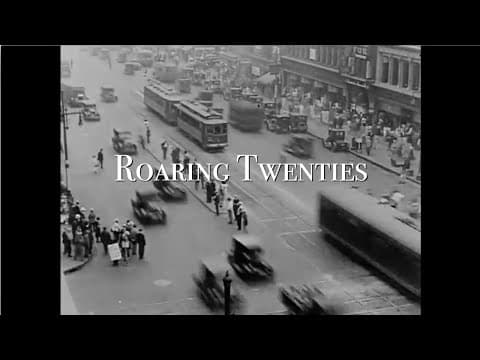
The Roaring 20s Documentary - World History Project
Tom Bolles
5m 55s869 words~5 min read
YouTube auto captions
Transcript source
YouTube auto captions
This transcript was extracted from YouTube's auto-generated caption track. The transcript below is server-rendered so it can be read, searched, cited, and shared without opening the original YouTube player.
Pull quotes
[0:05]The 1920s was a period of great social, political, and economic change, especially in the US and has come to be called the roaring 20s.
[0:05]By this time, more Americans were living in cities than on farms, and the nation's wealth more than doubled.
[0:05]By the end of the 1920s, 75% of Americans went to the movies at least once a week.
[0:05]The first horror films ever made were released at this time and the greats of silent comedy, including Buster Keaton and Charlie Chaplin were shown across theaters.
Use this transcript
Related transcript hubs
Watch on YouTube
Share
MORE TRANSCRIPTS


