[0:08]Hello everyone and welcome back to Mr. English Channel, where learning English is easy and fun. I'm Emily. hello Emily, hi everyone. It is so wonderful to be here today with all of you. I am very happy. I am happy too, Paul. You look very energetic today. Did you have a good breakfast? haha yes, I did. I had a big breakfast. I had eggs, toast, and a very large cup of tea. hmm tea. I have my coffee right here. It is warm and delicious. Coffee is always a good idea, Emily, especially when we have such an exciting topic to talk about. Yes, today is a very special episode. We are talking about small habits that improve your English. Oh, I love this topic. Habits are so important. Small things every day make a big difference. Exactly, you don't need to study for 5 hours. You just need small good habits. That is very true, but before we start sharing these great tips for 2026, we should ask our friends for a little help. Oh yes, everyone, if you are listening and you like our show, please click the like button right now. It helps us a lot. And please subscribe to the Mr. English Channel. When you subscribe, you never miss a fun lesson. Yes, and share this podcast with your friends, if they are learning English, they will love these tips too. Okay, Emily, I am ready. Let's talk about habits. What is the first small habit for our listeners? Well, Paul, I think the best way to start is at the beginning of the day. My first tip is the 5-minute morning. The 5-minute morning? That sounds very easy. What do we do in those 5 minutes? When you wake up, before you look at your phone or get out of bed, think of three things in English. Three things like I am hungry, the sun is yellow, and I want coffee. Yes, exactly. Just three simple sentences. It wakes up the English part of your brain. That is a great idea. It is only 5 minutes, but it starts the day with English. I like that. It is very powerful. And in 2026, we have so many cool tools to help us. That's right. For example, my second tip is about our phones. We use our phones all the time, right? Oh, yes. I use my phone for everything. Well, a great habit is to change the language on your phone to English. Oh, that is a big step, Paul. Is it difficult at first? At first, maybe a little, but you already know where the buttons are. You know where settings is. You know where messages are. That's true. So when I see the word clock instead of the word in my language, I learn it naturally. Exactly. You see English words 50 or 100 times a day. It is a small habit, but you learn so many new words without trying. I love that. It is passive learning. You are learning while you live your life. Yes, and speaking of living your life, Emily, what about the things in our houses? Ah, that leads to my next tip. The label habit. Labels, like stickers? Yes, get some small pieces of paper and a pen. Write the name of things in your house in English. Oh, I remember doing this. I put a paper on the mirror, a paper on the window, and a paper on the door. Yes, and in 2026, you can even use your phone to scan things and it tells you the name. But writing it and seeing it every day is a very good habit for A1 learners. It really is. Every time I brush my teeth, I see the word sink. Every time I cook, I see the word fridge. It is perfect for beginners and it's fun. Your house becomes an English school. haha. haha My house is very talkative now. Okay, I have another tip. This one is about social media. Oh, I spend a lot of time on social media. What is the habit in 2026? In 2026, there are so many short videos, reels, TikToks, and clips. The habit is follow three English creators. Only three? That is easy. Yes, find three people who speak English and talk about things you like, maybe they talk about cooking or cars or travel. Oh, I see. So when I am scrolling and relaxing, I see a 30 second video in English. Exactly. It's short, it's not a long lesson. You hear the rhythm of the language. You see their faces. It is very helpful for your ears. That is a great tip, Paul, and here is a bonus for that habit. Read the comments. The comments? Why? Because people in the comments use real English. They use short sentences. It is a great way to see how people actually talk today. Wow, Emily, that is a very smart tip. I never thought about the comments. thank you. Okay, Paul, what about speaking? Many people are afraid to speak. Yes, speaking is scary for many learners, but I have a habit that helps. It is called narrate your day. Narrate your day, like a movie? Yes, talk to yourself. When you are alone, say what you were doing. For example, I am washing the dishes now. The water is hot. I like this soap. Paul, do you really do that sometimes? It sounds funny. Sometimes. It sounds funny, but it helps your mouth get used to English words. You don't need a partner. You are your own partner. That is so good. I am putting on my shoes. My shoes are blue. I am walking to the door. It is simple, but it builds confidence. Exactly, and no one is there to judge you. You can make mistakes and it's okay. I love that. And speaking of speaking, in 2026, we have AI friends on our phones, right? Oh, yes. The AI assistants are so good now. My next tip is talk to your AI for two minutes, just 2 minutes. Ask about the weather or tell it about your day. That is a fantastic habit. The AI is very patient. It doesn't get tired if you speak slowly. Yes, you can say, hey, what is the weather today? And it answers in English. It is a real conversation, but it's very low pressure. I use my AI to practice my pronunciation. I ask it to repeat things. It is like a free teacher in my pocket. It really is. It's amazing how much technology helps us learn English in 2026. It does, but we also need the old habits. For example, music. Oh, I love music. How can music be a habit? The habit is one song a day. Listen to one English song and look at the words. The lyrics. Yes. Yes, the lyrics. In 2026, most music apps show the lyrics on the screen while the song plays. That's true. I like to sing along. Singing is the best. It helps with your flow. You learn how words connect together. I want to go becomes I want to go. Music teaches you that naturally. Yes, and it's fun. It doesn't feel like studying. It feels like a party. haha a very educational party. Okay, I have a very practical tip for the supermarket. Oh, I go to the supermarket every Saturday. What is the habit? The English shopping list. Oh, so instead of writing the words in my first language, I write bread and milk in English. Exactly. Every time you go shopping, write your list in English. That is a great way to learn food words. Apples, chicken, rice, cereal. And when you are in the store, you are looking for the apple and you see the word on your list. It connects the word to the real object. That is a very strong way to learn. I will do that this weekend. Good job, Paul. Now, what about the end of the day? Do you have a night habit? I do. It's called the one sentence journal. A journal like a diary? Yes, but very short. Just one sentence before you go to sleep. Write about your day in English. One sentence is not scary at all. Not at all. You can write today was a busy day, or I ate pasta for dinner, or I am tired but happy. That is lovely. It helps you practice the past tense too. I went, I saw, I had. Exactly. And after one month, you can read your journal and see 30 sentences in English. You will feel so proud. Wow, that is a great feeling. Seeing your progress is very important for motivation. It is. If you see that you can write 30 sentences, you know you are becoming an English speaker. These are such good tips, Paul. They are all very small. 5 minutes here, 2 minutes there. That is the secret, Emily. Consistency is better than intensity. Oh, that is a big word. What does consistency mean? ha It means doing something every day, even if it is a small thing. Ah, I see. So doing 5 minutes every day is better than doing 3 hours only on Sunday. Yes, exactly. Your brain likes to see English every day. It's like a plant. You need to give it a little water every day. I love that example. My English plant is growing every day. haha Mine too, and it's growing because of these habits. You know, Paul, another small habit is to watch movies with English subtitles. Oh, yes, but for beginners, is it audio in English or subtitles in English? For A1, I think audio in your language and subtitles in English is a good start, or audio in English and subtitles in your language. And in 2026, we have those dual subtitles where you see both languages at the same time. Those are amazing. You can see the English word and the translation together. It helps you understand the structure. It's like magic. You are watching a funny movie and you are learning grammar at the same time. Yes, I am learning while I am laughing. Exactly. Okay, Emily, we have shared so many habits. Let's think, is there one more? hmm Oh, I have one, the curiosity habit. What is that? When you see something and you don't know the word in English, use your phone to find it immediately. Oh, I do that. If I see a strange bird in the park, I think how do I say that name in English? And I check the word. Yes, and in 2026, you can just point your camera at the bird and the AI tells you it is a bird. haha Technology is so helpful. But the habit is being curious, asking how do I say this in English? Yes, that question is your best friend. Wow, we talked a lot about habits today. I feel very inspired. Me too, Paul. I want to start my English journal tonight. That's the spirit. And you know, we should remind our friends that they don't have to do all of these habits at once. That is a very important point. Don't try to do 10 new habits tomorrow. No, that is too much. Maybe start with one or two. Yes, pick one morning habit and one night habit. That is a great start. I agree. Start small and stay happy. Well, Paul, our time is almost finished, but before we go, let's remember the big ideas from today. Oh, yes. I remember the first one we talked about, starting the day with three simple sentences in English. That's right. The 5-minute morning. And you told us about changing your phone to English. I think that is a very smart one because we see it all the time. Yes, it's very helpful. And we talked about putting labels on things in the house, like the mirror and the fridge. It's like living in a school. Yes, and don't forget the English shopping list. That is so practical for learning food words. I love that one. And we also mentioned talking to ourselves, the narrate your day habit. It's funny, but it really works for confidence. It does, and we talked about using 2026 technology, like talking to AI for two minutes, or using dual subtitles in movies. And my favorite, the one sentence journal at night. It's a great way to see your progress. Yes, all these small things make English a part of your life. It's not a chore, it's a habit. Exactly, it's fun and easy. Well, everyone, we hope you liked these tips. We want to hear from you now. Yes, please leave a comment below. Tell us which habit is your favorite. Or tell us about a habit you already have. What do you do every day to practice English? We love reading your stories. It makes us so happy to see you learning. And remember, please subscribe to Mr. English Channel and give this episode a like if it helped you today. Share it with your family and friends too. Let's help everyone learn English in a fun way. Thank you so much for listening to us today. You are all doing a great job. Yes, you are. Keep going and stay curious. We will see you in the next episode. goodbye everyone. Bye bye.
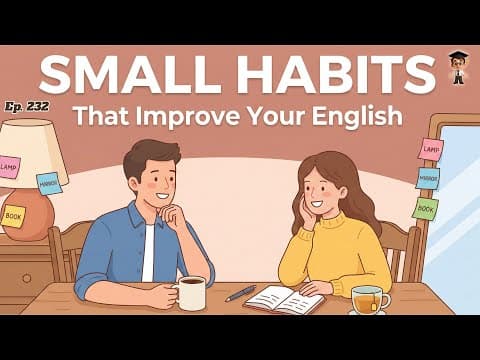
Small Habits to Learn English | A1 Beginner Level | English Podcast
Mr. English Channel
15m 3s2,261 words~12 min read
YouTube auto captions
Transcript source
YouTube auto captions
This transcript was extracted from YouTube's auto-generated caption track. The transcript below is server-rendered so it can be read, searched, cited, and shared without opening the original YouTube player.
Pull quotes
[0:08]Coffee is always a good idea, Emily, especially when we have such an exciting topic to talk about.
[0:08]That is very true, but before we start sharing these great tips for 2026, we should ask our friends for a little help.
[0:08]Oh yes, everyone, if you are listening and you like our show, please click the like button right now.
[0:08]Yes, and share this podcast with your friends, if they are learning English, they will love these tips too.
Use this transcript
Related transcript hubs
Watch on YouTube
Share
MORE TRANSCRIPTS


