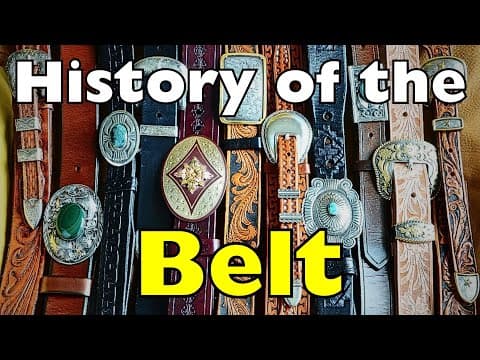
[0:03]Belts are a common accessory today, but their history stretches back thousands of years. More than just a tool for holding up clothing, belts have served various purposes, from practicality and decoration to symbols of power and status. Over the centuries, belts evolved alongside fashion, military gear, and cultural trends, adapting to different needs and styles. In this video, we'll explore the fascinating journey of the belt, from its earliest forms to its place in modern wardrobes, right here on History of Simple Things. The earliest belts date back to the Bronze Age, around 3000 BCE, when early humans began using simple leather straps or cloth bands to secure their garments. These belts were primarily functional, used to hold tools or weapons rather than as decorative accessories. The early belts were often made of raw hide, plant fibers, or woven materials, depending on the available resources of a particular region. Archaeological findings suggest that belts were widely used by both men and women, particularly among nomadic tribes and early warriors who needed a way to carry essentials while on the move. Belts played an essential role in combat and hunting, where easy access to weapons or pouches was crucial for survival.
[1:35]In ancient civilizations like Egypt, Greece, and Rome, belts took on a more sophisticated role. Egyptian artwork from around 1500 BCE depicts warriors wearing decorative belts adorned with metal embellishments. These belts often served as both practical and ceremonial items, worn by high-ranking officials, soldiers, and even Pharaohs. In Greece, the "zona" was a belt worn by both men and women, used to secure tunics at the waist. The Romans, however, took the belt to another level with the introduction of the cingulum, a military belt that signified status and rank. Roman soldiers wore elaborately decorated cingulums, often made of leather and fitted with metal plates, studs, or medallions to showcase their allegiance and accomplishments. These belts were not merely decorative; they held scabbards, daggers, and pouches, making them an essential part of a soldier's uniform.
[2:37]During the Middle Ages, belts became even more integral to both fashion and function. Knights and warriors wore wide sturdy belts over their tunics and chainmail, using them to carry swords, pouches and other equipment. The belt symbolized authority and chivalry, with elaborate buckles and metal fittings becoming a sign of nobility. Meanwhile, civilians also used belts to secure robes and tunics, as buttons and zippers had not yet been invented. The wealthy elite often wore highly decorative belts made of fine leather, sometimes adorned with gemstones or intricate metalwork, while the lower classes used simple, practical belts made from basic materials. Women's fashion during this period also incorporated belts, though in a different way. Wide, embroidered belts were often worn over long gowns, emphasizing the waistline.
[3:32]The Renaissance and Baroque periods saw belts becoming less of a necessity and more of a decorative fashion statement. Men's clothing styles shifted towards fitted doublets and coats that did not require belts for support. However, belts remained popular among soldiers and travelers who still needed functional ways to carry weapons or money. In contrast, women's fashion moved towards corsets and gowns with structured bodices, making belts less common in their wardrobes. During this era, belts with elaborate metal buckles and embellishments were worn by the upper class as a symbol of wealth and status. Some belts even doubled as money pouches or concealed compartments, a practical feature in a time when personal security was a concern.
[4:24]The industrial revolution of the 18th and 19th centuries brought significant changes to the belt's role in society. With the rise of mass production and advancements in textile manufacturing, belts became more standardized and widely available. This era also saw the emergence of the modern belt buckle, which allowed for easy adjustment and a more secure fit. In the military, belts remained a crucial part of uniforms, particularly in the 19th-century European and American armies. Soldiers often wore wide leather belts with large brass buckles, sometimes engraved with national insignia. These belts were not only practical but also served as a means of displaying rank and discipline.
[5:11]The early 20th century marked a turning point in belt history, particularly with the rise of men's trousers as the standard form of clothing. Prior to this, suspenders were more common for holding up pants, but as waistlines lowered and trouser designs evolved, belts became the preferred choice. By the 1920s and 1930s, belts were a staple in men's wardrobes, with sleek leather designs and simple metal buckles becoming the norm. During World War I and World War II, military-style belts once again gained prominence, with soldiers wearing utility belts equipped with pouches, ammunition holders, and canteens. These military influences later found their way into civilian fashion, inspiring rugged, functional belt designs.
[6:03]In the mid-to-late 20th century, belts became a major fashion accessory. The 1950s and 1960s saw the rise of bold belt designs, often worn as statement pieces rather than just functional items. In women's fashion, high-waisted dresses were often cinched with wide belts to accentuate the silhouette, while in men's fashion, slim leather belts with polished buckles became a sign of sophistication. The 1970s brought an era of flamboyant belt designs, from large, oversized buckles to studded and embossed leather styles, often associated with rock and Western fashion. The punk movement of the 1980s also embraced belts, incorporating chains, spikes, and heavy-duty leather designs as part of rebellious, edgy styles.
[6:56]Today, belts come in an endless variety of styles, materials and purposes. From luxury designer belts made by brands like Gucci, Louis Vuitton and Hermès, to practical utility belts used by workers and military personnel, the belt remains a versatile and timeless accessory. In the world of sports, championship belts symbolize victory in boxing, wrestling and martial arts, further demonstrating the belt's deep rooted significance beyond mere fashion. The rise of sustainability in fashion has also influenced belt production, with eco-friendly materials like recycled leather, fabric belts, and biodegradable components becoming more common.
[7:41]In many ways, the belt's evolution mirrors broader changes in human history, from the practical needs of ancient warriors to the high fashion statements of modern celebrities. Whether used for utility, decoration, or symbolism, the belt remains an essential part of our wardrobes and culture. While it may seem like a simple accessory, its long and fascinating history proves that the belt is much more than just a strap around the waist. It is a testament to craftsmanship, identity, and the ever-changing nature of style.
[8:21]Thank you for watching. If you have suggestions for our next video, feel free to share them in the comments below. We'll be sure to give you an acknowledgement for your contribution.
[8:35]Thank you for joining us on this journey through the history of simple things. Don't forget to like, subscribe, and stay tuned for more stories woven through the smallest details.


