[0:03]60 second adventures in economics. Number one, the invisible hand. An economy is a tricky thing to control and governments are always trying to figure out how to do it. Back in 1776, economist Adam Smith shocked everyone by saying that what government should actually do is just leave people alone to buy and sell freely among themselves. He suggested that if they just leave self-interested traders to compete with one another, markets are guided to positive outcomes as if by an invisible hand. If someone charges less than you, customers will buy from them instead. So you have to lower the price or offer something better. Whenever enough people demand something, they will be supplied by the market, like spoiled children. Only in this case everyone's happy. Later free marketers like Austrian economist Friedrich Hayek argued that this hands-off approach actually works better than any kind of central plan. But the problem is, economies can take a long time to reach their equilibrium, and may even stall along the way. And in the meantime, people can get a little frustrated, which is why governments usually end up taking things into their own more visible hands instead.
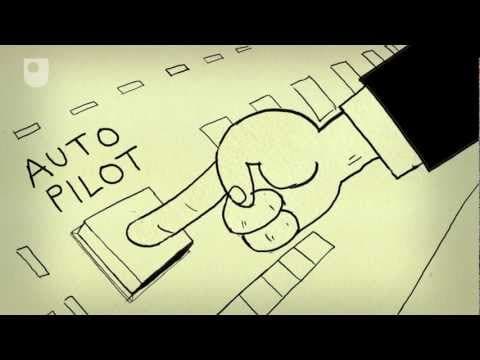
The Invisible Hand - 60 Second Adventures in Economics (1/6)
OpenLearn from The Open University
1m 10s197 words~1 min read
YouTube auto captions
Transcript source
YouTube auto captions
This transcript was extracted from YouTube's auto-generated caption track. The transcript below is server-rendered so it can be read, searched, cited, and shared without opening the original YouTube player.
Pull quotes
[0:03]An economy is a tricky thing to control and governments are always trying to figure out how to do it.
[0:03]Back in 1776, economist Adam Smith shocked everyone by saying that what government should actually do is just leave people alone to buy and sell freely among themselves.
[0:03]He suggested that if they just leave self-interested traders to compete with one another, markets are guided to positive outcomes as if by an invisible hand.
[0:03]Whenever enough people demand something, they will be supplied by the market, like spoiled children.
Use this transcript
Related transcript hubs
Watch on YouTube
Share
MORE TRANSCRIPTS


