[0:07]Hello. For the past 30 years or so, I've been a professor of psychology at Wellesley College in Wellesley, Massachusetts. But in my former life, I was an elementary school teacher. My classroom in Colorado combined kindergarteners, first graders, and second graders all in the same room, which meant that children stayed with me for three years. It was a wonderful time of my life, a real privilege. But as I went on in teaching, I began to worry more and more about my students' motivation and creativity, or better said, their lack thereof. Almost without exception, kindergarteners started the new school year raring to go. Their imaginations ran wild, they were excited about anything I put in front of them and their problem solving was fantastic, it knew no end. But for many of those same children, as they were finishing up their second grade year, they were no longer willing to take chances, to take risks. I started really wondering and worrying, frankly, about what it was about my own classroom or classrooms in general that was causing these children's motivation and creativity to die out over time. I was still really young at that point, and the optimism of youth told me, well, simple, just go to graduate school, get a PhD and figure things out. 35 years later, I'm happy to say that my colleagues and I have figured a lot of this out. We now understand that motivation and creativity go hand-in-hand. For any of us, no matter what our background, what our age, we need to approach a thorny problem, a creativity type task for the sheer pleasure, enjoyment, satisfaction, and challenge of that task itself, rather than for some extrinsic goal like getting a reward that someone has offered us, or we know that there's an impending evaluation. Intrinsic motivation is conducive to creativity, and extrinsic motivation is almost always detrimental. We know this. We understand it. Now, let me step back just for a moment and make certain that you understand that extrinsic motivation isn't always the enemy, it's not always bad. If creativity isn't at stake, if you want your students to help you clean the classroom, memorize their multiplication tables, or master a list of spelling words, by all means, go ahead, load on those extrinsic incentives, offer them a reward. Their work will get done, and it will get done on time. But if creativity is your goal, that's when you have to be really wary, very careful of those extrinsic incentives. Over time, my colleagues and I have learned as researchers that it's all too easy to kill motivation and creativity. Intrinsic motivation is a very ephemeral, situation-specific state. We have found, in fact, that there are six surefire methods for killing motivation and ensuing creativity. Promise someone a reward for what they're about to do. Lead them to expect that they'll be evaluated. Restrict their choice, restrict their time. Breathe down their necks, peer over their shoulders and engage in surveillance. And the killer number six, the most powerful killer of all, bring all those other killers together into situations of competition. Expected reward, expected evaluation, restricted choice, restricted time, surveillance, competition. This recipe for how to kill motivation and creativity most unfortunately reads like the recipe for the typical classroom, even my own former classroom. Now, it's important to know that this understanding is not just based on anecdotal evidence from teachers or people in the business world, it's not just based on hunches. I'm trained as an experimental empiricist. My colleagues and I have now done hundreds of studies across all age groups, people with from all walks of life. This isn't just true for little guys in kindergarten and first grade. We understand that these findings are, are really, they're cross-cultural, they're cross-time and they're cross-place. Typically, we go into schools into natural classroom settings and we randomly assign children to constraint or no-constraint conditions. In other words, maybe children will be assigned to an expected reward group, or an expected evaluation group, or a control no-constraint group. We then ask children to create some sort of product. They might tell a story or make a collage, and we also measure their motivational orientation. Time and time again, we find a statistically significant difference. A difference of magnitude between the performance of the two groups that can't be explained away by chance alone. Something other than chance is operating there, and the something other is that the children in the constraint conditions were working under very different circumstances than the children in the no-constraint control conditions. Invariably, children who were working for a reward, expecting an evaluation, or performing under one of those other six constraints that I talked to you about, show creativity that's significantly lower than children in the no-reward, no-evaluation control groups. We can't get away from it, that's what's happening. Historically, teachers have really not been taught or even encouraged to think much about student motivation. Yet, even at the turn of the last century, there were already some visionaries out there, people like John Dewey and the pragmatist, who were already experimenting with child-centered classrooms. And in the 60s and 70s, in this country, the open circle movement came to a fore. But over time, for a lot of complicated reasons, our educational system has come to look very differently than it did in Dewey's time or in the 60s. It's all about the standardized tests these days, tests that are touted to capture students' learning and teacher effectiveness. It's all about teaching to that test, learning for that test. We have to, as educators, turn things around. We have to understand that we can't just coerce kids into learning. We have to rely on their own unending stores of intrinsic motivation, their own drive, their own passion, their own creativity, of which they have quite a bit. And we can do this. We can turn things around. We if we have the will, there is a way. Most importantly, I would recommend that children need the luxury of time. In the classroom, they need time to really immerse themselves in difficult problems, to persevere, to work in teams, to try new things, to experience failure and then to pick themselves up in the face of that failure and try again. This is what they need as they go out into a world where other speakers today have said it's very uncertain, exactly what the workers of tomorrow will need, but we know they'll need to have intrinsic motivation against all odds. We know they'll need those creativity skills. We know they'll need to persevere. And it's classroom experiences that are going to give kids those lessons. Where there's a will, there's a way. If parents, teachers, and policy makers really value creativity, it's time to construct classrooms that will facilitate that kind of exploration on the part of children. It's time to have faith in kids' curiosity, their drive, and their own unending stores of intrinsic motivation.
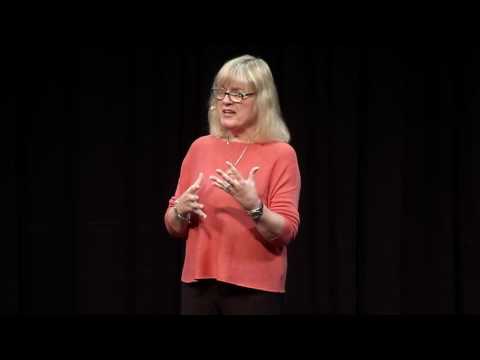
“Cultivating Intrinsic Motivation and Creativity in the Classroom” | Beth Hennessey | TEDxSausalito
TEDx Talks
8m 44s1,179 words~6 min read
YouTube auto captions
Transcript source
YouTube auto captions
This transcript was extracted from YouTube's auto-generated caption track. The transcript below is server-rendered so it can be read, searched, cited, and shared without opening the original YouTube player.
Pull quotes
[0:07]For the past 30 years or so, I've been a professor of psychology at Wellesley College in Wellesley, Massachusetts.
[0:07]My classroom in Colorado combined kindergarteners, first graders, and second graders all in the same room, which meant that children stayed with me for three years.
[0:07]But as I went on in teaching, I began to worry more and more about my students' motivation and creativity, or better said, their lack thereof.
[0:07]Almost without exception, kindergarteners started the new school year raring to go.
Use this transcript
Related transcript hubs
Watch on YouTube
Share
MORE TRANSCRIPTS


