[0:00]It's April the 12th, 1945, at 2:30 p.m., nine Mitsubishi G4M Betty bombers, and their escort of A6M zero fighters, swore over the East China Sea. In the lead bomber, Lieutenant Saburo Dohi puts on his oxygen mask and lies back on his makeshift cot. Breathing deeply, his mind is focused on one thing, the new secret weapon held in the bows of the Betty. A weapon the Japanese hope will change the course of the war.
[0:41]Radio operator Lieutenant Zenji Sugano taps Saburo on the shoulder, his face is solemn. We've made it. American ships have been spotted below, a pair of destroyers and smaller vessels. The attack is on. Flack opens up on the Betty and the crew scramble to their positions. Everyone knows if they haven't been spotted on radar already, their position will surely be reported now. It's only a matter of minutes until superior allied air power arrives. Saburo approaches the trapdoor on the bomber. The trapdoor has come to be known by the pilots as the Devil's Gate. But Saburo is undeterred. Thank you for everything. For a moment, there's a calm exchange of understanding and mutual respect between the two men. Sugano salutes Saburo, and Saburo smiles at his comrade. It's time. Taking a deep breath, Saburo passes through the Devil's Gate and down a small ladder, and he descends into his fate. The weapon that Saburo will pilot is suspended high over the sea in the bomber's modified bomb bay. He feels the tug of the wind buffeting him as he eases himself down to the familiar surroundings of the cramped cockpit and controls. He takes a deep breath and tries to get his bearings. Through the narrow gap of the Betty's partially open bomb bay doors, he can see a slither of the unfolding battle below. Three zero Kamikaze bombers head straight for the US destroyer, the Manner L Abley. The crew fights desperately as gunfire rains through the sky, turning every weapon they have to the incoming Japanese plane as three zeros sore towards the ship. One zero is destroyed. And another is driven off. But the third barrels on. Encouraged by their success, the Manner L Abaly's crew manages to score hit after hit on the remaining plane, but the determined zero can't be taken out. It slams into the destroyer's starboard side. The bomb it's carrying penetrates the deck and detonates. Above the chaos, Saburo has made his final preparations and taps out a Morse code message that he's ready to launch. His heart pounding, Saburo waits for his contraption to be dropped from the Betty and for the hurtling dive to begin. But a minute passes, and nothing happens. Cold fear begins to pull in Saburo's stomach, he's suspended helplessly over enemy fire. If the Betty covers much more distance, he'll lose track of his target. Back on board the bomber, the aircraft commander shouts to radio operator, Lieutenant Zenji Sugano. The explosive release bolt has misfired, and Sugano must manually jettison the rocket bomb. Sugano closes his eyes, unable to bring himself to watch as he releases the weapon. With no warning, Saburo plunges downward through the sky.
[3:56]Despite it feeling like the floor has dropped from underneath him, Saburo desperately follows his training. He activates a dial on the dashboard and shifts his thumb over to a button on the joystick and presses down. He has just activated a top secret piece of new technology. Capable of granting him incredible speed. An overpowering force, stronger than anything he's felt before takes hold, and he's thrown into the back of his seat. A deafening unnatural roar drowns out everything. The battle cry of the Thunder God has been sounded.
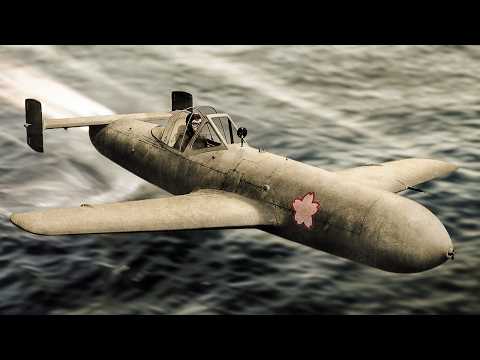
[4:38]Just eight months before the mission of April the 12th, 1945, on a hot humid evening, a group of inexperienced naval cadets fresh out of flight school are assembled at a Takao airfield, Taiwan. The cadets sit on Tatami mats awaiting their commander, barely able to contain their excitement. All they know is that they've been summoned for a top secret undertaking, and if they display the required attributes, they will be given control of a single weapon more capable than anything before it. Amongst the group are cadets, Saburo Dohi and Hideo Suzuki, friends and classmates from flight training. Group commander Captain Yunsaku Takahashi enters the room. His face is solemn. If you're married, if you're the only surviving male heir for your family, or if you have only one parent alive, raise your hand. Hands go up around the room as Takahashi watches gravely. You men with your hands raised, leave the room. The stunned silence is followed by looks of confusion and disappointment. Men exit quietly, leaving an ominous crowd of empty seats. Takahashi begins the briefing. He reveals to the cadets that despite the Japanese propaganda, the war is not going well. But this weapon could be the answer. It's capable of taking out an American aircraft carrier in one shot. The men are in disbelief. This is a game changer. But Takahashi isn't finished. There's a catch. Operating this weapon is a one-way mission. You will die. Saburo Dohi and Hideo Suzuki, nod to each other resolutely. They are determined to serve Japan at whatever the cost. Takahashi stresses to the men the urgency of the project, but also assures them that there will be no shame in backing out, giving them three days to consider. Despite the stark requirements of the mission, a team of cadets sign up. They are now the 721st naval air group, and they will soon become known as the Thunder Gods. Hideo and Saburo soon begin training with their fellow cadets and finally discover what the miracle weapon they will be learning to operate is. Named the Oka, meaning cherry blossom in Japanese. The title alludes to the sacrificial pilots as falling cherry blossom flowers. Diving to a glorious death. The Oka is constructed around a 2,600 pound warhead. During training, the pilots train using unpowered glider versions of the Oka. Despite the brutality of the assignment, Hideo Suzuki is in high spirits. His friend Saburo wishes him luck on the airfield. And Hideo eagerly climbs aboard the Betty bomber with his comrades. Once the bomber is cruising high in the air, Hideo settles down into the Oka K-1 training glider for his first flight. It's now that a rush of adrenaline passes through him, but he fights to remain calm. He confirms that he is ready by announcing into the mouthpiece. Maintenance preparations. All good. Hideo also taps out in Morse code an abbreviation of his oral message. The Betty pilot is not to drop the K-1 until he has confirmed Hideo's message, and Hideo himself has issued a reply. In the cramped cabin of the glider, Hideo waits an eternity for a reply. There's only silence from the Betty's pilot. With no clue of what to do next, Hideo frantically starts to repeat his original Morse code message. But before he can finish, there's a deafening bang as the explosive charge detonates prematurely and releases the Oka from the bomber into a roller coaster dive. The aircraft plunges through the air, immediately pulling hard G's. Hideo grapples with the joystick as the G force increases and threatens to overwhelm him. He can feel the weight acting harder and harder on him, and his eyes slowly start to close. With a jolt, he wrestles the little plane back into even flight, and the pressure slowly subsides. Gaining confidence, he sights the airfield circling it twice before lining up for the final approach. If you enjoy this video, we'd really appreciate your subscription. Thank you. Now, only three feet over the airfield, Hideo is inches away from success. Having been warned not to force the craft down, but to let it bleed energy until he feels the skid bite. Hideo grits his teeth and follows this training. Finally touching down on the ground and skidding along the sandy field. But it will not be an easy landing, as little cross tilts to one side, resting on the wing tip as it comes to a screeching halt. A grin slowly breaks across his face, knowing that the successful training flight signals his readiness for the real thing.
[9:59]After months of intense and nerve wracking training, the Thunder God's gather to celebrate the New Year on December the 31st, 1944. Having been granted leave, the pilots use this time to reflect on their spiritual values and life to prepare for the sacrifice they'll soon be required to make. Saburo and Hideo are among them. The men drink sake, eat special rations and wait for midnight, when the anticipated sound of the large bronze bell from the Buddhist temple, rings ominously throughout the night. Struck by the priests 108 times to mark the suffering caused by the earthly desires of man. The pilots fall into silence as they listen to the deep tolls sounding through the night. As the dawn creeps closer, the pilots walk to a humble hill known as Tornado Mountain. The normally festive atmosphere is muted by the effects of over seven years of war, as the pilgrims trudge exhaustedly up the mountain.
[11:06]The icy ocean breeze meets the bright rays of the sun as it bursts over the horizon. The men take a moment to watch the dawn from the heights of Tornado Mountain. Agiguchi, a pilot from the Thunder Gods that day stated. We drank a cup of sake and shouted, Banzai, Banzai, Banzai. We all knew it would be our final first sunrise. In April 1945, Saburo Dohi and Hideo Suzuki are becoming impatient and tense. Twice now they have waved off their fellow pilots on two previous Thunder Gods missions. These task forces have been annihilated by allied forces, but Saburo and Hideo are no less eager to jump into action. Finally the day comes when Saburo is assigned to the third Thunder Gods operation, although Hideo is again left in reserve. At the air base, Hideo and Saburo say their final goodbyes. Devastated that he's unable to join his friend in combat, Hideo congratulates Saburo on the great honor of dying for the nation, and says farewell to his friend for the last time.
[12:25]Rubel and jagged pieces of ship spray across the water as the USS Mannert L Abaly chorine to a halt. However, its troubles are far from over. Suddenly, a lookout sights a small aircraft, 1 and a half miles out, skimming low over the water at terrific speed. The crew have never seen anything so fast and so small. There's no time for them to react. Saburo and his Oka hurtle towards the vessel, ripping through the sky. He takes a deep breath and slowly closes his eyes. He takes himself back to the beautiful yellow dawn atop Tornado Mountain. The 2,600 pound warhead of Saburo's Oka has collided with the side of the ship. Having activated the manual launch of Saburo's Oka, Zenji Sugano has been watching every step of Saburo's journey and see the tremendous blast. He did it. Saburo's Oka obliterates the vessel's midsection, buckling its keel, severing all power, lights, and communications. Aboard the ship, water pours in from all angles, and those below deck don't even have a chance to register what's hit them. The Oka has done its job. The captain of the Manner L Abley gives orders to abandon ship as it breaks in two. The bow and stern drift apart before slipping beneath the waves. Dozens of men are trapped inside.
[14:01]As the stunned survivors clustered in the churning waters, the crew of the nearby destroyer, USS Jeffers, has sighted another Oka, zipping towards them. The Jeffers guns open up on Saburo's squadmate. But the Oka streaks on relentlessly, its pilot unfazed. An explosion rocks the ship. The decks are smashed, but the ship hasn't sunk. At just 50 yards, an anti-aircraft shell had struck the Oka. The Oka and its pilot are destroyed before they can even hit the target. Not so lucky as Saburo and his glorious death in the hull of the Mannert L Abley. The initial strike by the Kamikaze, the Oka and the subsequent strafing of this attack kills 83 and wounds 35. The operation is later deemed the most successful use of the Oka in the war. Saburo would never know that his hit of the Mannert L Abley would be the one and only ship accounted to be sunk by an Oka. Or that he had given his life, not for a US capital ship, but a small destroyer acting as a radar picket from outside the main fleet. Despite their sacrifice and commitment, Okas and their pilots would only damage six other US ships in their operations. Of the 74 that were used in action, most Okas were shot down still within the slow, overloaded Betty bombers and in failed attacks. The Oka pilots would come to earn the nickname, Buckers or Fools by the Americans. Yet the dignity of the Thunder God's sacrifice was not lost on those left behind from the operations, such as Hideo Suzuki, who would mourn the loss of his friend and the chance to sacrifice himself for the war effort. I felt that I had missed out on my chance to die for the nation. Hideo would later say. Of the 17 cadets who were assigned to the Thunder Gods alongside Hideo Suzuki, only two others survived the war. On March the 21st, 1948, the surviving pilots fulfill their promise to meet at Tornado Mountain. The same mountain the Thunder Gods have climbed that New Year's Day in 1945. The men share cups of hot green tea and bittersweet memories of their friends, who gave everything for Japan.


