[0:10]In this overview for Chief Financial Officers and Chief Accounting Officers, we'll show you the highlights of how you can simplify an overburdened general ledger and streamline your financial close with profitability and cost management cloud. Does your business change so quickly that you and your accounting team struggle to give management executives the answers and information that they need for agile, fact-based strategic decision making? To answer constantly changing questions from management, do you use offline spreadsheets and shadow systems? Is your general ledger expanding, straining to contain increasing amounts of chart of accounts segments and dimensions to meet performance analysis requests for shifting business models? In trying to provide the data that executives need, accountants swell the general ledger with entries and chart of account segments and dimensions, such as customer, product, channel, activity, and service. Adding operational and management details to statutory GAAP details, until the general ledger is so complex, it slows the financial close and limits your ability to react to market and industry changes. There's a solution: separate statutory GAAP and management reporting by moving operational and management details to profitability and cost management and use performance ledgers to easily perform complex calculations, transformations, allocations, and to generate the reports that you need. This unburdens the general ledger, freeing it to perform its primary purpose of statutory GAAP reporting, and letting you manage transformations and performance-based analysis by moving, re-categorizing, adjusting, aligning, aggregating, and allocating funds. Your statutory GAAP process is simplified because there's less chart of account maintenance, because you don't have to create entries, cost centers, accounts, and dimensions in the general ledger to adapt to business or organizational changes. You can quickly respond to changes by changing your performance ledger drivers. There's no need to manipulate your numbers, complex transformations and allocations are made in performance ledgers that reflect your business best practices, reducing balance activities, reconciliations, allocations, and data source errors. You can close your general ledger faster, since it's only performing consolidations for statutory reporting. At the same time, management can report on granular levels of data, such as product SKUs, for the analysis that they need for decision making and profit and loss reporting, using increased transparency and auditability, better allocations and alignments, what if planning based on different scenarios, an easy rule designer, and built-in trace and balancing. Let's explore some of the provided capabilities that let you easily extend, transform, and manipulate your data. You can import the additional dimensions that you need to support your transformations and reporting. For example, you can add operational dimensions to financial data such as product, customer, activity, channel, and service. You can also manage a complex waterfall of transformations. The allocation rule designer makes it easy to define and distribute funds between sources and destinations using a simple, guided, point-and-click interface. For any allocation rule, specify a description, source, destination, driver basis, and offset. You can view and validate transformation results to identify the impact of individual rules. This gives you a step-by-step trace of every rule and its impact on your data. You can track and evaluate allocations for complete transparency in several ways, such as using the trace allocation report, smart view, an easily accessible spreadsheet-based analysis tool, and the financial reporting studio. With the trace report, you can visually navigate allocations and view details, such as adjustments, allocation in, allocation out, contribution percent, and rules. And you can open many forms in smart view to drill down on different data slices and perform what if and ad hoc analysis with different scenarios. In this overview, we showed you the highlights of maintaining a lean general ledger. To learn more, visit cloud.oracle.com.
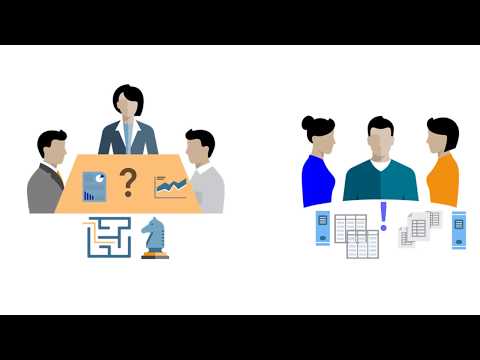
Overview: Streamlining Your General Ledger With Profitability and Cost Management Cloud
Oracle EPM in the Cloud
4m 41s615 words~4 min read
YouTube auto captions
Transcript source
YouTube auto captions
This transcript was extracted from YouTube's auto-generated caption track. The transcript below is server-rendered so it can be read, searched, cited, and shared without opening the original YouTube player.
Pull quotes
[0:10]Does your business change so quickly that you and your accounting team struggle to give management executives the answers and information that they need for agile, fact-based strategic decision making?
[0:10]To answer constantly changing questions from management, do you use offline spreadsheets and shadow systems?
[0:10]Is your general ledger expanding, straining to contain increasing amounts of chart of accounts segments and dimensions to meet performance analysis requests for shifting business models?
[0:10]In trying to provide the data that executives need, accountants swell the general ledger with entries and chart of account segments and dimensions, such as customer, product, channel, activity, and service.
Use this transcript
Related transcript hubs
Watch on YouTube
Share
MORE TRANSCRIPTS


