[0:00]If you master this setup as a day trader, your life will change forever. Step number one, map your zones. Plot hourly price movement ranges on a five minute and the daily price movement ranges on the hourly for the S&P futures. Those zones define your support and resistance and become your entry triggers. Number two, plan the setup. Entries come from the five minute and targets come from the hourly. Pick your vehicle, S&P futures, Micro S&P futures, SPY ETF, SPX or XSP. For the SPX, choose a reasonable out of the money strike near the daily price movement range gold zone. For S&P futures, Micro S&P futures, or the S&P ETF, I prefer a slightly near the in the money call. Number three, let price come to you, then execute. No chasing. Act only when the price tags your zone. Number four, manage the trade. Scale out into intraday resistance at the hourly price movement range target. After T1, slide the stop to break even. Keep risk at 2 to 3% per trade. Number five, respect time and distance. Don't pick strikes that need outsized moves. Take the base hits and let the bonus runs be a gift. Number six, review and repeat. Forward test across different days. Build months of samples and keep the checklist. Zones, trigger, execute, scale, review. Follow for strategies that work with any account size when risk is managed correctly.
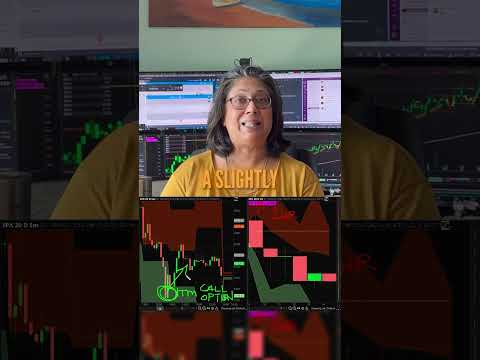
SPX Step-By Step Breakdown 📊 #shorts
Raghee Horner
1m 28s237 words~2 min read
YouTube auto captions
Transcript source
YouTube auto captions
This transcript was extracted from YouTube's auto-generated caption track. The transcript below is server-rendered so it can be read, searched, cited, and shared without opening the original YouTube player.
Pull quotes
[0:00]Plot hourly price movement ranges on a five minute and the daily price movement ranges on the hourly for the S&P futures.
[0:00]For the SPX, choose a reasonable out of the money strike near the daily price movement range gold zone.
[0:00]For S&P futures, Micro S&P futures, or the S&P ETF, I prefer a slightly near the in the money call.
[0:00]Follow for strategies that work with any account size when risk is managed correctly.
Use this transcript
Related transcript hubs
Watch on YouTube
Share
MORE TRANSCRIPTS


