[0:05]Thank you, Marcus.
[0:09]Now, like many good journalists, Helen Pilcher has a rich past. She was science and society manager at the Royal Society and then a reporter for nature. She has a PhD in neuroscience and even put in time as a stem cell researcher. In recent years, she has carved out a successful career as a freelance science writer and a performer. She writes serious science stuff for the likes of New Scientist and Nature, and funny stuff for comedy shows. So I'm excited to find out which alter ego she's brought along this evening. So here's Helen, who's going to tell us about something called the Nocibo Effect.
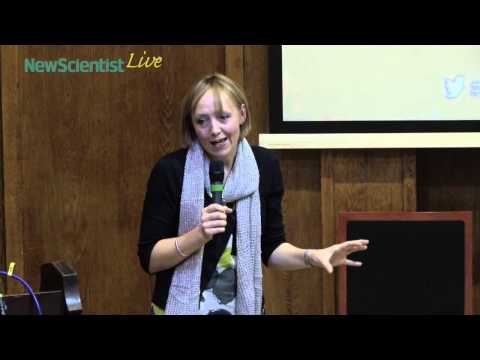
[0:55]Aha, have a clicker. Thank you. Hello, everybody. Thank you very much for coming. Um, before I start, I'd like to start with a bit of a disclaimer. Um, this talk may cause nausea. Just so you know. I've done this talk a few times and a couple of times people have come up to me afterwards and said, during the talk, I felt a little bit queasy. Nobody as far as I know has been physically sick, but a little bit queasy, a little bit uncomfortable. So just so that you know, nausea is a possible side effect of my talk. So, I want to start by telling you a story. And it's the story of a man called Vance Vaders. And I should say this is a true story. And it's set about 80 years ago in the deep Southern states of America in Alabama. Now, late one night, Vance Vaders was walking home and he decided to take a shortcut through a graveyard. Now, if you've watched Scooby Doo, you'll know that's a very bad idea. Never do that, something bad will happen. Now, sure enough, as he was walking through the graveyard, he bumped into a witch doctor. It may have looked a little bit like this one from Scooby Doo, but probably a bit more real. So he genuinely, he bumped into a witch doctor, and they got into a fight, they had an argument. Now, we don't know the exact content of the argument, but we do know that the witch doctor pulled out a bottle with some really strange smelling stuff in it. And he wafted it in front of Vance Vander's face, and it smelt absolutely awful. And the witch doctor said to him, I've put a curse on you. You are going to die, and there's absolutely nothing you can do about it. Now, nervous laughter. That night, Vance Vander's went home and he went to bed and he felt terrible. The next day, he felt worse, and he got worse and worse. His health deteriorated. After about three days, his wife was really, really concerned, and she got him admitted to the local hospital. In the hospital, the doctors couldn't find anything wrong with him, and they couldn't stop his health from deteriorating. So eventually, after a week, the wife was so anxious. She told the medical doctors what had happened, and the story of the witch doctor. And the medic there was a guy called Dryham Doty, and he went home that night and he thought long and hard about what he'd heard, and he came up with a plan. The next day, he went back to the hospital, and he summoned Vander's family to his bedside, and he told them a story. He told them how the previous night, he'd gone back to the graveyard, and he'd found the witch doctor, and he'd choked him up against a tree until the witch doctor had explained how the curse worked and how it could be lifted. And he explained that inside that bottle that he'd wafted, there were lizard eggs. And somehow, the guy had breathed in these lizard eggs and they'd gone into his stomach where one had hatched, and a lizard was eating him from the inside out. Now, if you're a patient, that's not exactly what you want to hear from a doctor, ideally. But that wasn't the end of the story. The doctor then called for a nurse to come into the room, who, by prior arrangement, had filled a syringe with a powerful emetic, so a drug that causes proper nausea, being sick. And with great spectacle, he inspected this syringe, and then he injected the contents into Vander's arm. Now, not surprisingly, Vander started vomiting uncontrollably, and the room descended into chaos. All of his relatives were there, and in the midst of the chaos, the doctor bent down and pulled from his medical bag something that he'd stashed there earlier. A great big green lizard. And he held it up, and he said, look what's come out of you. You are cured. The curse is lifted. And everybody stopped. And Vance Vander's fell back into his bed and went to sleep. But when he woke the next day, he was fine. He was absolutely fine, and a couple of days later, he was discharged, and he went home. Now, as far as we know, that is a true story. It was corroborated by four medical professionals who were alive at the time, one of whom wrote it up for a scientific journal. But the surprising thing about that story is perhaps the fact that Vance Vander survived. There are many instances around the world where people have had curses or hexes put on them, and they have died. So if we think about this story for a minute, there is an element of the story that we're perhaps quite familiar with.
[6:04]That's the placebo effect. So the placebo effect is something that you've all probably heard of, which is the power of the mind or of expectation to make you feel better. It can be something as innocuous as a kiss from a mother to a child, or it could be a dummy pill in a clinical trial, or in this case, it could be a great big green lizard. But the placebo effect has an evil twin. These are my twins, about five years ago, and my big one, sitting in their high chairs with their Elvis wigs on, as you do. Now, I'm I'm not saying that one of my twins is evil, but where there is a good twin, there is always a bad twin, always. So the placebo effect does have an evil twin, and it's called the nocebo effect, which is what I wanted to talk to you about. So the nocebo effect comes from the Latin, meaning I will harm, and it's the opposite of the placebo. It's the power of the mind to make you feel worse, to make you ill. And you might be sitting there thinking, okay, that's quite a good story. It's quite Halloweey, but it's not going to affect me. Well, let me tell you a story that's a bit more close to home. This time, it's the sad story of a guy called Sam Shoeman, and this story is set in the 1970s. It's a true story. Now, Sam Shoeman lived in America, and one day he was told by a doctor that he had three months to live, that he was dying from terminal cancer. Uh, this is not a horse chestnut. I have been reliably informed. This is actually a cultured cancer cell, just so that you know. So he was told he had three months to live, and three months later, he died, almost to the day. But when they cut him open and did an autopsy, they couldn't find any cancer. So they expected his body to be riddled, but all they could find was a one centimeter tumor that was barely enough to cause symptoms, let alone to have killed him. And I interviewed the guy who treated Sam Shoeman, and he told me, he didn't die of cancer, but from believing he had cancer. Now, that's suddenly a lot more real. Now, that story couldn't happen today, I can reassure you, because we have all this amazing imaging technology and these biomolecular tests. So that story cannot happen today, but I would argue that witch doctors are still around us. They're still here. In the Southern States of America, 80 years ago, they may have wafted strange bottles of liquid around and hung around in graveyards. But I would argue that today's witch doctor wears a white coat and carries a stethoscope. What your doctor tells you can influence your health for the better or for the worse. And nocebo is when it happens for the worse. Now, I think nocebo is kind of on a bit of a spectrum. So at the top end of the spectrum, we've got things like voodoo death. At the bottom end of the spectrum, we've got the you look a bit peaky effect. Now, this is, I'm I'm quite a pasty person. I'm quite pale, but most of the time, I'm very chipper and I feel fine. But I have the odd day when I go out, when my mom, who I trust and respect, will say to me, you look a bit peaky. And at that point, I will have been fine. But the minute she says it, I go, do you know what? I don't feel too good now. I might have to sit down in a dark room and eat a biscuit. That's a fairly mild nocebo, but it's nocebo, okay? Here's another one. 60% of people taking chemotherapy experience nausea before their treatment. Now, this is where it starts to get very serious. There is no medical reason for them to feel sick before their chemotherapy, but most people do, days before or even hours before.
[10:27]If you are, if you think you'll get sick, you're more likely to get sick. That's a very general term, okay? There there are people actively researching this, and we haven't done this for all illnesses, but there have been a number of studies that show this is a case. There was a study of women who thought they were more likely to die from heart disease, and they found they were four times more likely for exactly that to happen. And I've interviewed a lot of surgeons, and surgeons will tell you off the record, was that my one minute cough? No. Surgeons will tell you off the record, they don't like operating on people who think they're going to die, because they're more likely to die. In clinical trials, a quarter of patients get side effects. I don't know what the four's doing at the end of there, but anyway. Let me unpack that for you a bit. So when you're testing a new drug, you do something called a clinical trial, and you get loads and loads of people in. So if you're all in this clinical trial, right, half of you will take the drug, and the other half of you will take a dummy pill. So you can compare the effect between the two. You're the placebo group, okay? Now, what's important, you don't know which you're taking. That's the really important thing. You don't know if you're taking the drug or the control, and nor do you. But the important thing is that you're all treated the same. So, if there are possible side effects, you're all warned about the side effects. Now, here's the thing. 20% of you get the side effects. You haven't taken the drug. You haven't put any medicine inside your body, but 20% of you will develop the side effects. Sometimes these side effects can be so severe, they cause you to drop out of the clinical trial. So the nocebo effect, apart from being very personally distressing, is costing the drug industry an absolute fortune. And finally, because of the nocebo effect, you can overdose on nothing. That might sound a bit weird. Let me explain that to you. I came across a story of a young man who'd been desperately depressed, and he enrolled in a clinical trial for antidepressants. And because it was a clinical trial, he didn't know if he was getting the drug, and he didn't know if he was getting the control. He had no idea, but he had a particularly bad day, and he had a fight with his girlfriend, and he took all of the pills. And he instantly regretted it because he felt desperately ill, and he took himself to A and E.
[13:06]And in A and E, his vitals started to go off the wall, and his blood pressure started to go all over the place. And they desperately tried to get in touch with the doctor who was running the clinical trial. And after four hours, because doctors are difficult to pin down, they got him. And the doctor said, he looked him up in the charts, and he said, do you know what? This guy's not taking the drug. This guy was in the control group. This guy has overdosed on sugar pills. And the minute they told him, he felt better. So fairly serious stuff. Now, if I haven't scared you enough, I'd like to make the point, it can be catching.
[13:52]So, I should have done this roundabout Halloween, shouldn't I really, this whole thing. It can be catching. There are a lot of instances where somebody has experienced a symptom, and other people have caught it. There's a very high profile one that's just coming to an end in America, where in 2011, a teenage girl at a high school in New York developed these facial ticks. And these motor, jerky motor movements, and it really, she was speaking like that. Really profound ticks, and they couldn't find a cause for this, and it was deeply distressing for her and for her family. Um, over the next two years, another dozen people at school developed the same symptoms. Now, the Department of Health in New York didn't help things because they covered up, well, they didn't cover up, they just weren't quick to tell the public what they thought had happened, which was that this was basically psychosomatic. A nocebo that had been spread, they call it mass psychogenic illness. In the meantime, Erin Brockovich, the environmental campaigner, wade in and found some evidence that there'd been like a toxic dump or something near the school, which was then discredited. And in the meantime, the girls had all this media exposure, and that kind of seemed to fuel it. Now, basically, since this has fallen out of the media spotlight, the girls are getting better. But an interesting thing I'd like you to think about is that if nocebo is catching, I think that social media, be it blogging, or Twitter, or Facebook, is beginning to make these things easier to spread. So I'm going to leave you on that thought, but one last thing to say. I don't know if you are feeling queasy. Anyone feeling queasy? So basically, I did want to reassure you. My talk does cause nausea, but you are my control group. So you're completely fine. There's an identical room next door. That's my experimental group, and I just checked on them and they're all being sick into buckets. So, but I did want you to know that you are fine. I do have a white coat somewhere. I've probably got a stethoscope hanging around, so you'll be fine. Trust me, I'm a doctor. Thank you very much.