[0:00]I'm Mariana Van Zeller. As a journalist covering the underworld, I've seen almost everything that can be trafficked. But 'Apes' was a really sad and difficult story to report on. Wildlife trafficking is the fourth most lucrative crime in the world. We are talking between 20 and 30 billion dollars. The DRC is the only country in the world which has got three of the four great apes. And here in the Congo basin, primates, in general, are paying the price.
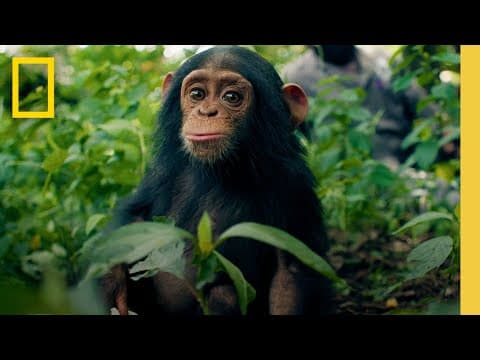
[0:31]A great ape is the closest cousin to a human. It is as smart as we are. Scientists have determined that we share an astonishing 98.8% of our DNA sequence with chimpanzees. It's very difficult to catch a great ape into a snare. I'm not saying it's impossible, but it's very rare. So the only way to catch a great ape is a gun. That's what kills an ape. By killing the family around it. Yes. And taking the baby chimps. Great apes flock in families. And before you can take a baby away from them, you've got to kill ten of them. To have just one. That is such a crazy number. But I think one of the most impactful moments for me was actually when we were in the Congo, and we traveled to the Kahuzi-Biega National Park to see the gorillas. And you track for, you know, hours and hours up into the mountains with these Congolese men who are there to protect the forest and to protect the gorillas. And they're showing us, 'Okay, so this, it looks like there's some gorilla poop here. And this is where the gorillas were last night.' Juvenal? Yes. And eventually, There is some of the group here. Some of the group is right here. Oh, my God. It's right here. Look! It's right here.
[1:54]He's starting to make the noises. Juvenal is starting to make the growling noises. Oh, my God! Come on! Right there!
[2:13]This is crazy!
[2:19]Nothing can prepare you for this. The majesty of a full-grown silverback, not in a cage or behind steel bars, but as free as you or me. In its own habitat, caring for its family, living without fear.
[2:47]Oh, my God! There's, like, tons of them. Look over here.
[2:54]The mother is actually holding a baby gorilla that was born just last week.
[3:02]Yeah, I mean, to know that they're basically killing the families, killing the silverbacks so they can take and sell the baby gorillas. So there's a lot of incentive to kill these animals. But still, you know, when you're in the presence of these animals here, it's really hard to understand how somebody could do that. It really is special and you feel so privileged to be here and see this. Juvenal, what does it feel to you every time you see a gorilla? For me, it was incredibly emotional. But for you? For me, they're my first babies. I must take care of my family. This is my first son, the gorillas. As I take care of my sons at home, so I can take care of this one. I have to protect them. Juvenal, you're making me cry. Do you think that in 30 years, we'll still be able to see gorillas in the wild like this? If we do not take care of them, they can be extinct. So we must take care. We must protect them. Compared to all the other black markets I've covered, this was one of the most emotional for me. I've got goosebumps everywhere. Let's not think in a monolithic way. Not every poacher does this because that's what they want to do. But there are those who are compelled to do it because of life's hardships. If you go in the so-called "protected areas," there are no schools. There are no hospitals. There is nothing. So, if the state is going to say, "Don't touch. Get out of there." It has to come up with ways and means on how these people can also live a decent lifestyle. To know how much suffering, how much death humans caused to these great apes is beyond imagination. But there are ways we can help. We can take a stand against the exploitation of apes for entertainment and reduce demand. We can work to alleviate poverty and help people find alternatives to poaching. And we can put more resources into protecting great apes in the wild and preserving their habitats. There is still time. But barely. After, you know, spending weeks and months investigating the trafficking of apes, to finally get to see a gorilla in the wild where it's supposed to be, was incredibly emotional. And also to know that there's a good chance that, in a few years, my own child won't be able to see this if we continue at the rate that we are right now.


