[0:04]It will be forever remembered as a day of infamy. Without warning, Japan's bombers rained down terror on a Sunday morning in Hawaii.
[0:19]Lasting just two hours, their attack on Pearl Harbor would bring the United States into World War II, transforming America's destiny as a world power.
[0:35]Based on eyewitness accounts, this is a dramatized reconstruction of events as they happened. On a day that shook the world. Attack on Pearl Harbor. It is December the 7th, 1941. In North Africa, Montgomery's desert rats are locked in a deadly struggle with Field Marshal Rommel's Africa Corps.
[0:59]In Russia, Soviet troops are desperately fighting the Nazis outside the gates of Moscow. And in New York, Walt Disney's Dumbo has just had its premiere.
[1:22]Though it is early Sunday morning, naval intelligence officers have been working throughout the night. Sir. Sir. This just came across. I really think you should take a look at it. Are you sure this can't wait, Lieutenant? We got to get back to the office. Naval intelligence is at the center of the most sensitive and top secret operation in the whole United States. Just 20 people are allowed access to the secrets contained in the folder. Lieutenant Commander Alvin Kramer, a Japanese specialist, is one of them.
[2:07]Brotherhood, we need to get this out straight away. Within the folder is an intercepted copy of the latest message to be sent between Tokyo and the Japanese Embassy in Washington. Thanks to Operation code name Magic. For the last year, the United States has been secretly decoding Japan's diplomatic signals. It's given them an unprecedented insight into the Japanese government's private thinking.
[2:39]But Commander Kramer has never seen a message like this one.
[2:50]Japan is a nation on a mission, a mission to build an Empire.
[3:04]Over the last decade, this small island nation has grown from a rural economy into an industrial powerhouse. But Japan lacks that one vital prerequisite that could truly transform her into the regional superpower she is desperate to become. Natural resources.
[3:30]Japan is starved of oil, coal and rubber, and in the face of an American trade embargo is ready to seize them by force if necessary.
[3:45]She has already invaded China and Indo-China.
[3:52]Now the rest of East Asia is in her sites.
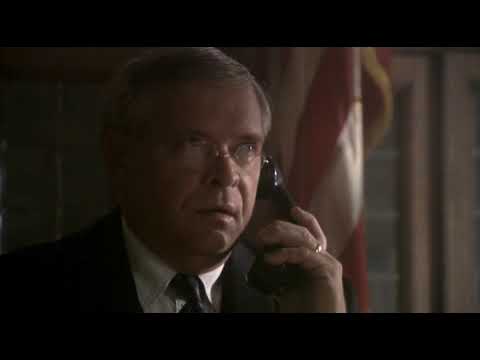
[3:59]Yes. No, I want you to send it right away. That's right. Let me know if there's a response. Thank you. In the American capital, the administration of President Franklin Roosevelt is still working to diffuse the crisis in the Pacific. The man in charge of keeping the peace with Japan, American Secretary of State Cordell Hull is already at his desk. President Roosevelt finds himself torn. On the one hand, he would like to intervene in Europe in aid of Britain, now standing alone against the might of Nazi Germany. But joining the war is deeply unpopular. Public opinion in the United States is hostile to foreign intervention, preferring that America retain her historic isolationist stance.
[5:06]Now, tensions in the Pacific are threatening to drag her into another conflict she has no enthusiasm for.
[5:20]For the last 10 months, Cordell Hull has been negotiating with Tokyo, anxious to diffuse that crisis and halt Japanese expansionism in Asia. But it is make or break time for the peace talks. The United States have issued Japan with an ultimatum, calling for her to withdraw from China and Indo-China. Just yesterday, President Roosevelt made a personal appeal for peace to the Japanese emperor, and Secretary Hull knows Tokyo's response could come at any time. He will not have to wait much longer for his answer.
[6:07]Yes.
[6:22]The intercepted message on Commander Kramer's desk is Japan's much awaited response to the American ultimatum. Such is the speed of their decoding operation that the United States government will read it hours before the Japanese ambassador.
[6:44]Kramer immediately realizes that far from quelling the crisis, Tokyo's message can only escalate it.
[7:05]The Japanese government regrets to have to notify hereby the American government that in view of their attitude it cannot that consider that it is impossible to reach an agreement through further negotiations. To Kramer, there was now a real puzzle. Was this instruction to break off diplomatic negotiations just a further act of diplomatic brinkmanship on the part of the Japanese?
[7:38]Or could it presage something more sinister? An attack on the British and Dutch in East Asia, or even on the United States itself?
[8:03]The Hawaiian island of Oahu and her massive naval base of Pearl Harbor, almost 2 and a half thousand miles west of the California coast. For America, this will be the front line for any war in the Pacific. It's the posting every serviceman dreams of, a subtropical idyll smack in the middle of the Pacific Ocean. Beaches, girls, lots of liberty, and a workload that never gets too taxing.
[8:42]Nice shot. Thank you very much. Thank you very much. Yeah, yeah. So about this beer. Several hours behind Washington, it is still night in Pearl Harbor, and war is the very last thing on the mind of two young sailors. It's my shot. No, wait. I've been practicing. Easy, killer, easy, easy.
[9:12]Is Charlie's where you said we found the girls? Oh yeah, found a lot of girls down in Charlie's. The two boys are old friends from Dallas.
[9:53]Yeah, yes. Did you see that little lady? The Navy was looking for personnel, and they kind of turned their head about the age.
[10:14]For the last year, this small port on Oahu's western coast has been home to the American Navy's vast Pacific fleet. Ever since the threat of war in East Asia, the Navy has been quietly working to transform Pearl Harbor into a Pacific fortress, and the docks bristle with battleships. Here on what is known as Battleship Row, lie some of the greatest vessels in the American fleet, lined up like sardines in a tin. Legendary names like the Arizona, the Maryland and the Tennessee.
[10:56]With the combined firepower of 64 massive naval guns, it is an awesome display of force, the embodiment of American power in the Pacific.
[11:09]The man in charge of all these battleships is Fleet Admiral Husband E. Kimmel. Kimmel is a career officer, and though by reputation a workaholic, is admired and respected by the men under his command. That's the admiral.
[11:32]With all those battleships and a further force of almost 400 aircraft to defend them, Kimmel and the US Navy regard Pearl Harbor as impregnable. The perfect base from which to launch America's response to any Japanese aggression in the Pacific.
[12:00]It is just before 8:00.
[12:16]Commander Kramer has just received a further intercepted cable from Tokyo. Brotherhood.
[12:24]If the earlier intercept caused concern, this latest one has rung alarm bells. We need to call the White House. Let them know that there's another magic pouch on the way that the President needs to see immediately.
[12:39]The cable contains two instructions. The first orders the Japanese Embassy to burn their diplomatic code books. But it is the second that troubles Kramer the most.
[12:56]It orders the Japanese ambassador to deliver the message announcing their withdrawal from the peace talks at exactly 1:00 p.m. today. Kramer immediately suspects that such precisely timed orders from Tokyo could be a vital clue to Japanese intentions. 1:00 p.m. in Washington will be early morning across the Pacific.
[13:30]Using a time zone chart, he begins working out the equivalent time over at US Pacific bases. It will be 2:00 in the morning in the Philippines, 4:00 in the morning on their base in Guam, and at 7:30 in the morning in Pearl Harbor. From his intimate knowledge of Japan, Kramer knows that historically, the surprise attack is one of Japan's favored war tactics. Early Sunday morning will be an ideal time for them to launch a preemptive strike. That's just over four hours away.
[14:23]Thousands of miles away in the middle of the Pacific Ocean, lies the confirmation of Commander Kramer's concerns.


