[0:02]I was often told that there is no disagreement at all within evolutionary biology, which turned out to be just over simplification. But first, this article in Science and Culture Today caught my attention. Because it claims that over 1000 doctoral scientists from around the world have signed a statement publicly expressing their skepticism about Darwinian evolution. They say that those scientists who expressed their skepticism are professors and researchers at major universities and international research institutions such as the University of Cambridge, London's Natural History Museum, Moscow State University, Hong Kong University, University of Stellenbosch in South Africa, Institute de Paleontology Humaine in France, Ben Gurion University in Israel, MIT, the Smithsonian, Yale, and Princeton, and all of those other reputable universities. Dr. Michael Egnor, the professor of Neurosurgery and Pediatrics at the State University of New York, claims that Darwinism is a trivial idea that has been elevated to the status of a scientific theory that governs modern biology. Dr. Roland Hirsch claims that life as revealed by the new technologies is more complicated than the Darwinian viewpoint anticipated. He says that modern science makes it possible to be a scientifically informed doubter of Darwinian theories of evolution. Most evolutionary biologists strongly reject these conclusions and argue that modern evolutionary theory already addressed all of these critiques. Even though all of those 1000 plus PhD holders represent a minority view, I still didn't understand why they questioned evolution.
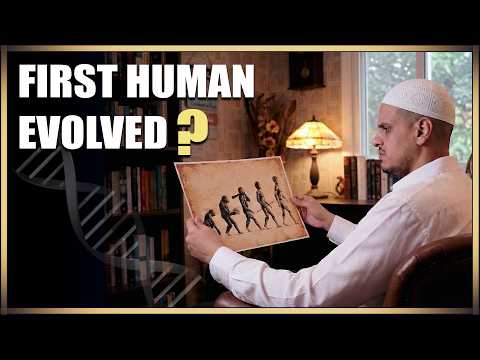
[1:29]I'm just a guy who likes math and likes to ask the tough questions that most people avoid. A guy who found this peer-reviewed paper published in Genetics on the Oxford Academics website. They say that it takes more than 100 million years for one successful mutation to become fixed in the human population and replace the previous version. And it's important to clarify. They're not saying it takes more than 100 million years for one mutation to happen. No, mutations happen all the time. It takes more than 100 million years for this mutation to spread throughout the whole population and become fixed and replace the previous version fully. Keep this number in mind. Because if you open this article on the official website of the National Library of Medicine, you will find out that they say that the old conclusion that we share 98.5% of our DNA sequence with chimpanzees is probably in error. A better estimate would be 95%. And according to the National Institutes of Health, a human has 3 billion basis or letters of DNA, which means that there are 150 million genetic differences between humans and chimpanzees. Now if we calculate the number of years it would take for the first human to evolve from the closest ancestor, while assuming the oversimplified sequential fixation model, he will need to undergo those 150 million successful mutations. And according to Genetics, each one of those mutations will require more than 100 million years to be fixated in the whole population. So, 150 million mutations multiplied by 100 million years each equals 15 quadrillion years. Under the sequential fixation model, this would be the number of years required for one species to become another. And that's why biologists clarify that parallel evolution and neutral drift are essential to the modern synthesis. And this simplified sequential fixation model cannot be used. Because Earth was born only 4.5 billion years ago. And that would mean that the evolution of one species only started way back before the Earth was even born. The Big Bang itself, the beginning of the whole universe was just 13.8 billion years ago. It doesn't make sense to assume that for one species to turn into another, it needs more time than the age of the universe. Then how much would it take for all of these 8.7 million species to evolve? So I decided to redo my math, but this time using the old estimated 98.5% similarity between our DNA and the chimpanzees. Assuming the 1.5% genetic differences of the 3 billion DNA letters human have, we can calculate 45 million required successful mutations for the first human to evolve. And each one of those 45 million mutations have to become fixed in the whole population and replace the previous version, which according to Genetics, will take more than 100 million years each. So 45 million multiplied by 100 million, that is 4.5 quadrillion years. Again, clearly this number is incorrect, as that would mean that for the first human to evolve, he requires 1 million times the age of the earth, or 326,000 times the whole age of the universe. So I asked, what mechanisms allow evolutionary biology to avoid this apparent mathematical tension? And I discovered that today, Evolutionary biologists explain this by emphasizing that mutations occur in parallel across populations. Fixation is not sequential. Most changes are neutral and population genetics does not really model evolutionary change as additive in this way, which means that my calculations do not reflect how the theory works. On one hand, their explanation addressed the mathematical issue, but on the other hand, it raised tens of new question marks for me. Let me explain. If we agree that the clean straight up sequential mutation model is wrong, meaning those 150 million mutations that were required for the first human to evolve, didn't become fixed in the whole population one by one, as we mistakenly assumed from this famous picture. And instead, mutations were happening in parallel, in random order to different beings without having to wait for the previous mutation to fully fixate in the whole population. Doesn't that mean that we should expect numerous distinct human species, both existing today and in the fossil record? As non-sequential mutations wouldn't really guarantee a unified result? And here is when I got stuck. Because the sequential model requires 226 times the age of the whole universe for one single species to evolve, which is clearly wrong. And the non-sequential model, at first glance, made me think that we should expect billions of different human species to co-exist, which clearly doesn't match what we observe. Of course, this is not what evolutionary biologists actually claim. So I decided to keep reading, and I chose only trusted scientific sources. I avoided all the religious content, and I also avoided opinion-based material. Today, it is just science. Which led me to do a much deeper research into all the evidence provided throughout the past 200 years, and you won't believe the surprise that I found. But please be patient with me, because what I'm about to present today may change how you see this topic. Initially, in the 18 hundreds, during the time of Darwin, our collective human knowledge in biology was minimal, and there were three wrong theories widely believed back then. Protoplasm, Lamarckism, and Pangenesis. Protoplasm refers to the old belief that the human cell consists of a Jelly-like living matter. Lamarckism refers to the old belief that traits an organism acquires during its lifetime can somehow be passed to its offspring. And Pangenesis refer to the old belief that all cells in the human body produce tiny particles called gemmules. And these gemmules carry information from all over your body about the traits that you acquired and collect in the reproductive organs, so that they can be inherited by your offspring. In layman's terms, back then scientists believed that this jelly inside the cell holds the traits that you acquired during your lifetime, and then you can pass it to your kids. For example, if you were fat when you had your first baby, then you went to the gym for five years and became fit, and then you got your second child. Your first kid will be fat and your second kid will be Big Ramy. Because they thought that each one of your kids will inherit the traits that you acquired throughout your life. Or let's put it this way, if you moved to a harsh environment and somehow throughout your life you gained the required skills to live in this harsh environment, you can pass this newly acquired skills to your offspring. Of course, after the discovery of the complex cell structure, the DNA and the human genome, we know for a fact that all of these theories were wrong. But for now, let's focus on Darwin. Based on the limited knowledge of his time and based on his famous observation of different birds, he proposed his theory of evolution. And predicted finding numerous gradual intermediate forms from our ancestors to us in the fossil record. You know what? Let me quote him directly. He said, why then is not every geological formation and every stratum full of such intermediate links? We should thus expect to find fossil remains of man or some closely allied form. In layman's term, he expected that when we dig down in the soil, we should first find human-like bodies. Then when we dig lower, we should find a lot of different intermediate species, and then when we dig much, much lower, we should find the bodies of our ancestors. If that's true, then his theory will be proven. Fair enough. This is the scientific part. But for us to complete the picture, we need some information about the political environment back then. At the time of Darwin, there were a lot of very strong movements against the authority of the church, like the Enlightenment that emphasized reason, science, and skepticism. Or Scientific Naturalism that believed that nature explains itself without divine intervention. Biblical Criticism that treated the Bible as a human historical document. Secularism and anti-clericalism that were especially strong in France, Germany, and England. And of course, the Post-French Revolution backlash against the church. As you can see, a lot of people back then really wanted a safe Haven from the church's authority, which is understandable. This doesn't mean that the theory of evolution was adopted for political reasons. No. But the scientific ideas often develop within historical contexts. And afterwards, evolutionary research started to receive significant institutional and academic attention. And of course, shortly, some evidence which is not considered representative of modern evolutionary biology, started to show up. We will discuss them for historical context, of course, not as evidence against the theory itself. In 1912, the archaeologist Charles Dawson discovered this skull, which according to the official website of the National History Museum, he said that it indicated evidence of a human ancestor living 500,000 years ago. A lot of people believed him for 37 years, until 1949, when we discovered that this evidence was fake using fluoride tests. I'm sure it was an honest mistake. In 1922, a paleontologist at the American Museum of Natural History by the name of Henry Osborn finally found the missing link, the intermediate species between apes and humans. Here he is, he called him the Nebraska man, and here is his pretty wife. Newspaper and some scientists back then hailed it as evidence for evolution. But five years later, Henry himself said that he drew this picture of the supposed Nebraska men and his wife from one single tooth. Yes, from one tooth, from one single tooth, he reconstructed this whole entire body and facial appearance of the man and for his wife. And then he admitted that even this one tooth he had belonged to a pig. It was neither a tooth of a man nor an ape. It belonged to a pig. But it's okay. We're not claiming that evolution is false or that biologists are dishonest. These are just a couple of unfortunate incidents. Because in 1974, when the paleoanthropologist Donald Johanson, discovered this fossil in Ethiopia, it was presented as the missing link that Darwin anticipated. They called it Lucy because the team celebrated the finding listening to the song Lucy in the Sky with Diamonds by the Beatles. They were very happy because they finally found the fossil that proves our evolution from apes. But then I found this article on the official website of the Natural History Museum. The article says that Lucy may not be our human ancestor after all. This is the scientific name of Lucy. When it was discovered in 1974, the fossils that came to be called Lucy was heralded as one of the first humans. Most recent discoveries has slightly altered this picture. For decades, we've been inundated with textbooks and documentaries that says that Lucy and her relatives are our ancestor. Fred explains. This Unexpected results suggests that, contrary to decades of scientific thought, Lucy's species might not have been the ancestor. Also, this article on the New Scientist website says that a baboon bone was found in the famous Lucy Skeleton. That detail really surprised me. The French Sciene&Vie Magazine wrote on their cover Adieu Lucy. Translation: Goodbye, Lucy. And Solly Zuckerman, the British zoologist and anatomist, said that Australopithecus fossils, such as Lucy, were simply apes and not intermediate human ancestor. Lucy was never considered a hoax like Piltdown or Nebraska man. While it remains important in discussions of hominin diversity, her exact place in the human lineage continues to be debated rather than universally agreed upon. So I searched for another piece of evidence. And I found out this amazing news. In 1959, we finally did it. We discovered the Homo habilis in Tanzania. According to Britannica, an extinct species of human lived in sub-Saharan Africa from roughly 2.4 million to 1.5 million years ago. At first, these reconstructions were presented as the definitive intermediate link, but there was a problem. Bernard Wood, the professor of Human Origins at George Washington University, who studied the Homo habilis for 20 years. After dedicating his life to studying fossils, he said, and I quote, my guess is that it's neither a chimp nor a human ancestor. It's a creature that was living at the same time. That's in Nature Magazine. He said, and I quote, how they are related to each other and which, if any of them are human forebears is still debated. This article in Science magazine says, Homo Habilis and Homo redolfensis do not belong to the genus. They should be removed from Homo and be transferred to Australopithecus. And you can see the same meaning here. This article in Molecular Biology and Evolution says that throughout the last three decades, we misinterpreted the habilin species. Seems like we need more research. Ernst Haeckel in 1866 said that an organism in the course of its development goes through all the stages of the forms of life which it was evolved from. Every fetus starts as a fish, then salamander, then a turtle, then a chicken, then a rabbit, then a human baby. He even presented this comparison picture between human and animal embryos to convince people that they look the same. His scientific findings were presented as evidence for evolution for years until finally in 1908 he confessed that he forged all that. By the way, these cases are not considered representative of modern evolutionary biology, but they illustrate how early scientific fields corrected mistakes over time. This is Reiner Protsch, the famous German anthropologist at the University of Frankfurt. In his 30 year academic career, he discovered the vital missing link between modern humans and Neanderthals. And he was praised for his hard work on the evolutionary science. But according to the Guardian, he was forced to retire because of numerous and I quote, falsehoods and manipulations. According to experts, his deceptions may mean an entire trench of the history of man's development will have to be rewritten. It seems like he claimed to have a woman's skull from 21,000 years ago, and the men's skulls that dates to the year 27,000 BC, which according to the Guardian are all fake. I won't let these incidents challenge my confidence in university professors. These are just minor exceptions. This article in Nature says that new discoveries suggest we didn't evolve only in East Africa to begin with. They say that this fossil rewrites our species history. Rewrites our species history? Does that mean that all of those stories that we've been taught in school about our ancestors will have to be rewritten into different stories? But we've been teaching them for almost a hundred years. This article in Nature says that the earliest appearance of our species was 195,000 years ago, but this article says it was actually 300,000. This article in the American Museum of Natural History says that it was 400,000 years ago, not 300,000. This articles, by the way, reflect how new discoveries refine the timelines. They don't accuse scientists of guessing randomly or anything. This article on New Scientist says that this skull from China may again, rewrite the origins of our species. And this article says that our earliest appearance was actually 780,000 years ago. But surprisingly, this article in Nature says that it was actually 3.5 million years ago. While the earliest hand bone dates to 1.84 million years ago. Maybe this is why some people ask questions like, do we have a solid idea about the history of our species, or is it just probabilistic reconstruction rather than direct observation? And does that mean that all the hard work that has been done building the evolutionary trees that we're teaching in schools now is technically obsolete? As it was based on discoveries that seems to be outdated now? Do we have to build new ones? And if that's the case, what about all of these evidences that were written in the same textbook that supports the outdated trees? I need someone to explain this to me. What is clear though, that a lot of people might argue that these discoveries at least led us to doubt the idea proposed in the Bible that Adam lived 6,000 years ago, as the scientific findings can clearly demonstrate that it was much, much earlier, which is something that the Muslim community don't really have a problem with. As Muslims don't believe in any historical date for Adam. But in my humble opinion, I think that before we introduce this new recalculated history of our species to the Muslim community, we should first find this missing link that Darwin was talking about. I am really sure they will ask about it. Because according to NPR, finding the ancient species that led directly to humans is kind of like finding the golden fleece. According to them, anyone who makes that claim faces some stiff questioning from other scientists. Wood says that the South African fossils look more like something from Lucy's tribe than early human ancestors. And Ernst Walter Mayr, the German-American evolutionary biologist. In his book, What Makes Biology Unique? specifically page 198, said that the earliest fossils of homo are separated from the southern apes by a large and bridged gap. This word: Australopithecus comes from two Latin words: australis means Southern, and pithekos means ape. Southern Ape. Ernst Mayr here is saying we don't have any fossils that can serve as a missing link, so we have to construct a probable scenario without relying on the fossils. I quote, readers who are not familiar with the method of historical narratives may say, why should I believe in any of this? It is nothing but speculation. Then he said, yes, you can call it speculation. It provides a most probable scenario. Why is he using words like speculation, most probable? And if that's the case, then why did Dawkins say that evolution is a fact? We absolutely can demonstrate that evolution is a fact.
[19:33]This is Joe White. He said that the co-holder of the 1945 Nobel Prize for developing penicillin, Sir Ernst Chain, called natural selection by chance mutations a hypothesis based on no evidence and irreconcilable with the facts. Also Selman Waksman, who was also awarded the Nobel Prize, said that applying the Darwinian principle of struggling for existence on the industry of antibiotic is, and I quote, figment of the imagination. Professor Philip Skell, the father of carbine chemistry, wrote the following in Scientist Magazine in 2005. Certainly my own research with antibiotics during World War II received no guidance from insights provided by Darwinian evolution. Nor did Alexander Fleming's discovery of bacterial inhibition by penicillin. I recently asked more than 70 eminent researchers if they would have done their work differently if they had thought Darwin's theory was wrong. The responses were all the same. No. Of course mainstream evolutionary biologists disagree with all of these claims. But the most important question I have is, since Darwin proposed the his theory in 1859 till today in 2026, 167 years, and I don't know how much institutional attention was invested into finding this intermediate species that Darwin expected to prove his theory. In all of my months of research, why couldn't I find one fossil that is universally agreed upon as a direct human ancestor without dispute? I thought we expected numerous intermediate species to be found underground all over the planet. If I'm missing something, please educate me. Because according to this article, what we actually found in the fossil record appears more complex than Darwin originally expected. Instead of finding billions of years of very slow, gradual change between different species, we found out that most species suddenly appeared. I'm not saying that God created them, no. I'm just quoting the scientific findings. Eldredge and Gould proposed that the degree of gradualism commonly attributed to Charles Darwin is virtually non-existent in the fossil record. The sudden appearance of most species in the geologic record and the lack of evidence of substantial gradual change in most species from their initial appearance until their extension has long been noted, including by Charles Darwin, who appealed to the imperfection of the record as the favored explanation. The article says that he privately expressed concern, noting that the margin of his 1844 essay, better begin with this. If species really, after catastrophes, created in showers world over, my theory is false. The references are down there. Based on the fossils, there was a sudden appearance of animal species without any precursor. Complex beings appear suddenly in history. How can we reconcile that with gradual evolution and natural selection? Didn't Darwin say that, and I quote, innumerable transitional forms must have existed? I really need help learning about that because punctuated equilibrium is considered by many biologists, a refinement of evolution theory, not a rejection of it. I also wanna inquire about this fossil. This is a picture of a fossil of a horseshoe crab from 450 million years ago, compared to a present day one. That was surprising to me because I expected them to undergo large morphological change under environmental pressures. This is a tail of a coelacanth fish from 140 million years ago, compared to a modern one. And this is a 98 million year old fossil of a Dracula ant, compared to a modern one. Why does it seem like demonstrating evidence for species that didn't undergo the expected mutations is much easier than demonstrating evidence for those that did? According to science.org, the fossil record shows that this plant species has maintained morphological stasis, meaning it remained physically the same for 180 million years. It remained virtually unchanged for the past 180 million years. I really don't understand why. According to the National Center for Science Education, DNA analysis shows that there is one female from whom all living humans today descend. They call her the Mitochondrial Eve. One woman whom all humans living today can call grandma. Of course that doesn't disprove evolution or anything, because they say here that maybe there were other women there, but they, and I quote, failed to produce a direct unbroken line. It's a solid assumption, but I think that other people will also come up with their own interpretations. I don't wanna comment on this one. Because the University of Michigan decided to end this debate using a very, very smart scientific experiment. For us humans to see mutations happening, we need to wait a very long time. But with bacteria, we can simulate the whole history of our species in a few years. These bacteria had access to glucose, potassium phosphate, citrate, and a few other things to help them replicate as fast as possible. That's it guys. Finally, a real-life demonstration of history seen in front of our eyes. Every day the bacteria in each flask divides six or seven times, which increases their numbers 100 times. Every day for them is like 200 years for us, and this bacteria experiment lasted 33 years. Which is equivalent to millions of years of our history. Some people mistakenly predicted that they would evolve into another species of bacteria. Other people made a wrong assumption because they were taught that all life became from one cell. They mistakenly expected that this bacteria in the experiment will evolve from being a one cell organism into a two cell organism or a three cell organism. But the goal of the experiment was not to observe bacteria turning into a complex organism. What actually happened is they didn't diversify into fundamentally different biological forms. All of these assumptions were wrong, whoever was expecting them to evolve into a small fish was wrong. They didn't evolve into a three cell organism or a two cell organism, and most importantly, no entirely new functional protein families emerged at all within the experimental timeframe. What we actually observed is adaptation within existing biological limits. Professor Jerry Fodor and Professor Massimo Palmarini wrote a 320 pages book called What Darwin Got Wrong. You should check it out. But note that other biologists argue that these criticisms misunderstand how evolutionary mechanisms operate in practice. Fodor also published an article with the title Why Pigs Don't Have Wings. I quote, in fact, an appreciable number of perfectly reasonable biologists are coming to think that the theory of natural selection can no longer be taken for granted. William B. Provine in his book, The Origins of Theoretical Population Genetics on page 199, said that natural selection does not do anything. He claimed that natural selection simply doesn't work as was previously thought. Meanwhile, many evolutionary biologists disagree with him. This is Sir Karl Popper, one of the 20th century's most influential philosophers of science. According to the University of Chicago Press, he said that evolutionary theory contains no testable laws and is therefore a metaphysical research program. Metaphysical research program? I often see religious beliefs criticized for being non-testable. Now, how can we reconcile that with this quote from Sir Karl Popper's claiming that Darwinism is a metaphysical research program that contains no testable laws? I don't get it. Also, one year before his death, he released his book, Evolutionary Epistemology, where he stated that the evolution theory is just a tautology. According to Merriam-Webster, tautology in logic means a statement that is true by virtue of its logical form alone, a statement that relies on itself to prove itself, not on external evidence. Some people use the word circular reasoning. They give a nice example down there, a quote from Ernst Mayr. He says that the entire theory of natural selection rested on a tautology. Who survives? The fittest. Okay, who are the fittest? Those who survive. I got this thesis about the process of evolution from Oxford Brookes University. As you can see here, I don't have permission to quote it extensively, so instead, I'll just show you something. If I write the word tautology in the search, I get 22 results. I will leave the judgment to you.
[27:53]From an Islamic perspective, these scientific uncertainties raise theological reflections, not scientific conclusions. Allah said in Surat An-Najm, they follow nothing but assumptions and whatever their souls desire, although true guidance has already come to them from their Lord. They say, there is nothing beyond our worldly life. We die, others are born, and none will be resurrected. Allah says, Were they created from nothing? Or are they their own creators? Or did they create the heavens and the earth? In fact, they have no certainty. Or do they possess the treasuries of God? Or are they in control of everything? Or do they know the unseen? So leave them until they face their day in which they will be struck dead. The day their scheming will be of no benefit to them whatsoever, nor will they be helped. I certainly created Adam from Clay, blessed is Allah, the Best of Creators. Quick disclaimer. This video does not claim that evolution is false, but explores unresolved questions, internal debates, and historical issues that are often not discussed. Evolutionary biologists disagree with some of the scientists that I quoted today, and they provide other evidence like Animal Intermediate Species, Junk DNA, lab-created cells, vestigial organs, artificial selection, interspecies breeding, comparative anatomy, retrovirus, Neanderthals, and Abiogenesis. And the good news is, I still have a lot of questions about each single one of them. Next video in Sha Allah. Hit the bell icon so you get notified when it's uploaded, and don't forget to write me what you think in the comments. Jazakom Allahu Khairan. Salam Alikom.


