[0:11]Hello friends, welcome to another video of Zeta Axis and today we are going to discuss about the National Parks of Indian Islands. Now Lakshadweep and Andaman Nicobar Islands are the two major island groups in India. Out of which Lakshadweep does not have any National Park. So today we will discuss the National Parks of Andaman and Nicobar. Remember, this is a seven video series of all the National Parks in which in the last six videos we have covered the National Parks of Northern India, North Eastern India, Central India, Eastern India, Western India and Southern India. So do watch those videos and this video we will discuss about the National Parks of Andaman and Nicobar. So in the Andaman and Nicobar group, we can see that there are total nine National Parks. Two of which are in the Great Nicobar Islands and rest of which are in Andaman Islands. So let's start with Campbell Bay National Park. This National Park is a tropical island type of ecosystem which has an evergreen forest. It also has mangrove forests. It is also a biosphere reserve under Man and Biosphere program of UNESCO. It is actually part of Great Nicobar Biosphere Reserve and it is also an important bird area marked by Birdlife International. So if you look in this diagram, we can see that the Campbel Bay National Park is located right in the Great Nicobar Island. Here is our Great Nicobar Island and this is the Great Nicobar Biosphere Reserve. And we can see that within this Great Nicobar Biosphere Reserve, we have Campbell Bay National Park as well as Galathea National Park. So both of these National Parks are part of this Biosphere Reserve. If we see the 3D view of the landscape of this region, we can see that it has some mountainous region, but largely these are low mountains. We have already seen that this Campbell Bay National Park is part of Great Nicobar Islands and it is also part of Great Nicobar Biosphere Reserve. This Campbell Bay National Park and this Galathea National Park both are on the Great Nicobar Island and they are part of Great Nicobar Biosphere Reserve and they are separated by a 12 km buffer zone. It has dense tropical evergreen forests which features orchids and flowering plants. It also has mangrove forests along the coastal areas that support unique aquatic life. The most important species living on this National Park is the crab eating macaque, which is an endangered species. The other important species found in this National Park are Nicobar flying fox, Nicobar pigeon, megapode, crab eating macaque which we have already seen, coconut or robber crab. This National Park also provides nesting grounds for leatherback sea turtle, which nests from February to December. It is also the largest turtle in the world. This leatherback turtle, it nests on the coast of this National Park. Next important National Park of Andaman and Nicobar Islands is Galathea National Park. Again it has very similar climate as the Campbel Bay National Park. So it is also a tropical island with evergreen forests, it has mangrove forests, it is part of Great Nicobar Biosphere Reserve. We have already seen that and it is also an important bird area marked by Birdlife International. We can see that it is located right over here just below Campbell Bay National Park. Here we can see that it is also part of Great Nicobar Biosphere Reserve located on the Great Nicobar Island. The Campbell Bay National Park and the Galathea National Park are separated by a 12 km buffer as you have seen earlier. And both of these are actually part of Great Nicobar Biosphere Reserve. Here vegetation is again mainly tropical and subtropical moist broadleaf forests because of the large amount of rainfall occurring over here. The important animals which are found over here are Nicobar flying fox, crab eating macaque, Nicobar pigeon, coconut or robber crab and megapode. Next National Park is Mahatma Gandhi Marine National Park which has an marine ecosystem. It also has coral reefs. We also see mangroves forests in this National Park and it is also an important bird area marked by Birdlife International. If you see in the map, we can see that Mahatma Gandhi Marine National Park, which is also called as Wandoor National Park, is located just in the Southern side of these Andaman Islands. If we have a closer look, we can clearly see that it is located in South Andaman. Here is our Wandoor, this location is called Wandoor and that is why this is called also called Wandoor National Park. This National Park is a collection of 20 islands which include Labyrinth Thailand and Twin Islands. Here is the Labyrinth Island which is located in the northern side and Twin Islands are located on the southern side. These mark the southern border of this National Park. Here in this map, we can see the Twin Islands. Here is the border which gives the full extent of this National Park. And this line shows the core region of this National Park as it is marked in these regions. So the park comprises a collection of 20 islands. Here in this satellite view, we can see these are the Twin Islands and here are also a cluster of Islands which are part of this National Park. These Twin Islands are important because these sea turtles they nest over here. The National Park has tropical evergreen forests and mangrove forests. And the underwater environment that is the region having the sea, it includes coral reefs that support marine life. This landscape, it has less mangroves and rocky coastlines and beautiful sandy beaches. As we had seen, the Twin Islands which are part of this National Park are important breeding grounds for turtles within the park. These turtles include green sea turtle which are an endangered species. Then Hawksbill sea turtle, which are critically endangered, then we have Olive Ridley which is a vulnerable species and then leatherback sea turtle. So all these four turtles they hatch their eggs on the Twin Islands which are part of this Marine National Park. Next National Park is Button Island National Park. So there are basically three islands which are called North Button Island, Middle Button Island and South Button Island. And each of these islands are individually a National Park. So basically these are three National Parks. All of these three National Parks have quite similar characteristics. So we are going to look at them together. Each of them have a tropical island with evergreen forest like ecosystem. They also have coral reefs in the seas surrounding it. Here in this map, we can see this is the Andaman Islands and these are the three Button Islands. If you see in the closer view, we can see that this is the Northern Button Island, this is Middle and the Southern Button Island which is very small. These three islands are located close to another National Park that is Rani Jhansi Marine National Park. And it is located in Middle Andaman. If we see the 3D view of this region, we can clearly see that these three islands. They are located adjacent to each other, however they are separated. They are not connected and each of these three are basically individual National Park. Here we can see their names along with Rani Jhansi Marine National Park. So these are the images of each of these three National Parks and we can see that they are characterized by tropical climate, dense moist tropical forests and shallow waters surrounding them have coral reefs. So each of these have pretty similar type of ecosystem. The important animals which are found over here are Dugong which is a vulnerable species. Then we have dolphins, blue whale as well as Asian water monitor lizards. They are found on the land. In the Middle Button Islands, we see spotted deer. Sea turtles are also found along the coast of these islands. And all these four sea turtles are found here. It includes Green Sea Turtle, Hawksbill Sea Turtle, Olive Ridley and Leatherback Sea Turtle. The next National Park is Rani Jhansi Marine National Park. Again it is a marine National Park as well as it has some large islands. So it has a mix of tropical island with evergreen forests as well as marine ecosystem. So we see both these type of ecosystems in this National Park. It also has coral reefs in the shallow waters surrounding this National Park as well as mangrove forests are seen there. And it is also an important bird area marked by Birdlife International. We already seen the Button Islands and the Rani Jhansi Marine National Park is located adjacent to them. If you see the closer view, we can see it is located right over here. In the 3D view of this region, we can see that it consists of these islands which are located just adjacent to Middle Andaman. This is Middle Andaman and these are group of islands which form part of the Rani Jhansi Marine National Park. Here is the satellite view and we can clearly see that there are some islands which together form this National Park. So this National Park has coral reefs, mangrove forests as well as tropical forests on the land. So this is in the ocean, this is on the coast and this is on the land. The most important species found over here are fruit eating bat, which plays very important role in the ecosystem, because it pollinates plants and scatters seeds. So because of their characteristics of eating fruits, they disperse the seeds all across the island and thus help in pollination. Another important animal found over here are Dugong which is also called as Sea cow. This is a vulnerable species and it lives in the shallow waters surrounding the island. The next National Park is Mount Harriet National Park also called as Mount Manipur National Park. It is mainly hilly and since it is located in a tropical island, it is also covered with evergreen forests. Mangrove forests are seen on the coastal regions of this National Park. Here we can see that the Mount Harriet National Park is located right over here in the Southern Andaman. If we see the 3D view of this landscape, we can clearly see that it consists of mountainous region. The National Park has low rising hills. The park includes Mount Manipur and it is because of this Mount Manipur, it is also called Mount Manipur National Park. This Mount Manipur is the third highest peak in whole Andaman and Nicobar Island group. Here is the satellite view of this region. We can see that it is located on the eastern side of South Andaman. The park is characterized by its tropical climate, with elevations ranging from sea level to the peak. So it starts from the coastal level and it can go to the heights of the mountains that is Mount Manipur. It has tropical evergreen forests as well as mangrove ecosystems on the coastal regions. The important turtles which are found over here are again green sea turtle, Olive Ridley, Hawksbill sea turtle and leatherback sea turtle. So all these four turtles are found on the coasts of this National Park. Other important animals are salt water crocodile which is found in this National Park as well as coconut or robber crab. The next National Park is Saddle Peak National Park. It derives its name from Saddle Peak which is a peak in this National Park. This National Park also has a mountainous terrain and it is also an important bird area marked by Birdlife International. In this map, we can see that the Saddle Peak National Park is located in the northern region of the Andaman Island. It is actually part of North Andaman. If we see the 3D view of the terrain, we can clearly see that it has a hilly or mountainous terrain. The National Park extends from the coastal regions till the top of the Saddle Peak. The Saddle Peak is the highest point in whole Andaman and Nicobar Islands. The park features a diverse landscape with dense tropical forests, coastal areas and numerous streams. So we can see that here we have dense forest on the land and here we have the coastal region. It has evergreen forests and moist deciduous forests because of the large amount of rainfall occurring in this region. The important species found in this National Park are Dugong, Salt water crocodile, blue whale, dolphins and Asian water monitor lizards. I hope you liked our take on the National Parks. Do let us know in the comments. And with this video, we end our series on the National Parks. Please watch all other videos for complete information and if you have any doubts, then you can ask us in the comments. If you like what we are doing then you can share this channel with your friends and subscribe to it. Thanks for watching the video.
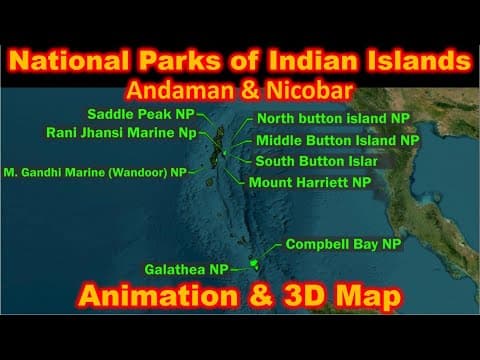
National parks (7/7) of Indian Islands: Andaman & Nicobar | UPSC
Zeta Axis (UPSC-SSC)
13m 53s2,196 words~11 min read
YouTube auto captions
Transcript source
YouTube auto captions
This transcript was extracted from YouTube's auto-generated caption track. The transcript below is server-rendered so it can be read, searched, cited, and shared without opening the original YouTube player.
Pull quotes
[0:11]Hello friends, welcome to another video of Zeta Axis and today we are going to discuss about the National Parks of Indian Islands.
[0:11]Now Lakshadweep and Andaman Nicobar Islands are the two major island groups in India.
[0:11]So do watch those videos and this video we will discuss about the National Parks of Andaman and Nicobar.
[0:11]So in the Andaman and Nicobar group, we can see that there are total nine National Parks.
Use this transcript
Related transcript hubs
Watch on YouTube
Share
MORE TRANSCRIPTS


