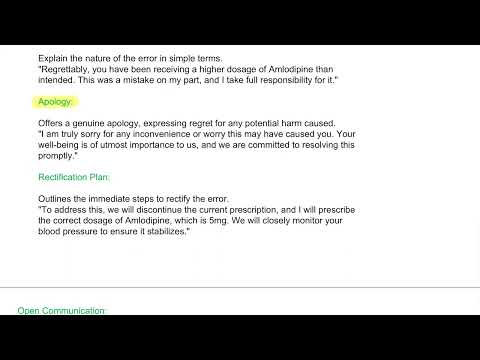
[0:00]So we're going to continue with the MRCP basis consultation station, and I'm going to discuss about medical error case. So, here is our scenario. So, you are a junior doctor responsible for prescribing medications for patient on the medical board. Ms. Johnson, a 65-year-old patient admitted for hypertension management, has been mistakenly prescribed the wrong dose of a blood pressure medication. So, scenario is Ms. Johnson has been receiving treatment for hypertension for the past week. You, while reviewing her medication chart, notices that the prescribed dosage of her anti-hypertensive medication, Amlodipine, is higher than intended. Instead of 5 mg, she has been receiving 10 mg daily. So, this is your scenario, and now I'm going to tell you about the format, how to approach this case. So, remember for there because there are not many scenarios actually, just follow the format. And remember these consultation station, these are not difficult, actually, quite easy, and you can get a very good score, but practice is the key. So, you have to practice about for these cases, so practice with your colleague or your friends, then it will be very easy. So, again, first of all, you have to do some introductions. You enter Mrs. Johnson's room with a calm and composed manner. Uh, good you can say something like this. Good morning, Ms. Johnson. I hope you're feeling okay today. My name is Dr. and I've been overseeing your care during your stay here. So, you're trying to just introduce yourself. Then the next step, so this is the first step, um, that is the introduction. And then you're going to do some acknowledgement. So, acknowledge the reason for the visit, addressing Ms. Johnson's hypertension. So, you can say something like this. I see that we have been working on managing your blood pressure during your stay. I appreciate your cooperation and commitment to your health. And then once you have acknowledged, then you're going to address the error. So, directly addresses the medication error, taking responsibility. You can say something like this. I need to discuss something important with you regarding your medication. Unfortunately, it appears there has been an error in the prescription, and I want to sincerely apologize for any concern this may cause you. So, straight away, you have to admit your error and address the error. Once you have addressed the error, the next step is explanation. Now, explain the nature of the error in simple terms. You can say something like this. Regrettably, you have been receiving a higher dose of Amlodipine than intended. This was a mistake on my part, and I take full responsibility for it. Okay. And then, once you've done your explanation, you're going to do the you're going to apologize to the patient. So, offer a genuine apology, expressing regret for any potential harm caused. You may say like this. I am truly sorry for any inconvenience or worry this may have caused you. Your well-being is of utmost importance to us, and we are committed to resolving this promptly. And then going to talk a bit about the next step is rectification plan. So, outline the immediate step to rectify the error. You can say something like this. To address this, we will discontinue the current prescription, and I will prescribe the correct dose of Amlodipine, which is 5 mg. We will closely monitor your blood pressure to ensure it stabilizes. Now, remember, I'm just giving you the different sections or different points how to address. The patient may interfere at any point and may ask you further questions or any any there may be some reaction from the patient, so you have to keep yourself calm and quiet. Uh, not quite, keep yourself calm and try to answer the patient questions and continue following of this format. So, rectifi after the rectification plan, they're going you're going to move to next step, which is open communication. So, now you will encourage Ms. Johnson to ask questions or share her concerns. You can say something like this. I want to make sure you have all the information you need.
[5:07]Please feel free to ask any questions or share your thoughts on this matter. Then next step is reassurance. So, reassure Ms. Johnson of the commitment to her care and safety.
[5:49]You can say something like this. Your health is our top priority. We will take all necessary measures to ensure your recovery, and I will personally oversee your medication plan moving forward. So, this is the scenario where the medical medication error has occurred. There could be other errors as well, maybe misdiagnosis or maybe some other error, but the format remains the same. Then after that, you're going to do the closing. So, conclude the conversation, uh, reiterating the apology and offering ongoing support. So, something like this, you can say, once again, I apologize for this oversight. We are here to support you throughout your treatment, and if you have any concerns or questions, please don't hesitate to reach out to us. So, here maybe patient will ask some more questions or. So, in this scenario, the medical error is communicated with transparency, empathy, and a clear plan for rectification to ensure patient's safety and trust. So, remember these headings, um, and any any case where the medical error has occurred, you can apply this approach. Uh, and if you just follow this approach, I'm sure you'll get very good marks in your consultation station. Thank you very much, my dear doctors, and I'll see you in my next presentation.