[0:00]Why do we bother with this old thing we call the Bible? Let's be honest, it's a strange book written thousands of years ago in languages most of us don't even speak. Nor do we have any desire to really understand it. People quoted, argue over it, even died for it. But why? Why should we take this book that has been collecting dust on your bookshelf, or tucked away in a hotel room drawer? Why should we take it seriously today? I'll tell you why, because the Bible doesn't just preserve ancient words, it reveals God's heart. And when we stop forcing our own ideas into it and let the text speak for itself, it changes everything. And here's the problem. All too often, we try to make the Bible make sense to us. We insert our definitions, our thoughts, our beliefs into it instead of letting the text itself explain itself. But Solomon warned us about that. Lean not on our own understanding, he says. The Bible isn't, it isn't here to confirm what we already think we know. It's here to confront us, to wrestle us, to make us uncomfortable. It shows us what God loves and hates, what he desires, what he expects from his people. That's why the Apostle Paul told Timothy, study to show thyself approved unto God, a workman that need not to be ashamed, rightly dividing the word of truth. You see, the Bible doesn't need our help to be relevant. It needs us to be humble, humble enough to listen to its words and labor in it. Take one word that we think we understand. Love. When we hear, God is love. Most of us imagine emotion, affection, romance, feelings. But in Hebrew, the word is Ahavah. And Ahavah doesn't mean a passing feeling. It's not that tingle or the butterflies you get when you see your crush. The root of Ahavah literally means to give. That means that love in the Bible is not what you feel. It's what you give. So watch this. God loves us because it's his very nature to give of himself. You see it woven into passages like John 3:16. For God so loved the world that he gave his only begotten Son. The Hebrew concept is right there. Inside of the Greek itself, filtered into English so we can read it. But most of us still miss it. We read it as that's just how much God loves us. But the deeper truth is, this is simply who God is. To love is to give, and as John said, God is love. But Ahavah is not the only word for love in Hebrew. Another word runs like a golden thread through the entire Old Testament. Hesed, Hesed is translated loving kindness, steadfast love or mercy. But none of those fully capture what Hesed is. Hesed is covenant loyalty. It's love that endures because it's bound by promise, not by emotion. So when the Psalms repeat, his Hesed love endures forever, it's not saying God has endless warm feelings for us. It's saying his loyal covenant love never breaks. He binds himself to his people and he just won't let go. And just the other day, I was talking with a gentleman who attended my ancient Hebrew course. He shared with me something powerful that he'd gotten out of the course. He said, we are victims of the English language. And he's right. But here's the point I had to help him see. It's not English's fault. English in itself is not bad. The problem is that English is trying to carry ideas that don't belong to it, nor the Western mindset. Even the Greek of the New Testament was stretching itself to hold concepts that were foreign to its categories. That's why words like Ahavah and Hesed get flattened in translation. The Bible is wrestling with realities that no human language can fully contain. But Hebrew, it preserves a depth and texture that English itself just can't capture. And that's what makes the God of the Bible completely different. From the gods of Egypt, Babylon or Rome, their gods were powerful rulers in heavenly places. But not one of them ever claimed they loved the people that worshipped them. No one ever said, Zeus loves you. No one ever said, Ra loves you. No one ever says Marduk loves you. Why? Because every last one of them demanded fear, tribute and sacrifice, but never covenant love. The God of the Bible is just that different. From Genesis to Revelation, he is described not only as creator and king, but as the God who loves. Not loves us in return, but loved us first. And if you've ever wondered whether the Bible is just another myth, this is where the Bible separates itself. I talk about it in God's garden. Because believe it or not, the Bible proves itself over and over, setting itself apart from Egyptian myths, Mesopotamian epics and Greek legends. Where other gods demanded power, the God of the scripture loves. He gave himself. And this love wasn't just an idea. It was lived out by his people. Jesus himself said, by this all people will know that you are my disciples, if you love one another. That's John 13:35. And history shows that early Christians took Jesus seriously. Around 125 AD, Aristides of Athens told the Roman Emperor that Christians love one another. He who has, gives to he who has not, even without boasting. And when they see a stranger, they take him into their homes and rejoice over him as a brother. Strange to them. A century later, Tertullian, the North African theologian recorded what the pagans themselves were saying about us. See how they love one another. See how they are ready even to die for one another. This was unheard of in the ancient world. The only way outsiders could describe these strange new communities was as communities of love. Do you see how radical this is? The ancient world had no category for a God who loved his people, or for people who embodied that love in their communities. That idea came straight from the Bible. This is why we must wrestle with the text like our life depends on it. If we project our modern assumptions onto it, we shrink love down to sentiment. But when we let the Bible define love for us, we encounter something no other faith has ever proclaimed. A God whose very essence is love, and a people called to embody that love. So why bother with this Bible? Why bother with yours? Because it's the only book that confronts us instead of comforting us. That defines love, not as a feeling, but as giving and covenant loyalty. It reveals a God unlike Ra, Zeus or Marduk. A God whose very essence is love, and a people so transformed by that love. That the ancient world could only describe them as communities of love. This book refuses to let you stay the same way. It demands that you wrestle with it, that you let it shape you. That you see God on his own terms, not yours. And if you're ready to go deeper, watch my next video where I uncover how the Bible even came to be. Why these books and not others were recognized as scripture? Once you see that, you'll never look at your Bible the same way again. God bless you.
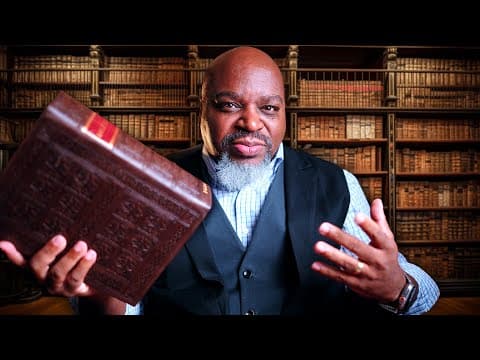
The Bible’s Meaning of Love Will Surprise You
gclmedia
12m 15s1,255 words~7 min read
YouTube auto captions
Transcript source
YouTube auto captions
This transcript was extracted from YouTube's auto-generated caption track. The transcript below is server-rendered so it can be read, searched, cited, and shared without opening the original YouTube player.
Pull quotes
[0:00]Let's be honest, it's a strange book written thousands of years ago in languages most of us don't even speak.
[0:00]Why should we take this book that has been collecting dust on your bookshelf, or tucked away in a hotel room drawer?
[0:00]I'll tell you why, because the Bible doesn't just preserve ancient words, it reveals God's heart.
[0:00]And when we stop forcing our own ideas into it and let the text speak for itself, it changes everything.
Use this transcript
Related transcript hubs
Watch on YouTube
Share
MORE TRANSCRIPTS


