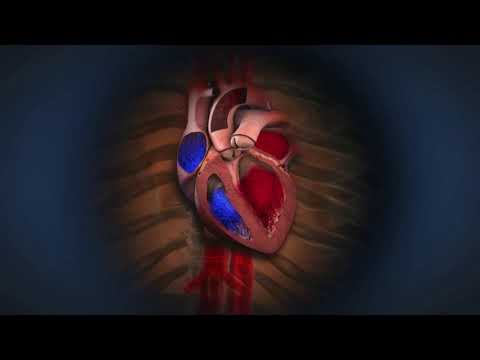
[0:00]We'll start with the basics and examine how the human heart works. The heart is a muscle about the size of a clenched fist that is located under the rib cage and between the lungs.
[0:12]It is divided into a left side and a right side. Each side has two chambers, the upper chambers are called atria and the lower chambers are called ventricles. Blood flows from the atria to the ventricles through one way valves. The atria and the ventricles work together as a team to pump blood through the heart. The right atrium receives oxygen depleted blood from the body and pushes it into the right ventricle, which pumps it out to the lungs. Oxygen enriched blood is returned from the lungs to the left atrium, which pushes it into the left ventricle where it is pumped back out to the body. After the body has used all of the oxygen in the blood, the blood returns to the heart and the cycle repeats. In a normal heart, this sequence occurs 60 to 100 times per minute. The heart's beating rhythms are driven by electrical impulses within the heart. In a normal heart rhythm, electrical signals originate in the heart's natural pacemaker, the sinoatrial node, also called the SA node. These electrical signals travel from the atria to the ventricles in a defined rhythmic pattern. The electrical signals pass through the atrioventricular or AV node. The AV node acts as a natural gatekeeper for the heart through which all the heart's electrical signals normally pass.


