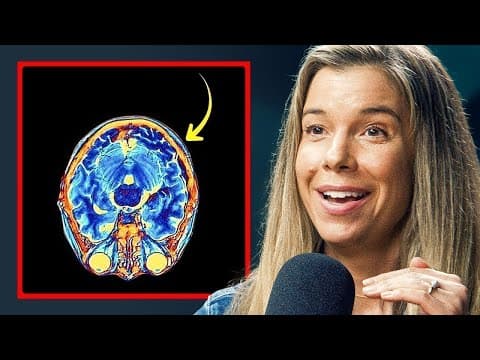
[0:00]What happens when people get brain fog? Like what is what is brain fog? I know what it feels like. But like what's what's going on? Um yeah, so brain fogged or as I like to call it, a reduction in mental clarity. Such a doctor way of reducing like I've just heard too many like people say like brain fog brain fog like and it's I I got like this like I was telling you I got this new jerk reaction to like You've got brain fog it. I do. when people like say brain fog I'll be like, oh, no what are they gonna say you know, but yes it is a thing. So it's um, you know, when when you have a reduction in mental clarity it feels like this brain fog. And you know, there's I personally think it all comes down to food. I think it really comes down to food. Now I mean, when you're sick, you have brain fog. But we can talk about how it overlaps with that. So I think there's really two big it all has to do with meals and and and eating. Um, so the first thing I think that's highly involved in this reduction in mental clarity or brain fog as people like to call it is what's called the postprandial glucose response. So that means blood glucose levels going up after a meal and um what happens is this if you have a really high postprandial glucose response. You're eating a high glycemic index food, something that's definitely like a refined carbohydrate for example, that'll really smash you. Um, you're gonna get this really sharp peak in glucose and then like a drop and or a sugar crash as people like to call it. Um, and so it's really hard for your brain to to be functioning properly with that postprandial glucose response. And that's partly why you'll hear a lot of anecdotes and myself included people that have tried a ketogenic diet or I used to always like to do podcasts on a fast in a fasted state. Because um, you're not getting that postprandial glucose response is one thing. It it really sort of it it's Evens it out. Evens it out. Yeah. Not everyone responds well to a ketogenic diet and I certainly don't think it's easy to continue on forever. So there are other things. Um, obviously avoiding refined carbohydrates is an easy no-brainer, right? There's nothing in there anyways, what do you need from there? Nothing. No micronutrients, you know, no protein, right? Like you're not getting anything from that. So that would be one thing to avoid because that'll make sure you're not going super, super high. But you can still have it um from from from a meal. And um, some of the things that you can do to mitigate that, one would be exercise snacks. So this is like doing a really short burst of intense, like vigorous exercise 80% max heart rate for like 1 to 3 minutes. And you do it 30 minutes or up 30 minutes up to an hour either before or after a meal. So you kind of do it within this hour before or after a meal. And what happens is that vigorous intensity exercise while you're, you know, shooting your heart rate up, you know, and it's it's hard to do. You're you're increasing lactate and it doesn't take much, it gets soaked up by the muscle and this is then um causing transporters, glucose transporters to come up to the muscle, it's opening the gates basically. So that when you eat that meal, the glucose goes into your muscle. It's more anabolic. You want it to go there. And it's not you're not getting that like huge rise and then drop in the post with the postprandial glucose response. So that would be one thing. Exercise snacks. Lots of studies out there, especially with people with type 2 diabetes have a problem you know, maintaining their blood glucose levels. The second thing would be food order, the order you eat your macronutrients. On the plate? Kind of. So, so I would say about 10 minutes it it can be on the plate depending on how slow you eat. So if you if you food order, um there's been studies again, largely in people with type 2 diabetes who have issues regulating their blood glucose. If you eat protein or fat, 10 to 30 minutes before carbohydrates. It can very much blunt and slow the postprandial glucose response. So, if you have like, let's say you eat a can of sardines before you're gonna go to a restaurant, you're gonna eat out. You're presumably going to eat more terribly than you would if you're cooking at home, right? Or you do a little protein shake 20 minutes before you're going to go to a restaurant or whatever and that'll or or before like even just if you're going to do a podcast and you need mental clarity you want to make sure that let's say just eat the protein and and not have the the carbohydrates, right? Um, so what that does is it's I mean, it's doing essentially like increasing insulin so that when you do have that glucose it's. It's crapped. But I mean, if you were if you were going out for dinner, presumably something else you could do is try and have the starter be a steak tartar, tuna tartar, oysters, something like that and just be like, can we just wait an extra 10 minutes on mains? Like however long you think that we need, just give us another 10 and then you've encapsulated it within the the entire meal. I guess as long as everybody else is on board with that, otherwise someone's had a bunch of bread and they're just they want their whatever main course to come out. But See, that's like the worst thing is having the bread on the table first, right? It should be It is good, but like, eat the eat the steak tartar first, and then go for the bread, right? You'll you'll you'll slow the glucose response. There's a place in Austin called Deans Italian, uh, it's just down the street from you. Oh, you should go. You should go one. Yeah, I need I'm looking for restaurant recommendations, please. I'll send you some afterwards. So, uh, Deans, three forks and um, there's somewhere else that I went the other evening that was phenomenal. But Deans, Deans and three folks are the two steak restaurants I go to the most, uh, but Deans do this they call it a bread crown. So it's like a literally looks like a little crown that comes out, kind of about that size, and there's a pot of whipped butter in the middle of this thing, and it's glazed on top. It's got like a salt glaze. This thing is like crack. It's so good. And it's it's just there. You arrive, you sit down, you've got the drinks or whatever. And then this thing arrives and you just can't, it's impossible to not eat. So, yeah, almost getting, is there something that we can do with this like pre-appetizer appetizer to come after the appetizers around about 15 minutes if that's okay, because Dr Ronda said so. Yeah, so food order, you know, is is something legitimately that's been studied, empirical data showing it does blunt the glucose postprandial glucose response. And um, so that is another thing that can really I think affect mental clarity or brain fog. So um, just like I said, like the protein or or fat, like an avocado sometimes I'll have an avocado. And that kind of just delays the emptying of your stomach into your intestines and it kind of slows it even keel rather than real high spike and then lower. Presumably as well, prioritizing the foods during an eating window. Even if you do the protein shake at home and then go out for dinner afterwards, prioritizing that and skewing that toward protein is just going to cause you to eat less of the carbs. If there is dessert at the end, you're gonna think, oh, I'm like not as bothered because I've just put more in me that's been skewed and discriminated in the direction of what you should be prioritizing anyway. Absolutely. So you get more you're it's satiety plays around me you're eating something before like protein you're just not gonna use as much you know, you're not gonna eat as much. But that kind of leads into the second. That's not the only part of the meal or food or eating that I think plays a role in this reduction of mental clarity and brain fog. The other thing is the postprandial inflammatory response. So eating a meal causes inflammation. It happens in everyone every meal. It's no there's no avoiding it like to some degree it happens. And but you can minimize like how much of an inflammatory response you're having. So people um eating a very high sugar and high fat meal, it really that's the real, those are the two real big movers of it. Um, but even if you're just doing a ton of fat without like fiber or protein, fat is harsh on the gut. And so what ends up happening is your gut epithelial cells, there's like things holding them together tight junctions, they open up, and they let little pieces of bacteria so our microbiome. I mean, we got trillion Is this leaky gut? Is exactly what it is. It's intestinal permeability and it allows pieces of bacteria to get your Let me at him. Oh how for every, for every like bro science term I've got, you've got the specific term that comes out of medicine. Is it brain fog? It's a reduction in mental clarity. Is it leaky gut? It's a the the wall lining of the intestine is opened up to a Yeah, intestinal permeability or leaky gut as it's called. That's what you're doing. So meals cause that to happen transiently. Uh, some people have like a very big problem with leaky gut, but so transitly you're letting bacteria get into your bloodstream and this is what's happens is it's it's pieces of bacteria, they're called endotoxin or lipopolysaccharide the same thing, but um, they're getting into your circulation because they're opening up, right? Getting from the gut into the Not supposed to be there. Right. And your immune system gets activated. So your immune system's like it it knows those pieces of the bacterial membrane, it recognizes it. That's how it, you know, recognizes a bacterial pathogen. And so it gets activated. And um, what ends up happening there is one, your immune system's activated, okay? That requires a ton of energy. So energy is shunted away from your brain and it goes to the immune system because your body goes, triages it. It goes, I need to survive. There's a bacteria, there's a bacterial invader in my system right now. I'm gonna make sure that I get rid of this invader, so I don't die, right? So that's that's the first thing that's happening in terms of like energy's being diverted from the brain, from neuro transmission, from thinking everything, and it's going to the immune system to activate it. Okay, and it doesn't, you know, happen for that long of a period, but it it's happening after a meal. Um, the second thing that's happening is that your immune system itself is creating cytokines that are activating other immune cells. That's how they like talk to each other. And these things are um, they're essentially can be somnogenic. So they can make you sleepy. So when you're sick, what happens when you're sick? You're you have no energy, right? Cause all the energy's going into your immune system and you're sleepy. So that's exactly what's happening after a meal. What's happening when you're sick to a smaller degree is happening after a meal, the post postprandial inflammatory response. Yep.
[11:21]And the other thing that actually makes an effect on that is believe it or not, we're going full circle, Omega 3. Omega 3 has been shown in clinical studies to blunt the post postprandial inflammatory response. With the meal or at any point throughout the day? So that's why I take my omega-3s throughout the day with meals. And it's doing it to some degree both, to some degree both. There's something systemic, but there's also something acute. Exactly. There's something systemic the inflammation process, but there's something acute in the gut that it's also playing a role in preventing the lipopolysaccharide from getting into circulation. Is there is this dose dependent? If I have one gram with each meal, you say two grams of triglyceride responsibly sourced blah, blah, blah from a Norwegian guy that's doing it like this with fish. Can I have one gram with each meal? Would that be sufficient? I think the studies and I can't remember, I think it was like, they were lower dose, like 500 milligrams. I think it wasn't even that high. So I typically do the one gram with each meal. It's a nice way to remember to do it. But yeah, it's a nice way and um and that so so I like to do the reason I like to have omega-3s throughout the day is for one that reason, blunting the postprandial inflammatory response. Two, I want to have these like specialized resolving like these specialized resolving molecules in that they produce like when you're metabolism in my blood constant resolving inflammation. Just working. Yeah, so through uh, throughout my twenties, I said I was a a club promoter and I I thought I had depression or like acute depression that would come on every so often, like intermittently throughout the year. I think looking back, it was just low mood and burnout. I think that's what was going on. But the way that it would manifest for me is I wouldn't get out of bed. I wouldn't want to go to work and see people and I was I was in charge of this company, so I could do whatever I wanted and no one could tell me otherwise. But one of the things that I would do is I would order pizza or you know, like high sugar foods and sweets and stuff like that and it would comfort eat, right? Like I'd comfort eat and that would be something I'd do, but I'd notice especially if you have, you know, a big Dominos in front of you and you've got some sweet stuff to have after that. The inflammation like the throbbing that you feel in your body. It's almost like your heartbeat feels like or your blood pressure feels like it's gone up and then almost all of the time after that, I think this is very common for people that deal with low mood. If they do comfort eat like that, they'll then fall asleep. So shortly after that and then that disregulation of your sleep pattern also makes you feel even more like shit and then you come out of this sleep your emotions are all over the place. You've still got tons of like either blood sugar rushing around you or you don't or you've got digestive discomfort because you've just eaten all of this food. And um, yeah just seeing that as like a little, uh, Petri dish microcosm for what happens if the least amount of movement possible, like you've gone from bed to door, back to bed and that's it. Nothing in terms of any kind of stimulation already in low mood and then you go to sleep, the most sedentary of all of the positions, uh, yeah, it's you can feel that inflammation that cytokine response and your thoughts again, super, super muddy, which more so um, feeds back into that low mood. It's a vicious cycle, right? Exactly. No, and you mentioned it's funny how you mentioned people gets when you get sleepy after a meal. It's like that's the cytokines that are somnogenic, it's the post-inflammatory inflammatory response. And again how it happens with the bigger meal too. You'll notice like the bigger the meal if you overeat, the sleepier you are, right? And so it's it's more of an inflammatory response. So now you can think about it as, oh, I'm not sleepy, it's oh, I'm I've got some inflammation going on after that meal. In other news, this episode is brought to you by AG1. Nutrition doesn't have to be complicated, it just has to work and that's why I've used AG1 every single day for over three years now. AG1 is literally the best in the world at providing you with a scientifically backed blend of ingredients that helps to fuel your body. You might have heard Tim Ferriss, and Joe Rogan, and Peter TIA, and Andrew Huberman, and myself talk about this product and that's because it is the best daily foundational nutrition supplement on the planet. AG1 is a comprehensive nutrition solution formulated to support whole body health. It's got 75 high quality vitamins, minerals, and whole food sourced ingredients. Best of all, it's got a 90-day money-back guarantee, so you can buy it and try it every single day for three full months and if you do not like it at the end of those three months, they will give you your money back. That's how confident they are. That you'll love it. Right now, you can get a year's free supply of vitamin D plus five free travel packs by going to the link in the description below, or heading to drinkAG1.com/wisdom. That's drinkAG1.com/wisdom. Wisdom. Thank you very much for tuning in. If you enjoyed that clip with Ronda, you will love the full length three-hour long podcast, which you can watch right here.


