[0:00]The big players can easily manipulate price, but they can't manipulate volume that easily. You can actually tell from price and volume relationships whether somebody's playing with you or not. Let's try. Look at what's displayed on your screen right now and give me your prediction. Will this price surge higher or crash down? When you're working with just basic candlesticks, making this call feels nearly impossible, doesn't it? Watch what happens when I reveal the secret ingredient. Same exact chart, but now I've overlaid the daily volume distribution. Suddenly, everything becomes crystal clear about where this market is headed. See that thick horizontal line cutting through the volume bars? That's your point of control, the price zone where maximum trading activity occurred. When price touches this magnetic level, watch the immediate reaction. What seemed like random price movement before, now shows a clear, predictable pattern when you add volume intelligence. Here's another mind-blowing example. Without any volume context, this chart looks like a guessing game. Will it bounce or break? But the moment we add our volume footprint, the answer jumps off the screen. Price crashes right into that point of control zone and boom, instant reversal. The volume distribution just gave us a crystal ball into market behavior. This point of control isn't just some random line on your chart. This is where the smart money placed their biggest bets. Here's the psychological warfare happening behind the scenes. When price returns to this battlefield in the future, those same institutional players who created this volume footprint will spring back into action. They have a vested interest in defending these levels because their positions depend on it. It's like they've drawn a line in the sand and they'll fight to hold it. This is the insider knowledge that Wall Street doesn't want retail traders to understand. The volume profile can give you precise sniper entries for your trades. Most people don't know about this one simple tool, but after watching this video, you'll be able to add this to your trading arsenal. This powerful analytical weapon works completely differently from anything you've seen before. While traditional volume bars show you trading activity over specific time periods, volume profile maps out volume distribution across different price levels, creating a horizontal histogram right on your chart. Why does this matter so much? When you see thick volume bars at certain price zones, that's your proof that serious money was actively buying or selling there. These become magnetic levels that price gravitates toward repeatedly. It's like having X-ray vision into market sentiment at every price point. Now, let me introduce you to the value area. This range consists of three key levels: the Value Area High, the Value Area Low, and the Point of Control. These three levels create a zone that captures 70% of all trading volume during the analyzed period. Let me walk you through accessing these volume profile tools. All of them can easily be found on TradingView.com. If you don't have an account yet, I'll leave a link in my description. Your first power tool is the Anchored Volume Profile. Hunt for this in your left side toolbar. You'll spot it positioned right above that brush icon. Double click to unlock the customization panel where we'll optimize these settings for maximum clarity. Here's my personal color scheme that eliminates all confusion with standard red green candles. Set your Up Volume in blue, Down Volume in yellow, Value Area Up in blue, Value Area Down in yellow, Value Area High in blue, Value Area Low in blue. Make that point of control stand out in bold red. When deploying volume profile analysis, focus on clearly defined trading ranges. Locate where your range begins and anchor your analysis there. Once clicked, the anchored volume profile appears on the right side of your chart. It spans from your selected starting point through current market price and extends into future price movements. Each horizontal bar represents volume activity at specific price levels. Longer bars indicate heavier trading volume at those prices. These extended bars are your high volume nodes, prime locations for identifying potential trading opportunities. You'll also spot shorter bars throughout the profile. These are low volume nodes, price areas within the chart where minimal trading occurred. They represent zones of reduced interest, showing where buying and selling activity was limited. That prominent red line cutting through the profile, that's your point of control. The price level where maximum volume was traded. This marks the most crucial price zone and represents peak trader interest. This level experienced the highest buying and selling pressure during the analyzed period. Double-click the Anchored Volume Profile to activate additional features. Enable the Value Area High and Value Area Low settings to add two more reference lines to your chart. These boundaries deserve your attention, as they define the institutional comfort zone. Like any technical tool, Volume Profile works best when combined with confluence factors, such as traditional support and resistance levels. When volume profile levels align with horizontal support or resistance zones, that area gains significantly more strength and reliability for potential trade setups. Just like every other indicator, you want to combine this with other confluence like support and resistance. So whenever one of these volume profile levels are near traditional horizontal support or resistance, then that area becomes even stronger, and you can have a higher confidence of a trade laying out from that level. Your next weapon is the Fixed Range Volume Profile, located in the same toolkit section. Here's where things get interesting. While the anchored version displays volumes at specific ranges that are selected, which include current market price, with the Fixed Range Volume Profile, we can choose to not include the current market price action, opting to use it only on historical price data. This can be very useful since old points of control can still provide strong levels on our current chart. We will be able to mark out multiple areas within the fixed volume range profile this way, as we can see here, price has reacted to every old point of control once it broke out of the range and came back. Each reaction provides short-term trading opportunities, even if they don't trigger major trend reversals. Configure your settings by double clicking the tool. Navigate to the input tab and set Value Area Volume to 70. Under the Style tab, transform the green to blue and red to yellow, the Value Area High and Low in blue, and set that point of control in red. Now, let's go over the Session Volume Profile indicator. It requires a paid TradingView subscription, but before you rush to upgrade, let me save you some money. The free Fixed Range tool we just mastered can accomplish virtually identical results. The only difference? The Session Volume Profile automatically generates profiles for each trading session. While you'll need to manually create them with the free version, that's literally the only distinction, so keep your wallet closed if this is your sole motivation for upgrading. Now, the juicy part: how to trade using the Point of Control. So let's start with a long trade scenario. Let's take a look at this volume profile. It has a very nicely visible point of control, which is right here at this level. That's the point of control. Let me draw a line here. The price went up from this point of control, made a pullback to it. The moment price touched this zone, those original buyers who established positions here, jumped back into action. They aggressively defended their territory, driving price higher again. This is textbook institutional behavior in a long scenario. The bearish version follows the same institutional psychology. Examine this volume distribution where maximum activity occurred right here. Notice how the volume bars reached their widest point at this level. When price revisited this institutional stronghold, the original sellers who dominated this zone, reactivated their positions. They hammered price lower, protecting their short positions and driving the market down. This demonstrates classic institutional selling pressure in action. Here's your step-by-step roadmap for executing these setups like a professional. Your initial task is spotting that point of control. Simply locate where the volume histogram reaches its maximum width. Next, exercise patience and wait for price to distance itself from this critical zone. Whether it moves higher or lower doesn't matter. You need that initial separation. Once you see price returning towards your marked level, prepare for action. Execute your trade at the very first contact with the institutional zone. This first touch principle is crucial. Subsequent retests lose their effectiveness. For bullish setups, you're buying that initial retest after an upward move. For bearish plays, you're shorting the first pullback after downward momentum. Now I share with you a trick that improves the strategy even more. But first, I want to thank our amazing community. We selected the user who helped another community member, and we're gifting them one free month of Flux Charts. Because that's how a community should work, by helping each other out. Please reach out to our email to claim your free subscription. Now, if you haven't heard about Flux Charts yet, this is the platform I use every single day for my trades. It completely changed how I trade. Flux can run screeners on up to 15 tickers and time frames at once. So instead of flipping through charts, it tells me exactly where my setups are happening. They have back testing tools to build custom strategies and test them against years of market data in seconds. So you know if a strategy works before risking any money. Here's the best part. 90% of their indicators are completely free. Plus, you can use Flux Charts even with the free version of TradingView, which is huge, because you can use multiple indicators simultaneously, avoiding TradingView's two indicator limit. They also host daily live trading classes teaching strategies, risk management, and trade mindset. Can't join live? They have a full library of recordings. Click the link in my description and use this code to discover the fantastic promotion I got for our community. All right, let's get back to the video. Instead of waiting for price to hit that exact point of control line, I discovered something far more effective. Here's my breakthrough realization. Institutional resistance and support aren't just single lines. They're entire zones of heavy volume activity. The point of control sits in the center, but the real power lies in the surrounding volume cluster. This creates a defensive perimeter rather than just a single line. When price approaches this institutional fortress from above, I don't wait for it to reach the center line. Instead, I position my long entry at the upper boundary of this volume zone, right where the institutional activity begins. This strategic shift happened after I noticed a frustrating pattern. Time after time, price would react just before hitting that exact point of control line, leaving me watching profitable moves from the sidelines. Price respected the volume zone but never quite reached the center. By moving my entry to the zone's edge, I captured those early reactions that I was previously missing. For short positions, the concept flips perfectly. When price approaches from below, I enter at the lower boundary of that heavy volume cluster. Let's dive into actual market scenarios where this strategy delivers results. Examine this volume profile with its institutional footprint clearly marked. I'll highlight this crucial zone. Watch the price behavior unfold. Initial downward movement signals that sellers have seized control. Those institutional players who established short positions in this volume cluster are now pushing price lower. We position ourselves for the inevitable pullback. When price rebounds to test this institutional stronghold for the first time, we strike with our short position. The execution is clean and decisive. Here's another textbook setup. Notice how price abandons this volume cluster, stages a pullback attempt, and gets rejected precisely at the institutional defense line. This rejection becomes our short entry signal. Now observe this bullish scenario playing out. The daily volume profile reveals institutional accumulation at this specific level. Once price retreats and retests this support fortress, the original buyers reactivate their positions, driving price higher. This creates our perfect long entry opportunity. The next example perfectly illustrates why my refined approach outperforms the traditional method. Study this volume profile where the institutional footprint is clearly visible. Using the conventional approach, you'd wait for price to reach that exact center line during the pullback. But notice what actually happened. Price reversed just short of that target, leaving traditional traders empty-handed. This scenario plagued my early trading until I discovered the solution. My enhanced technique positions the long entry at the upper boundary of this institutional volume zone, right where serious trading activity begins. Watch how price hits this optimized level and immediately launches higher. The volume zone boundary provided the perfect entry point. Expanding our view reveals an even more compelling example. The conventional point of control approach would target this exact level for the long entry. But again, price never quite reaches that target line, creating another missed opportunity. My zone-based approach transforms this missed setup into a winning trade. Risk management completes our trading system. The rules are straightforward, but crucial for protecting your capital. This is the point of control. So again, you print a line here on the chart, wait for the pullback, and when price hits the level, then you go short. Stop loss needs to go in low volume area where nobody really was interested in trading. So take a look at the profile and the low volume area would be in here. This red line is a perfect spot for the stop loss because this is the heavy volume zone and this zone is a resistance. The whole zone is a resistance, and you want to place the stop behind that resistance, because if the price goes past the resistance, there's no way of telling where it would go next, right? So that's where you want to cut your losses. So remember, stop loss needs to go behind a heavy volume barrier like in here. Take profit follows the inverse principle. You want to take the profit before the price reaches heavy volume zone. So if you look at this profile right here, this is a heavy volume zone and that heavy volume zone could potentially represent a strong support. And when you are short from here, you don't really want the price to hit a support and ruin your trade. So when the price hits the beginning of your support, which is here, this is where you take your profit at the beginning of the heavy volume zone. So again, the rule for the stop loss is stop loss goes behind a barrier and take profit goes before a heavy volume barrier. That's all for this video. Remember to leave a like and activate the notification bell. See you guys next time.
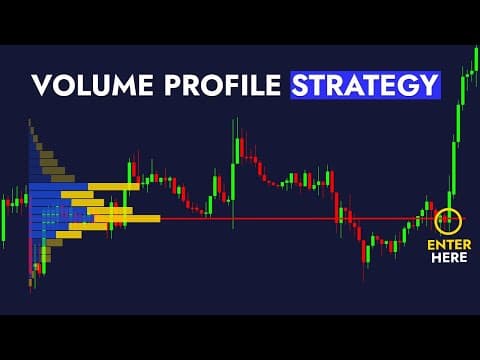
How to MASTER Volume Profile Trading in Less Than 15 Minutes And Never GUESS Market Direction Again
Trading Notes
14m 54s2,515 words~13 min read
YouTube auto captions
Transcript source
YouTube auto captions
This transcript was extracted from YouTube's auto-generated caption track. The transcript below is server-rendered so it can be read, searched, cited, and shared without opening the original YouTube player.
Pull quotes
[0:00]The big players can easily manipulate price, but they can't manipulate volume that easily.
[0:00]You can actually tell from price and volume relationships whether somebody's playing with you or not.
[0:00]When you're working with just basic candlesticks, making this call feels nearly impossible, doesn't it?
[0:00]That's your point of control, the price zone where maximum trading activity occurred.
Use this transcript
Related transcript hubs
Watch on YouTube
Share
MORE TRANSCRIPTS