[0:00]Have you ever heard the sound of silence in a place designed to host millions? The Dubai Mall, that $20 billion beast, is bleeding out. What was once the Mecca of consumerism, a human anthill that attracted 105 million souls a year, is today struggling to survive in the face of a financial collapse that no one saw coming. We are talking about a 30% drop in revenue. We are talking about empty hallways and luxury brands that are packing their bags. If you walk through there on any given Tuesday in this year 2025, the feeling is chilling. Foot traffic is dead. Luxury spending has evaporated. Something broke in the foundations of Dubai and the numbers tell a horror story that tourism authorities are desperately trying to hide. Imagine the scene. You have 54 million square feet of retail space, the title of the world's most visited destination in 2023, and suddenly, nothing. The emptiness is so aggressive, it hits you. Entire wings of the complex echo back the sound of your footsteps. Boutiques where a handbag costs what you earn in a year, totally unattended, without staff and without customers. Remember that ground floor where you had to fight elbow to elbow to move forward? Now you can walk a perfect straight line without touching anyone. The king has lost his crown. And the crisis is not just a rough patch, it is a structural paradigm shift. To understand the magnitude of the disaster, you have to look back. November 28. The world watched with its mouth open. 1,200 stores, 200 restaurants, an Olympic sized ice rink, an aquarium with 10 million liters of water, and as if that weren't enough, the gateway to the tallest building in the world, the Burj Khalifa. For more than a decade, it was the perfect money making machine. Waiting lists for dinner were weeks long. Brands killed for a square meter there. It was the physical embodiment of Dubai's excessive ambition. But 2025 has arrived with a baseball bat to shatter that illusion. The cracks can no longer be covered with makeup. Let's get serious because the numbers don't lie, and this is what's keeping investors awake at night. Amar Properties, the owners of the circus, are breaking into a cold sweat over their financial reports. Pay attention to this. Retail and entertainment revenue fell by 18% in 2024. Do you think the bleeding stopped there? Not at all. The first half of 2025 brought another 12% crash. If you add it up, you have a 30% collapse in 18 months in an asset that was supposed to be untouchable. But the real drama is in the footfall. Leaked internal data confirms that weekday visits have fallen by up to 40% compared to two years ago. The problem isn't just that fewer people are coming, it's that those who do come, don't spend. The mall needs between 200,000 and 250,000 people daily just to justify its operating expenses. The reality? They barely reach 140,000 during the week. It's a financial black hole.Look at the average ticket. In the good times, a tourist would spend about 420 dirhams per visit, about $115. Today, if they're lucky, they reach $76. A 33% drop in per capita spending. And if we break it down by sectors, it's a carnage. Luxury fashion down 45%, watches and jewelry down 38%. Even food, which always holds up, has fallen by 22%. By the way, if you're interested in understanding how economic cycles affect empires like this, and want to dive deeper, I've left a selection of incredible audiobooks in the pinned comment and in the description. Check them out because they are well worth it. The ship's great anchors are coming loose. Galleries Lafayette, that French giant that occupies an entire wing, did not meet its targets and is in an open war to renegotiate the rent. Bloomingdale's has had to close its home section and downsize. Level Shoes, which was the crown jewel, has laid off 30% of its staff. Vacancy is skyrocketing at 11%. That means more than 130 dark closed storefronts, gathering dust in a place that should shine. Iconic brands like Roberto Cavalli have quietly left through the back door. And over all of this hangs a giant sword of Damocles debt. Mr is carrying a total debt of about $7.6 billion. The question is no longer whether they will recover, but how long they can hold out before the entire house of cards comes crashing down. But the real terror for the accountants isn't just the lack of income. It's the cost of keeping the beast breathing. When a cash cow the size of the Dubai Mall stops giving milk, the impact shakes the company's entire balance sheet. Because operating expenses are a shredding machine that never stops. Think about it for a second. You have to air condition five and a half square feet in the middle of one of the hottest deserts on earth. The electricity bill to keep the Olympic rink ice from melting or to filter the water in that monstrous aquarium is astronomical. Security for 1,200 stores, cleaning crews operating 24/7. Mr is burning bills on a property that was designed to print them. This collapse is not the result of bad luck. It is a perfect storm where three hurricanes collided simultaneously between 2024 and 2025. First factor. The Great Chinese Stampede. Chinese tourists were not just visitors. They represented 22% of international traffic and were the true whales of luxury. We are talking about people who dropped between 3,000 and $10,000 per visit on watches and jewelry without blinking. But China's economy stumbled and fell flat on its face in 2024. Youth unemployment skyrocketed, its real estate sector imploded, and consumer confidence hit rock bottom. Tourism from China to Dubai fell by 48% and has not returned. If you walk through the luxury wing today, the absence is visceral. Those stores that used to have Mandarin speaking clerks on every shift, have now eliminated those positions because the customer they were designed for, simply evaporated. The second nail in the coffin, the digital enemy is already inside the house. For years, the Dubai Mall had a geographical monopoly. If you wanted authentic luxury in the region, you had to go there physically. That is over. Platforms like Farfetch, Net a Porter, and direct to consumer sales from brands have exploded in the Gulf. Local youth, who are the future of consumption, no longer waste time walking miles of hallways. They come for dinner, yes, but they make high value purchases from their couch. The mall zone data shows a 29% drop in purchases over 2,000 dirhams among locals under 35. By the way, if you want to deeply understand how digital is dismantling traditional business models, check the description and the pinned comment. I've left some brutal audio books that explain this phenomenon in detail. Third factor. Competition has turned cannibalistic. The Mall of the Emirates was renovated, the Dubai Hills Mall opened in 2022, attacking the same high class clientele, and Abu Dhabi has started playing hard, stealing tourists with itineraries that no longer pass through Dubai. And then there is the psychological factor, the hardest to measure, but the most lethal boredom. The Dubai Mall was a global novelty in 2010. It was mind blowing in 2015, but in 2025, it's just a very large shopping mall. Tourists from Europe or North America have already seen it. The waterfall and the aquarium no longer justify losing four hours of your vacation when the shopping experience doesn't excite anymore. Add to this the currency blow. The Dirham is pegged to the dollar, and the dollar has been relentless. That makes Dubai an incredibly expensive city for Europeans and Asians. A 500 euro handbag that seemed like a bargain in 2022 today costs the equivalent of 580 after exchange rates and fees. People know how to do the math and they've realized it's better to shop at home. Even wealthy Russians who flooded the city after the sanctions have withdrawn. Banking restrictions in the Emirates tightened in 2024 and that faucet of easy money was turned off by 60%. And finally, the post pandemic shift in mindset that no one saw coming. Today's tourist looks to live, not to buy. They want desert safaris, skydiving, yacht parties and Instagram content. The concept of a shopping mall is the antithesis of this. Being locked up for four hours under air conditioning doesn't generate likes or social envy the way a sunrise hot air balloon ride does. The Dubai Mall's value proposition depended on shopping being the center of the trip, and that is now history. Walk through the Dubai fountain entrance on a Wednesday afternoon and the emptiness hits you in the face. Those gigantic atriums that seemed majestic now only serve to amplify the silence. The luxury corridor, home to Chanel, Dior and Hermes, used to have lines going out the door. Today you can walk straight to the counter where sales associates wait, bored, for a customer who might never arrive. Time equals, quote, 0.8 seconds, quote, slash, greater than the vital energy of the place has evaporated. If you go up to Fashion Avenue on the second floor, you'll find a scene that looks like something out of a post-apocalyptic movie, entire sections in the dark. It's not that they've closed forever, it's that they are operating in survival mode. Stores that used to open punctually at 10:00 in the morning now don't raise their shutters until noon. Some close at 8:00 in the evening instead of midnight. The Galleries Lafayette wing, which should be a tourist destination in itself, feels cavernous, cold and empty. The escalators spin and spin without carrying anyone, like a forgotten machine. Those beauty and cosmetics aisles, where you once had to dodge people to avoid colliding, now allow you to navigate in absolute peace. Sounds relaxing, right? But in the world of retail, that piece is the sound of financial death. And if fashion is suffering, food tells the same tragic story. Restaurants next to the ice rink or the aquarium are holding their ground, but the further you get from the center, the more desolate the landscape becomes. There are restaurant clusters on the upper floors that are ghost towns. High-end places where you used to need to book months in advance now welcome you with open arms any night without an appointment. The Cheesecake Factory, which has always been a barometer of success with endless lines, has empty tables on a Friday at 7:00 in the evening. That, quite simply, should not be happening. Entertainment zones are holding on, but with visible wounds. The aquarium still attracts families on weekends, and the VR park has lines during school holidays, but if you compare the volume with 2022, the drop is undeniable. The Real Cinemas complex has had to sacrifice two entire theaters this year, converting them into event spaces, because ticket sales didn't even cover the projector's electricity. But the rawest truth will be told to you by the employees. If you know how to ask with tact. Sales staff in luxury stores, who live off commissions, have seen their income plummet between 50 and 60%. Many have thrown in the towel, moving to the hospitality industry or leaving the Emirates for good. Managers describe suffocating pressure from above to cut costs, reduce staff, and cover the same shifts with half the people. Morale is at rock bottom, and staff turnover is sky high, which creates a vicious cycle. Demotivated employees provide worse service, and the customer stops coming. By the way, understanding how to manage teams in crisis and adapt to such brutal market changes is vital. If you're interested in the subject, check out the audio books I left in the pinned comment and the description. They are pure gold for understanding these dynamics. Even the visual magic is fading out. Seasonal decorations, which used to be excessive and perfect for Instagram, feel cheap this year. Christmas 2024 was notably poorer than the previous one, fewer giant ornaments, simpler lights, smaller trees. It's subtle, but it screams budget cuts to the four winds. Even the famous fashion shows and promotional events have disappeared from the calendar. There used to be two or three major activations per month. Now, with luck, there is one. The competition is a pack of wild wolves and the Dubai Mall is losing on all fronts. Its old rival, the Mall of the Emirates, smelled blood and renovated aggressively in 2023, adding new luxury wings and improving its dining options. Now it's real competition and its location near the Marina and JBR makes it much more convenient for beach tourists. On the other hand, Citywalk has taken the lifestyle crowd off the streets. Its open air design boutiques and modern atmosphere attract exactly the demographic that The Dubai Mall is losing. Wealthy millennials and Gen Z who prefer experiences over transactions. And on an international level, the sleeping giant has awakened, Saudi Arabia. Riyadh and Jeddah are building Pharaonic entertainment complexes explicitly designed for one thing. So that Saudis spend their money at home instead of flying to Dubai. Slash greater than that Saudi customer, who historically represented almost 20% of the traffic, is staying in their country. The ease of travel that made Dubai great is now working against it. Because other destinations have improved their infrastructure. Finally, there is a psychological shift in the definition of luxury. The old model of big brands in big malls feels obsolete to young consumers. They want exclusivity, the boutique feel, stories of sustainability and brand values. The Dubai Mall represents mass luxury, and today that is a contradiction. The stores are too big, the selection too obvious, and the experience too cold. A millionaire under 40 would a thousand times rather buy at a hidden concept store in London or Tokyo than walk through a mall in Dubai, even if it costs them more. And let's not forget the final blow from online commerce. Platforms like Namshi or Noon deliver to your doorstep in days, with easy returns and an infinite catalog. Except to try on shoes or a tailored suit there is no longer a reason to step into a physical store. Brands know this and are reducing their global footprint and The Dubai Mall is not immune to this. When the landlord tries to renew contracts at old rental prices, brands stand their ground or leave. The property is too iconic to close, but it is mortally wounded. Today's customer acts like a surgeon. They research online, go in for the exact product and leave that. That carefree stroll, the, let's see what we find. That behavior upon which shopping malls were designed, is extinct. The Dubai Mall is trying to stop a global tsunami with a bucket of water, and it is not enough. And here enters the generational abyss. Tourists over 40 still see value in the refuge of air conditioning, the convenience of all in one. But for someone under 35, let alone under 25, a shopping mall is quite simply boring. It is a climate controlled cage. They prefer to be outdoors, at the beach, in real social spaces, anywhere that isn't an artificial closed box. And the problem is that the tourist traveling to Dubai is increasingly younger. The Dubai Mall has failed to read this change. Ice rinks, aquariums, virtual reality, all of that sounds outdated for a generation raised on the instant dopamine of TikTok and immersive digital content. The building remains impressive, yes. The architecture is brutal and the aquarium is world class. But the current trajectory is unsustainable. Revenue is collapsing, storefronts are emptying, and the human behavior that sustained the business has mutated forever. This crisis is a screaming warning for the entire city. Tourism models based on spectacle and superlatives are as fragile as glass. When the novelty fades, when competition arises and tastes change, the foundations crack at a staggering speed. Dubai needs to stop obsessing over being the city of the biggest and the tallest, and start becoming a city people return to because they love it, not just to check it off a list. The Dubai Mall could lead that evolution, transforming into a gastronomic and entertainment destination that, coincidentally, has stores. But getting there requires humility, investment and the courage to kill the old model. To better understand how large companies must pivot or die in these times of change, don't forget to check the selection of audiobooks I left in the pinned comment and the description. They will give you a much deeper insight. Now the question is for you.Are Mr and Dubai ready to accept this new reality? Have you been to the Dubai Mall recently? Do you think they can turn the situation around in 2026 or has the era of mega shopping malls finally died? Let me know in the comments. Subscribe if you want more deep dives like this and I'll see you in the next video.
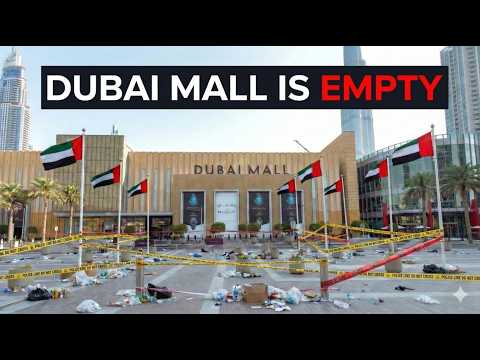
DUBAI BANKRUPT? The world's largest mall is empty.
Dubai Secrets
18m 29s2,869 words~15 min read
YouTube auto captions
Transcript source
YouTube auto captions
This transcript was extracted from YouTube's auto-generated caption track. The transcript below is server-rendered so it can be read, searched, cited, and shared without opening the original YouTube player.
Pull quotes
[0:00]What was once the Mecca of consumerism, a human anthill that attracted 105 million souls a year, is today struggling to survive in the face of a financial collapse that no one saw coming.
[0:00]We are talking about empty hallways and luxury brands that are packing their bags.
[0:00]If you walk through there on any given Tuesday in this year 2025, the feeling is chilling.
[0:00]Something broke in the foundations of Dubai and the numbers tell a horror story that tourism authorities are desperately trying to hide.
Use this transcript
Related transcript hubs
Watch on YouTube
Share
MORE TRANSCRIPTS


