[0:39]Interpreting Asia Interpreting Europe. Unit 4 Note Taking. Hello, and welcome to interpreting Asia, interpreting Europe. Now, have you got a pen ready and some paper? This program is about note taking. Note taking is one of the essential skills for li on interpreting, and a vital aid to memory. Notes are generally used to record specific details like numbers, proper names, and lists of things. People often refer to it as note taking, but the term I prefer to use is how to use notes. In other words, it's an interaction between your notes and your short-term memory. In the following drama, look at how the interpreter takes notes at the meeting between two business people. Both are hoping to sign a deal and the final stages of negotiations should be straightforward. And as you know, the sales of A have more than trebled over the last six months in Japan. Outside of the UK, we have six offices in Europe, as well as in Tokyo, Sydney, and Bangkok. Sales have increased by an average of 23% in all territories, while our main competitor's market share has decreased by 13%. We know that our marketing strategy works, and so we are very keen to move into the Vietnamese market. And as a sign of our commitment and belief that our product is right for your country, we will be spending over a million US dollars on our marketing campaign in Vietnam. Thưa quý bà và thưa quý vị, trong số tháng qua, doanh số của A ở Nhật Bản đã tăng lên gấp ba lần. Ngoài nước Anh, chúng tôi còn có sáu văn phòng ở châu Âu cũng như ở Tokyo, Sydney và Bangkok. Doanh số tăng trung bình khoảng 23% ở tất cả các nơi, trong khi thị phần của chúng của các hãng cạnh tranh với chúng tôi giảm 13%. Biết chiến lược chiếm lĩnh thị trường của mình đã phát huy tác dụng nên chúng tôi quan tâm đến việc đưa sản phẩm vào thị trường Việt Nam. Và để chứng tỏ sự cam kết của mình và sự tin tưởng rằng sản phẩm của chúng tôi sẽ phù hợp với thị trường Việt Nam, chúng tôi sẽ đầu tư 100.000 đô la vào chiến dịch chiếm lĩnh thị trường. Vâng, nhưng còn chiết khấu, quý bà định tính thế nào? Yes, what about discount? What are you offering? Well, on an order of over 500,000 units, I can offer you 10%. Nếu mà bà quý bà đặt hàng trên 500.000 chai đấy thì chúng tôi có thể giảm cho 10%. Vâng, nhưng Water Southeast là công ty cạnh tranh với quý bà đang tính chiết khấu 12% và còn chi phí vào quảng cáo nhiều hơn thế nữa. Well, your rival, Water Southeast, is offering 12% discount and is spending far more on advertising. Are you sure Water Southeast is spending more on advertising? Bà có chắc là công ty Water Southeast chi phí nhiều hơn về quảng cáo không? Xin lỗi quý bà, nếu không có chiến dịch chiếm lĩnh thị trường đâu ra đấy thì chúng tôi chịu, không thể bán sản phẩm của quý bà được đâu. I'm sorry, madam, but we cannot sell your product without a proper marketing campaign. It was a disaster for all three of them, wasn't it? So, now let's look at what's wrong with this interpreter's note taking.
[5:01]Poor preparation. The interpreter really seems to be working from scraps of paper, and he's got his notes in a real mess. And as you know, the sales of A have more than trebled over the last six months in Japan. Outside of the UK, we have six offices in Europe, as well as in Tokyo, Sydney, and Bangkok. Too many notes. This interpreter seems to be trying to write everything word for word, which, of course, is an impossible task. Well, your rival, Water Southeast, is offering 12% discount and is spending far more on advertising. Are you sure Water Southeast is spending more on advertising? Ah, the wrong figures. A wrong number in this kind of situation can easily lead to a breakdown in negotiation, which can seriously damage the interpreter's reputation. How do professional liaison interpreters do it? The essential tools are pen and paper, a spiral bound pad. Interpreters work vertically. It is easy to write and easy to recall.
[6:22]Yeah, I'm glad to meet you. I'm from Beijing Police to come over here to study. You know, for us, we don't have any opportunities to meet foreigners. So it's quite an honor for me to meet you. I'm from Beijing Police.
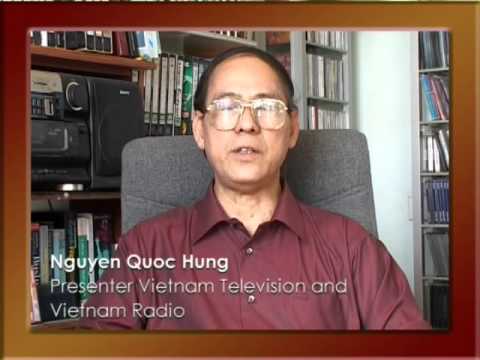
[6:55]Yes, indeed I did. I worked in the years of 1992-1993 in the Gulf. I worked in the mission called the United Nations. An interpreter should not try to write everything down. You must retain ideas rather than words in your memory. Memory comes first. Note taking should always be done on the basis of memory and a good comprehension. It is actually the product of the good digestion of the source text. It is never possible and advisable to take down every piece of information you hear. Most of the information is actually kept in our short-term memory. I think we should mention an important thing about note taking here. Many people with a good education are used to taking notes. But notes for liaison interpreting are quite different. Note taking plays an essential role in supplementing our shorter memory and comprehension. For note taking, for example, I believe there is no single best system of note taking. Because the situations that interpreters are in vary so much, everyone develops their own little tricks. For note taking, you would have different skills or techniques or even tricks if you may call it to help you. For example, you can you may have different kind of signs, different kind of symbols, different kind of abbreviations to help you. While people have different ways of taking notes, there are some basic guidelines to follow. For instance, have a proper layout, note down the keywords, idea reminders and those that can hardly be retained in memory such as figures. And use abbreviations and symbols. Sometimes you cannot, you cannot remember all, especially about the number, for example, the number of the products or the the the year, what happened in what year, for example, and then you've got to take notes. Generally, the objective of note taking is that it should supplement memory efficiently. Notes cannot replace memory, but properly taken notes should make it easier when delivering interpretation. Now, let's watch how interpreters work with notes in real situations. have been good value for the investment made in Và chúng tôi biết là những cái người này thì họ học rất là thành công và có một cái thuận lợi nữa khi học tập ở New Zealand đó là các cái giá cả sinh hoạt ở đất nước của chúng tôi thì nó thấp hơn nhiều so với lại các cái nước mà nó tiếng Anh khác.
[10:09]If there are long speeches, notes can keep a record of the basic structure of the speech. Notes from a consecutive interpreting can help draw your memory, which means your notes can give you the basic structure of the discourse of the original speaker. And then with the uh, you know, with the assistance of the specific information that you write down from the from your listening, then you can produce a best discourse into the target language. Very often, I need to maintain my quality from 9:00 in the morning until about 10:00 in the evening, and very often, uh, business schedules like that last several days. And I need to ensure that my quality is the same from the first day, the first minute, until the last day, the last minute. Without notes, relying on your short-term memory only, you simply cannot do that. Interpreters work in two languages, and their notes can be in whatever language best suits their needs. It is important to remember that the notes are taken from one language and are used to generate speech in the other language. Of course, the advantage of signs and symbols is that they do not belong to any one language. It's hard to work out how much oil we've got left. We don't know how long what we've got left will last, and we also don't know what price we're going to pay for it. What we do know, however, is that the price has recently gone from $60 a barrel and jumped right up to $70.80 last Monday. We're now paying more than twice as much for oil as we did before the Iraqi War. And we know from experience that all previous price spikes of this kind have led to serious trouble. Already, the inflation barometer is twitching, and I know that the people who do economic forecasts, they're just looking ahead to storm clouds. But some people actually say that there is a case to have high oil prices. They say that on balance, at this particular time in our global political and economic situation, there are good things. It was once said that the foremost dangerous words in English were, this time it's different. Well, this time, it actually may be different, and I think we ought to be very worried. There are commonly used abbreviations in interpreting, and it's well worth studying these. But there is no one way of note taking, and it is not advisable to copy anyone else's system. Some will use more graphic symbols. Others, more abbreviations. Ultimately, you have to develop your own system through practical experience.
[13:09]People sometimes describe note taking as a necessary evil. Because on the one hand, interpreters can hardly survive without note taking, and on the other, note taking, if improperly used, could distract our attention. So, practice and training are essential. I hope this program has given you some insights into the practice of note taking. However, remember that the best note taking is the one that you develop yourself and that takes experimentation and practice. So, keep practicing. Goodbye.