[0:00]60 Minutes Rewind. What Rod Laver is to tennis, what Jack Nicholas is to golf, that's what Bobby Fischer is to chess. And on June the 22nd, unless arrangements fall apart, and in the stormy world of chess, anything can happen. Bobby Fischer of the United States will finally meet Boris Spassky of the Soviet Union in Belgrade, Yugoslavia, for the chess championship of the world. At stake, immense prestige for the Russians, who jealously guard their reputation as the country of the chess masters. They've held the world title for 35 years, plus a purse of $138,500. The richest prize for a head-to-head confrontation in any sport but boxing. Boxing champions have been coming to the Catskill Mountains of New York for almost half a century to get in shape. But does a chess champion need to train physically? Take a look behind that window, into the training headquarters of Bobby Fischer.
[1:02]Championship chess is a physically exhausting game. More than just a test of mind and will, it is a contest of physical endurance, too. Bobby is 29 and he lives virtually a monastic life. Exercise is part of it.
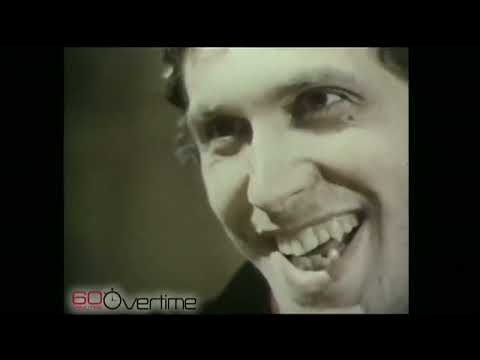
[1:23]He lives alone, always in hotel rooms that seem barely larger than chessboards. The television set is his window on the world. Daytimes for his exercises, night times for old movies. It is almost the only company he keeps. A lot of the time he won't even answer his telephone. He's shy, suspicious of strangers. It took us nearly six months to persuade him to sit for this television portrait. Fisher was a child prodigy. He began playing when he was six, a prodigy, but never the darling of the chess world. From the beginning, he gave officials a hard time. He'll refuse to play a match because his special terms aren't met. It's either money, or the number of games, or the schedule of play. Nothing is ever quite right. He isn't even US champion now because he refused to play under the conditions laid down by the US Federation. And for the past month, he's been giving fits to the International Federation too. Not enough money for the winner of the world title, he says. He's sure he's going to beat Spassky and he thinks he's worth more than a mere $90,000. He's a stubborn young man, sometimes he fights for principle, more often just for himself. Before we settle down to talk to Bobby, we asked him to play one of the coming generation's most promising players, 12-year-old Lewis Cohen. The game is speed chess. Each player has five minutes to finish, which makes the contest as violent as chess ever appears to someone who doesn't really understand the game. And Bobby, even here, plays to win. No mercy for the young. Before the five minutes are up, he closes in for the kill. Check, and Lewis Cohen concedes. Winning is obviously very important to you. Now, winning for winning's sake is important. But do you like to beat another man? Yeah, I do. Yes. I like to beat another. You smile about it. You like to crush another man's ego? Uh-huh. So when they go home that night, you know, they know that they can't kid themselves that they're so hot, you know. You think the Russians are pretty worried about you at this moment? Oh yeah, they have been ever since I started playing chess. Even as a little boy? That's right. I remember the first thing they ever wrote about me was, you know, he's a talented player. And uh, you know, they showed a game I played. And then they said, but all this publicity is getting and all of this attention cannot fail to have a harmful effect on his personality development. And sure enough, a few months later, I was a rotten person already in their press. I was doing this, I was doing that, I was conceited, you know. They sting you, they get to you. Well, they don't anymore because I realized it has nothing to do with me. You know, if you were a great chess player, they'd be saying the exact same things about you. Maybe they just tailor them a little bit to your personality or your background. This championship match between you and Spassky, is it in any sense a grudge match? In a sense, I mean, not personally against me, against Spassky because you know, I don't care two cents about him one way or the other, he's just another guy. But it's against the Russians and, you know, all the lies they've been saying about me. Do you worry about Spassky? Not overly. I mean, he's a little better than I think than the other Russians I've taken on in this series. But uh, yeah, well, we've only played a few games, so we were just the other day looking through that uh, his games from that Moscow event, that tournament, and they were atrocious games. He was really, you know, he was lost in half the games in that tournament. Really bad games on his part. Why would that happen to a man who, after all, is the champion of the world? Well, the champion of the world, first of all, I didn't compete, so he's not really much of a champion. But, you know, he's the best they've got, that's the big deal. Where do you get your confidence? Well, when you're successful, you realize there must be something going on with me. Why why am I so successful? There must be a reason, right? So obviously there's something, some some natural ability, some, you know, factors working, right? Sometimes what we're talking about is described as Fisher's arrogance. I sense that it's uh, something quite different. You simply Yeah, this arrogance, like people have been calling me arrogant for many years, but lately they're not calling me arrogant. Why? Because now, you know, I've been winning all these matches and I'm doing what I've always said I was, you know. So I used to say I was the best player in the world, everybody's arrogant, terrible, conceited person, you know. But this is just an obvious fact. It's not just the arrogance of you're saying that you're the best in the world, but the lights are too tough or or the or the temperature is too high or arrangements aren't right. It's difficulty of dealing with you that people complain about. Yeah, but the thing is, uh, everybody was looking at it from the organizer's point of view, you know. The organizers, I mean, you wouldn't believe the kind of conditions they want us chess players to play in. For instance. Oh, I remember playing once I played in Berlin. I played a match with the, you know, the best players in Berlin, you know, America team against the Berliners and, uh, you know, I had guys leaning right on my head practically, smoking in my face, expectators. Is chess a tough game for the body as well as the mind? It is pretty tough, yeah, because of all the tension and all the, you know, a lot of concentration, sitting there for hour after hour. It's really exhausting. I think that that's pretty difficult for somebody who doesn't know the game to understand. It looks like, I mean, after all, you and I sit at a board. Yeah. Well, you know, it's kind of like after you go in to take your, you know, your final exam or something, you're pretty tired, right? So it's like taking a five-hour exam every day or something, you know. Bobby does not like personal questions. He won't talk about his religion. He was born a Jew, now he is a fundamentalist. Nor will he talk about his relatives. His father left when Bobby was two. He never sees his mother, nor his sister. No girls in his life. He claims he hasn't time for them. We spent Bobby's 29th birthday with him at Grossingers. He came alone, no family, no friends. At the table with him, little Lewis Cohen. And Bobby disdained the cake that we had ordered for him. Happy Birthday to you. You were worrying about this.
[7:58]Yeah, I just don't go. First of all, I don't eat this kind of cake. Second of all, I don't go for this. All right.
[8:07]Should we take it away? Please.
[8:14]His only constant companion is the big red book of Spassky. A collection of 350 tournament games that Boris Spassky, the man he wants to take the world title from, has played. Bobby's training for the title match consists of studying every one of those games, every move, every strategy. He carries the book with him everywhere as if to absorb its contents through his fingertips. He has no advisers, no coaches, no manager. He doesn't really trust anyone's advice. In a sense, his most reliable friends are the pieces on the board. His strategies in life as in chess are mysterious and his own. This summer he will finally play Boris Spassky for the championship. And perhaps he'll prove what he has always said, that Bobby Fischer is the best chess player in the world.