[0:00]We can admit to being a little skeptical when the US announced it would impose its own blockade in the Strait of Hormuz. Answering one blockade with another seemed like an unconventional answer to a complex problem. The US plan is working. What Iran feared most has come to pass. As the US blockade has become a major success. After weeks of air strikes during Operation Epic Fury, the US has found a way to crush Iran without firing a single shot. Iran's regime is terrified. It knows it's running out of time. It all started when Operation Epic Fury led to Iran creating a blockade of the Strait of Hormuz. This wasn't your typical naval blockade. It couldn't be, as the US set about attacking Iran's traditional navy to the point where it had destroyed most of the regime's warships by April 12th. Instead, Iran used a combination of drones and fast boats to make the Strait of Hormuz too dangerous for merchant vessels to cross. The regime's move was smart. Hundreds of ships ended up staying in the Arabian Gulf as they were too wary of the possibility of being attacked by Iran's asymmetric assault. Even those who tried to brave the voyage did so while knowing that their insurance likely wasn't going to cover them, or they'd have to pay enormous rates just to make the journey. Iran's strategy worked. An oil price shock rocked the global markets as prices for a barrel of oil exploded to $100 or more. The US saw all of this and it realized that its devastating air strikes on the Iranian mainland weren't going to be enough to stop Iran's blockade. Crippling Iran's leadership and destroying its navy, air defenses and key military nodes meant that Iran couldn't put up much of a traditional fight. But the asymmetric war in the Strait of Hormuz was different. So how did the US respond? It launched its own naval blockade, which is battling Iran's unconventional strategy with far more traditional naval power. A counter blockade is in place, focusing on stopping Iranian cargo ships and oil tankers from leaving their ports and passing through the Strait of Hormuz. That counter blockade is working. The US has launched an economic war against Iran and it could be mere weeks before the country's economy is crippled. The point where it signs any deal that the US puts in front of the regime. It's here where things are getting very serious for Iran. But we'll come back to the economic fallout in a few minutes. First, America's blockade for a blockade strategy is working exactly as intended on the practical level. As Reuters reported on April 27th, traffic through the Strait of Hormuz is so sparse that it's almost non-existent. A waterway that typically handles between 125 and 140 merchant vessels per day. was down to just seven over the 24 hours prior to Reuters reports. Those vessels included an Iranian dry bulk ship, along with several that left from Iraqi ports. So Iran has gotten one ship through, maybe. Far more worrying for the regime is that the American blockade has forced 37 of Iran's merchant vessels to turn back since the US put its blockade in place on April 13th. This is the entire point. While overall traffic being so slow in the Strait of Hormuz does nothing to solve the global energy problems that Iran's response to operation Epic Fury has caused. The US is turning Iran's strategy against it. This is a game of time, and Iran's is running out fast. While the rest of the world deals with higher prices, Iran is now in a position where practically none of the oil that it desperately needs to sell to other countries is getting to where it needs to go. The US is in the way. And not even Iranian ships that are making it through the Strait of Hormuz are immune. As Australia's ABC reported on April 20th, the US isn't just blockading Iran's ports in the Strait of Hormuz. It also has warships patrolling the waters around the exit to this vital waterway, and their task is to intercept any Iranian ships that make it through the straight. America's warships have done that at least once. US President Donald Trump even lauded the interception, stating, "Our Navy ship stopped them right in their tracks by blowing a hole in the engine room." when detailing how the US stopped the Iranian flagged Tuska from sailing out of the straight. There have likely been more interceptions since, retired US Navy Rear Admiral Mark Montgomery says the US has likely stopped three or four of Iran's ships up to this point. And each one may have been carrying up to 2 million barrels of fuel, which amounts to $200 million of cargo. That gives you a little hint about the economic pain that Iran is feeling due to this blockade. Trump is clearly happy about the results that the US is achieving with this latest phase of Operation Epic Fury. Though the fragile ceasefire between the US and Iran is still in place, Trump now appears to see the US blockade as the key to getting everything that he wants out of the conflict in the Gulf region. In an April 29th report, Bloomberg said that Trump has declared Iran to be in a state of collapse as a result of the American blockade. Iran is running out of oil storage now that its ships aren't able to sell. US Treasury Secretary Scott Bessent later declared, he added that Iran would soon have to start cutting back on production, which would have a clear impact on the domestic economy of a nation that was already straining before the US went to war. Pressure is being applied. Trump now seems ready to make that pressure pay off for as long as needed. The Wall Street Journal reports that Trump has told his aides that they should prepare for the US to carry out an extended blockade of the Strait of Hormuz. The decisive victory that America may have expected from its rampant firestorm in Iran hasn't come, so a war of economic attrition is now the preferred approach. The blockade of the Strait of Hormuz is now the least risky of the options available, the Trump administration appears to have concluded. And it may be the key to forcing Iran's regime into an agreement that satisfies the US. It's all about time and pressure. Iran is feeling the latter while running out of the former and we're already starting to see signs of desperation in the country's regime. But before we dig into what those signs are, you are watching The Military Show. If you're looking for more insight like this, make sure that you are subscribed as we break it down like this every single week. Desperation in the Iranian regime is resulting in that regime making offers that it would never have made when Operation Epic Fury was launched. On April 28th, Euro News reported that Iran has offered to lift its own blockade on the Strait of Hormuz, if the US pulls its ships out of the waterway. Iran has thrown in the caveat that this seemingly quid pro quo move would lead to a delay in discussions over the country's nuclear program. What we're really seeing here is the first signs of strain in the Iranian regime. Iran's leaders know that the US blockade is hurting them more than they ever thought possible. Trump signaling that he's ready to keep that blockade in place for as long as he needs, has sent Iran's regime into a spiral. As it knows that it can't take much more of the economic pressure that is being exerted upon it. Al Jazeera reports that the new Iranian plan is unlikely to be accepted by the Trump administration in its current form. Likely due to the regime doing everything it can to hold onto its nuclear program, even as America's blockade stifles Iran's economy. Iran wants deescalation without accountability, and that is a no go for the US. Trump has already made that clear in an April 29th post where he appears to have revealed what he thinks about Iran's latest proposal. Iran can't get their act together, Trump declared before adding, they don't know how to sign a non-nuclear deal. They better get smart soon, President DJT, No more Mr. Nice Guy. The post was accompanied by what seems to be an AI-generated image of Trump holding a rifle against a backdrop of explosions in Iran. Informative? Perhaps. But Trump is sending a clear message to Iran that the bad situation the regime has found itself in is only going to get worse, the longer the US blockade goes on. America knows that it has leverage now. Iran has given the game away by asking for the blockade to be lifted and saying that it will lift its own blockade. And even as oil hit an April high of more than $119 per barrel on April 29th. Trump is showing no indication that he's going to give Iran an inch on its demands. The Hormuz blockade stays in place, and why wouldn't it? Rising oil prices may be an issue for the Gulf states and many outside the US, but the American blockade is costing Iran something critical. $435 million per day in exports. That, above all else, is the leverage that the US now holds over Iran, as well as the most significant sign that America's Hormuz blockade is working precisely as intended. The goal now isn't to shatter the regime, it's to cripple Iran's economy to the point where the regime becomes a lame duck that will acquiesce to anything that the US asks of it. And there may be an even deeper problem than submission to America lurking for Iran's regime. Remember, it was economic problems that caused the protests, which in turn indirectly led to the US attacking Iran. The regime is getting weaker, and it may soon face an escalation on its own turf that isn't ready to handle if it isn't able to solve the current economic crisis. We'll get back to that after we take a closer look at just how bad things are getting for Iran, economically speaking. Right now, Iran's regime is in a state of limbo. The asymmetric tactics that it thought would allow it to exert pressure on the US in Hormuz have been flipped on their head. And all of that pressure is now coming back down onto the regime's collective shoulders. There's not much else that Iran can do militarily speaking from here. The country's military infrastructure has already been shattered, so any strikes it carries out against the US will be isolated. They would also break the ceasefire between the US and Iran, which would likely lead to more air strikes as the American ships maintain the blockade. Going on the attack takes Iran out of the frying pan and into the fire. So all that the regime can do is hope for a miracle, an unexpected break in the blockade that isn't motivated by Iran finally giving up on its nuclear ambitions. The US says that isn't going to happen. And Iran's regime is running out of time for its miracle to arrive. According to Montgomery, Iran may have as little as three or four weeks left as America's blockade saps its export income and its oil storage facilities fill up. For context, if we take four weeks as given, that's 28 days and almost $12.2 billion lost for Iran. Adding to this, Iran may have to permanently shut down some of its oil wells due to running out of storage space. That's according to an unnamed senior US official who the independent says is pointing toward Iran being on the brink of falling into a chasm of long-term problems. that will affect it long after Operation Epic Fury comes to an end. Others give Iran a little more time, though the overall outlook is still dire. The Jerusalem Post says in an April 15th piece that the US blockade of Hormuz could collapse Iran within three months. rather than three or four weeks. It points to Iran's economy being heavily reliant on the oil sales that have been prevented by America's blockade as the reason why. And it speculates that the crumbling of the Iranian economy could be accompanied by massive waves of street protests, similar to those we saw at the beginning of 2026. Keep that in mind, it may be just what the US is angling for if it isn't able to get the non-nuclear deal it wants out of Iran. Even if we look at Iran's economy as it stands right now, it's clear that the American blockade is wreaking the kind of havoc that the regime simply can't afford. Literally, as it turns out. Iran's economy is in a free fall as we speak. Iran International laid it all out in an April 24th piece. It points out that Iran started the war with the US from an economic weak point, and it's only gotten worse from there. Inflation is high and rising, as is unemployment. Real incomes are falling among the population as a result, and stagflation has taken hold to compound these problems. All of this was happening before the US started to block over $400 million per day from entering Iran's coffers. Full economic collapse and hyperinflation aren't likely to happen within the next couple of months, the outlet claims, but Iran was already dealing with inflation that had risen above 50% and a currency that lost 20% of its value in 20 days at the end of 2025. That 20% drop in the value of the Real was the lowlight of a consistent decline triggered by the end of Iran's 12-day war with Israel in the summer of 2025. After which the currency collapsed to the point of losing 60% of its value. These aren't signs of a healthy economy. They're signs of an economy that is standing on a precipice. US Navy warships will soon push that economy over the edge. More numbers come from Ynet News, which says that 1 million Iranians have lost their jobs since the beginning of Operation Epic Fury. And millions more are at risk as Iran's oil industry looks to be on the verge of a forced shutdown. Iran's steel and petrochemical plants have also been paralyzed, the outlet says. Even Iran's carpet industry, which was once the envy of the entire world, is on the verge of collapse. Somehow it gets even worse. Food inflation in Iran rocketed up to 64% in October 2025, and has only gotten worse since. It was up to 105% by February with bread and cereals among the worst affected. Between March 2025 and March 2026, these two staple foods have seen their prices rise by 140%. Iran already had a disgruntled population. Raising the price of food to the point where it would be unaffordable, especially when millions are losing or on the verge of losing their jobs, only makes things worse. The International Monetary Fund projects Iran's economy to shrink by 6.1% in 2026. With inflation reaching 68.9% by the end of the year. Unemployment is very close to 10% and rising. Government debt now amounts to close to 40% of Iran's gross domestic product. With the US blockade in place, 90% of Iran's global trade has been shut down, which accounts for 70% of the country's entire export revenue, CNBC reports. Now, remember this. The US announced its Hormuz blockade on April 13th. At the time of creating this video, the blockade has been active for about three weeks. And this is the scale of the damage that we're already seeing. These economic problems existed in Iran long before the US sent warships to block the country's ports. America's blockade is just exacerbating them, accelerating a decline that was already well in motion long before Operation Epic Fury was launched. Iran will be begging for a light at the end of the tunnel, but it may have to wait several more weeks before the US will even consider lifting its blockade. Trump is set to meet China's President Xi Jinping on May 14th. The visit will mark the first by a US President to China in a decade, and it's almost certain that the situation in Hormuz will be one of the main topics of discussion. The odds are that the US won't be looking to make any changes to its blockade until the conclusion of that visit. Trump knows that the Hormuz situation isn't affecting China as badly as it could be. Beijing has plenty of oil reserves and it doesn't rely on Iran for liquefied natural gas. Trump may be looking at that meeting as an informal deadline for Iran. The US won't want to restart combat operations before Trump meets Xi, so it'll keep its blockade in place, which will only drain Iran further. So that's around two more weeks of pain for Iran. How much longer can its regime last? And if things don't go as Trump wants in China and Iran fails to comply with the deal by going non-nuclear. What happens to the regime if the economic stranglehold that the US has developed is accompanied by a new wave of air strikes? The answers to these questions will depend on how stubborn the Iranian regime wants to be at this point. Ideologically, some in the regime may have been pushing for the continued refusal of America's nuclear demands. They'll say that Iran can wait the US out, likely because they're not part of the millions of people who are being crippled by the economic black hole into which the US is plunging the country. But that just creates a new problem. And it's a problem that the US is more than happy to see. Earlier, we mentioned the December and January protests, which were sparked by Iran's economic problems. The regime managed to shut these protests down, potentially killing around 30,000 people in the process. The Guardian reports. Those who rose up once may be willing to rise up again, especially as a confluence of factors is playing into their favor. The regime has been weakened by American air strikes. The economic issues that led to the protests in the first place are only getting worse, and they'll become catastrophic if the US maintains its Hormuz blockade. Maybe this is the actual US plan. After all, Trump has called on Iran's people to rise up against their regime in the past. The US might be setting the stage for that to happen with the Hormuz blockade. Iran's regime is caught between a rock and a hard place. It either gives up its nuclear ambitions to get the blockade lifted, allowing it to stand some chance of survival, or it stays stubborn, and Iran sinks into economic oblivion that will take the country's people with it if they don't rise up and rebel. What Iran's regime feared most is happening. Without firing another shot, the US has put itself in the perfect position to force regime change or push through an agreement on Iran's nuclear ambitions. And if the US does have to go back to hitting Iran, it has that part of the equation covered too. We already know about the thousands of air strikes that have crippled Iran's military, but the US also unleashed something so classified over Iran earlier in Operation Epic Fury, that it could spell the end of any attempt by the regime to fight back. Find out what the US sent into Iran and what it could send again if Iran doesn't play ball by watching our video. And if you enjoyed this video, make sure that you subscribe to the military show to keep up with our analysis of the latest developments in the Gulf region.
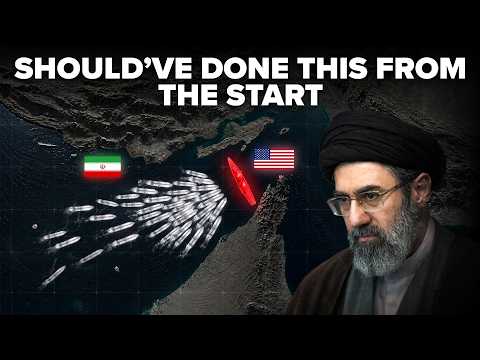
U.S. Just Found a Way to CRUSH Iran Without Firing a Single Shot
The Military Show
16m 47s3,354 words~17 min read
Auto-Generated
Watch on YouTube
Share
MORE TRANSCRIPTS