[0:00]Have you experienced trauma or neglect in your childhood? It may seem like a part of you will always carry that darkness within you. But recovery is 100% possible to achieve. It's a long journey that will have its ups and downs. But as long as you stay hopeful and motivated, you can find your way towards healing. This video will cover some of the steps you can take to get closer to your goal of healing. The information in this video is based on a book called Running on Empty: Overcome Your Childhood Emotional Neglect. It was written by Dr. Johnny Webb, who specializes in childhood trauma and neglect. Let's see what advice she has for you in store. Number one, realize it's not your fault. Before you start your recovery journey, as Dr. Webb explains, you need to come to an important realization. Let's try an exercise together. Say these words out loud. It's not my fault. Really, say it out loud. Childhood trauma and neglect can often make children develop feelings of guilt, blame, and shame. You might feel that somehow you deserved to be treated that way. But that's not the case at all. There is nothing you could have done to deserve it. You were an innocent child who wanted to be loved, and you should have gotten that love. So, if your memories sometimes take you to those bad places, remember to say it out loud. It's not my fault. Number two, welcome your emotions. An emotionally neglecting household is an emotion-free household. In a way, you're trained to ignore and diminish your emotions. For that reason, getting back in touch with what you feel is an important part of overcoming your trauma. The first step is to understand that even if the child in you blocked your emotions to protect itself, that doesn't mean they aren't there. Maybe you can't describe them yet, but you're experiencing a range of emotions every day. Even Carl Rogers, a notable American psychologist, talked about acceptance. The curious paradox is that when I accept myself just as I am, then I can change. So, try to accept your emotions and welcome them as a valuable part of your being as you begin healing. Number three, recognize and identify your emotions. The next step is learning how to recognize and identify those emotions. Sometimes, you'll find it hard to identify the feelings you're experiencing. When that happens, pay attention to your body. For example, are your muscles tense? Are you mindlessly fidgeting? This could mean that you're anxious or nervous about something. Another thing you could do when you're not sure how you're feeling is to take a look at an emotion chart. Dr. Webb provides great tools in her book, a detailed list of emotions as well as an emotion chart. So feel free to check them out if you need help with learning about what you feel. Number four, keep track of how you feel. Once you learn how to recognize and identify your emotions, try keeping track of them. You could use a journal or download an emotion tracking app on your phone. The effectiveness of this technique was shown in a few trauma survivors in a 2002 study. Authors of said study believe that journaling about your feelings could help you process repetitive, intrusive thoughts. So, every few hours, write down where you are, what you're doing, and how you're feeling at that moment. Writing it down could help you build a habit of tuning in with your emotions so that one day you can do it effortlessly and automatically. Also, you'd be able to go back and take a look at your entries, which would allow you to see a possible trend. Maybe you find out that certain people or situations consistently make you feel down. Is there something you can do to make those instances more bearable? Or you may notice that you've been exceptionally cheerful during the last week. What is it that made you so happy, and how can you get more of it? Number five, find ways to self-soothe. As a neglected child, there's a chance your parents didn't give you much needed comfort when you were upset. They probably weren't there to wipe your tears or rock you to sleep. As a result, today, you might have trouble dealing with stress, anger, or any overwhelming situation. You might still seek someone to comfort you, but recovery actually means finding that comfort within yourself. You can achieve that by learning to self-soothe. As the name suggests, it's a skill that enables you to calm yourself when you need it and find some peace when things get rough. A 2017 research article shows that this technique can really be beneficial, even for those suffering from PTSD. You can try out three simple steps to learn how to self-soothe. Step one, make a list of possible strategies that you could use to calm yourself down. Do you like a cup of hot chocolate on bad days? Curling up in a fluffy blanket, cuddling your pet? You can put as many things as you like on that list. Make sure to include some things that are easily accessible wherever you are, such as taking three deep breaths, for example. Step two. This is where emotions charts and identifying your emotions come in handy. When you notice a strong negative feeling, it's time to check out your list. And step three, try out different strategies and pay attention to what works and what doesn't work. Maybe petting your dog works when you're sad, but not when you're angry. Feel free to modify your list, crossing out strategies and adding new ones. You may find it hard at first to come to terms with yourself and your emotions. It'll probably seem scary, difficult, and unachievable, but please don't lose hope. Start with small baby steps and work your way up. When it gets hard, remember the child you once were, and remember you're doing this for them. Give them all the love you didn't receive. If you'd like to read the whole book to gain even more insight into therapeutic strategies you can take, visit the link in the description. We got your back. If you enjoyed this video or if it helped you find some insight, please leave a like and share it with friends. As usual, all sources used are in the description below. Thanks so much for watching. Until next time.
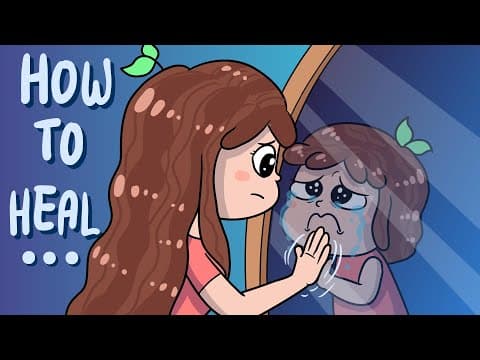
Dealing With Childhood Trauma & Emotional Neglect
Psych2Go
YouTube auto captions
This transcript was extracted from YouTube's auto-generated caption track. The transcript below is server-rendered so it can be read, searched, cited, and shared without opening the original YouTube player.
This video provides a comprehensive guide to healing from childhood trauma and emotional neglect, emphasizing that recovery is entirely possible despite the challenges. Drawing insights from Dr. Johnny Webb's book, "Running on Empty: Overcome Your Childhood Emotional Neglect," the video outlines a series of practical steps to embark on a journey of self-healing and emotional well-being.
The core of the recovery process begins with a crucial realization: the trauma was not your fault. The video stresses the importance of internalizing this truth to combat feelings of guilt and shame often developed by neglected children. Following this foundational step, the guide encourages individuals to reconnect with and embrace their emotions, which may have been suppressed as a protective mechanism. It then progresses to the skill of recognizing and identifying these emotions, suggesting methods like observing bodily cues or using emotion charts. Crucially, the video advocates for tracking emotions through journaling or apps to identify patterns and triggers, fostering a deeper understanding of one's emotional landscape.
Finally, the video highlights the importance of learning to self-soothe, a skill often underdeveloped in those who experienced childhood neglect. It offers a three-step process to build a personalized self-soothing toolkit, enabling individuals to manage stress and overwhelming situations independently. The overarching message is one of hope and encouragement, urging viewers to start with small steps and to remember they are healing the inner child who deserved love and comfort.
Key Takeaways
- Recovery from childhood trauma and neglect is 100% possible, though it is a long journey.
- Realize and internalize that the trauma was not your fault to overcome feelings of guilt and shame.
- Welcome and accept your emotions, even if they were previously suppressed, as a vital part of healing.
- Learn to recognize and identify your emotions by paying attention to bodily cues or using emotion charts.
- Track your emotions through journaling or apps to build self-awareness and identify patterns or triggers.
- Develop self-soothing techniques to independently manage stress, anger, and overwhelming situations.
- Approach healing with hope, start with small steps, and remember you are providing the love you didn't receive to your inner child.
Topics Covered
[0:00]But as long as you stay hopeful and motivated, you can find your way towards healing.
[0:00]This video will cover some of the steps you can take to get closer to your goal of healing.
[0:00]The information in this video is based on a book called Running on Empty: Overcome Your Childhood Emotional Neglect.
[0:00]Childhood trauma and neglect can often make children develop feelings of guilt, blame, and shame.